★★★★★
“Allen provided exceptional service — friendly, professional and went above and beyond.”
JVerified
Jane
Wantirna South, VIC

FreshDuct cleans and services pot belly stoves across Melbourne — in homes, studios, sheds and cabins. Small cast iron stoves on narrow flues need more frequent attention than most owners expect.
Small flue diameter fills far faster than a full-size one. Same soot, much less room for it.
The pot belly is the oldest recognisable stove design still in everyday use: a rounded cast iron body, a small firebox, a cast top plate, an ash door below the grate and a narrow flue out the top or back. They turn up in Melbourne in living rooms, studios, converted garages, sheds, workshops and weekender cabins, and they are frequently the least maintained heating appliance in the country.
Two things make them genuinely different to service. The first is the flue diameter. Pot bellies run much narrower flues than a modern wood heater, and cross-sectional area falls away quickly as diameter reduces. A layer of soot that would be trivial in a large flue takes a meaningful proportion of a narrow one, so these systems restrict sooner and need sweeping more often than their small size suggests.
The second is the material. A pot belly is cast iron, and cast iron does not fail the way the folded steel of a modern heater does. It does not bow or burn through; it cracks. Grates crack and burn out, top plates crack from thermal shock, and the joints between cast sections open as the stove cement bedding them dries and shrinks. Those are the things to look for, and they are not what a technician trained on steel appliances is looking for.
The setting adds a third factor. A great many pot bellies live in sheds, studios and cabins where the installation was done informally, the flue is short, clearances to timber framing are tight, and nobody has ever inspected any of it. We are not there to lecture anyone, but we will photograph what we find and tell you honestly if something needs attention.
Small cast iron stoves have their own failure modes and their own service rhythm.
Cast iron failure modes, narrow flues and informal installations.
Because the flue is small, soot has a disproportionate effect on airflow. We sweep the full run and check for restriction along it, and we are usually recommending a shorter interval than people expect on the basis of the appliance being small. Small does not mean low maintenance here.
The grate sits directly in the fire and is the first cast component to go, cracking and burning through over seasons. The top plate cracks from thermal shock, particularly where a stove is fired hard from cold or has had something cold set on it while hot. We inspect both and photograph the condition.
Cast sections are bedded together with refractory stove cement that dries and shrinks with heat cycling. Once a joint opens the stove draws uncontrolled air, becomes difficult to regulate, and may allow combustion products out. Repointing an open joint is routine cast iron maintenance.
Informal installations frequently sit closer to timber framing, cladding or stored material than they should. We measure the actual clearances, look for heat discolouration on nearby surfaces, and photograph anything that concerns us. In a shed full of stored timber that is a conversation worth having.
Pot bellies in outbuildings often have very short flue runs, which produce weak draught and a smoky, hard-to-establish fire. We assess the flue height and termination and advise where additional height is the genuine fix rather than repeatedly cleaning a flue that is not the problem.
FreshDuct recommends at least annually for a pot belly in regular use, and more often where the flue is narrow and the stove is used daily. This is the appliance type where we most often recommend a shorter interval than the owner was expecting, and the flue diameter is why.
Real FreshDuct flue and appliance photography from Melbourne jobs.
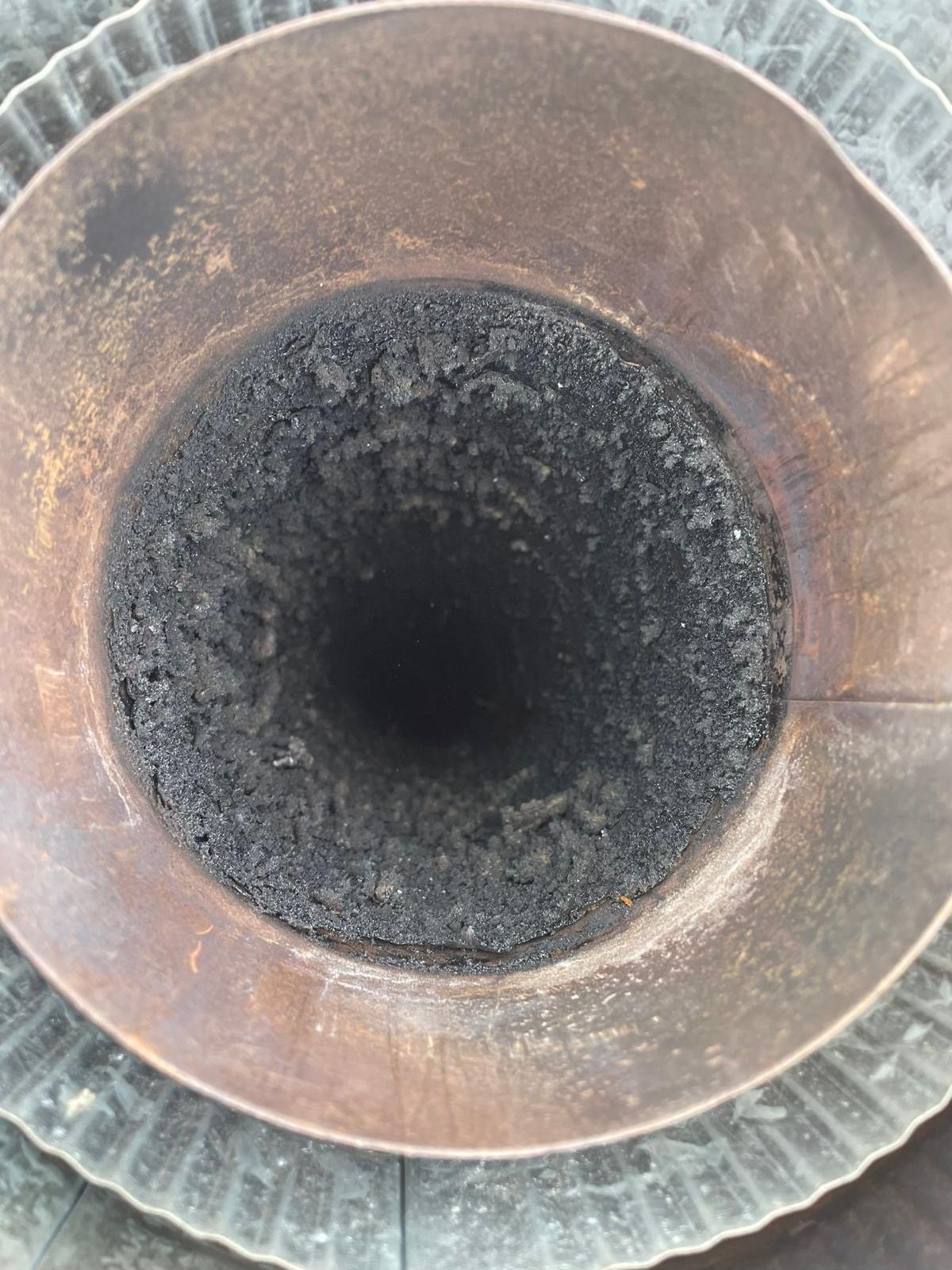
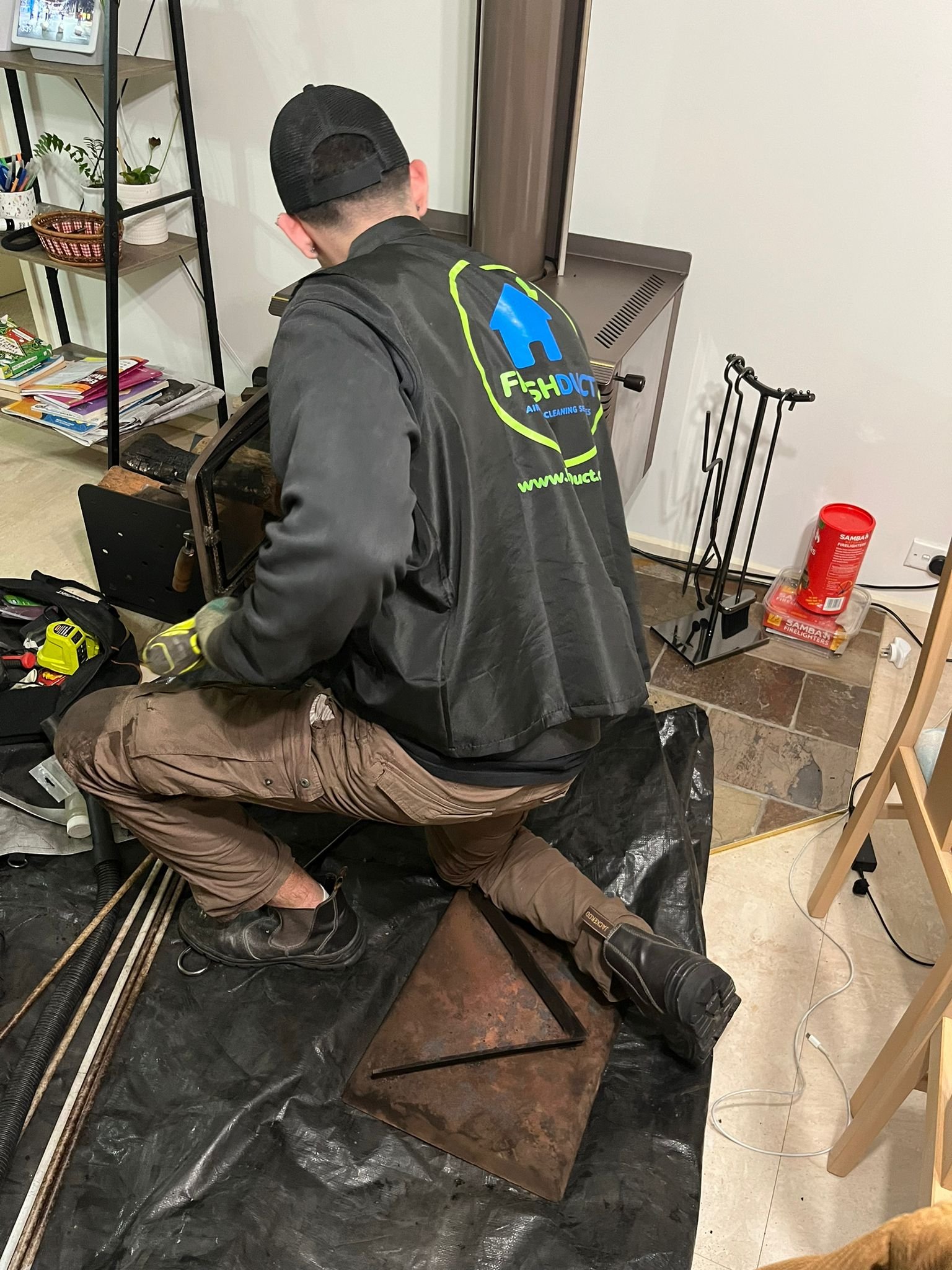
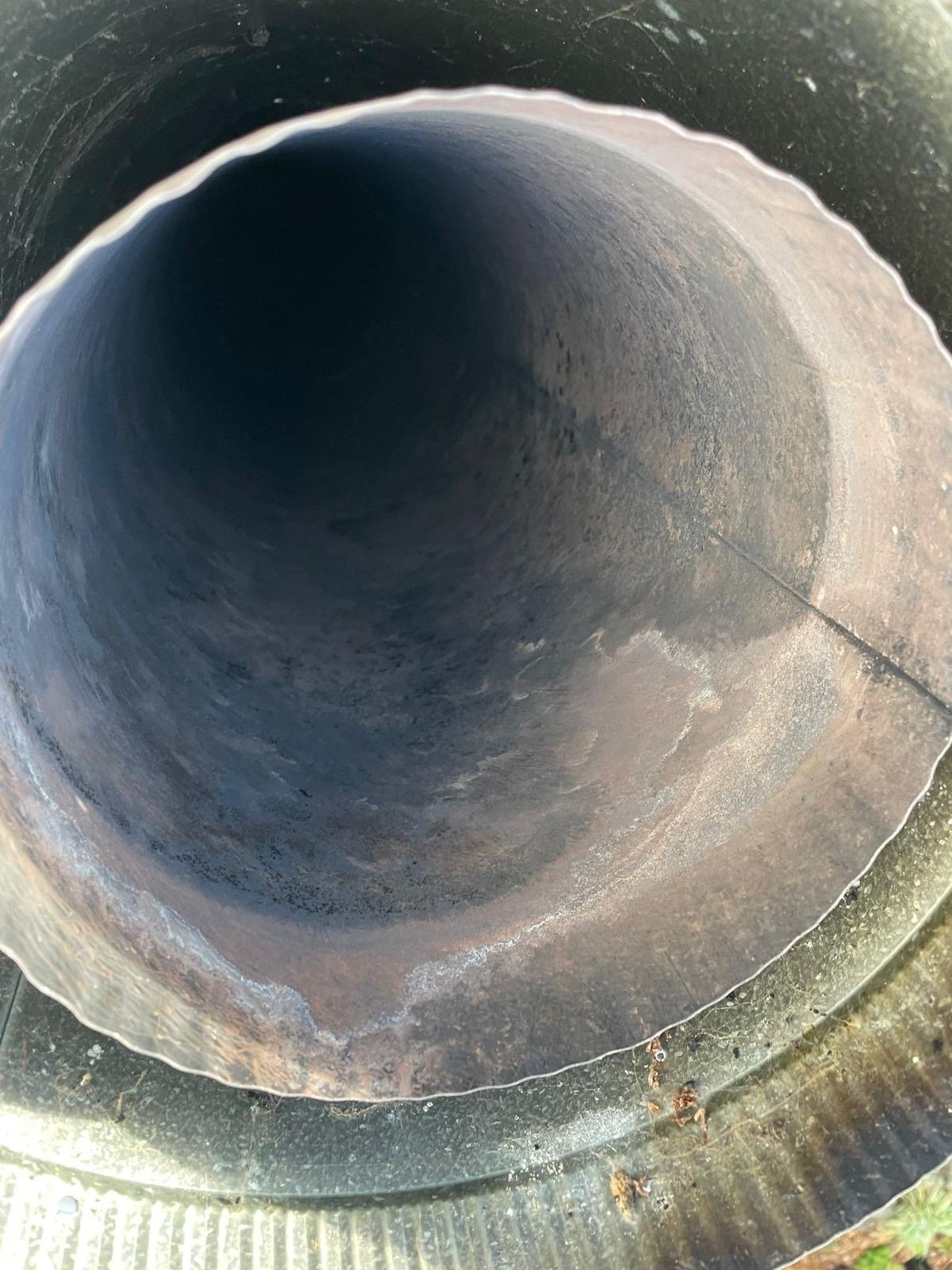
On a pot belly we sweep the full flue run, clean out the firebox and ash pit, inspect the grate and top plate for cracking and burn-through, check every cast joint and repoint with refractory cement where a joint has opened, check the door and its seal, and assess the flue height, termination and clearances.
We fit suitable service consumables such as rope, refractory cement and firebricks where the stove uses them, and we name exactly what we used. Where a cracked grate or top plate needs replacing we will tell you honestly whether a suitable replacement can be sourced, because on older and unbranded stoves it sometimes cannot.
Book a Pot Belly Stove ServiceWe service pot belly stoves across Melbourne and the surrounding regions. They are most common in the semi-rural fringe and the ranges — Warrandyte, Eltham, Healesville, the Dandenong Ranges, the Yarra Valley, the Macedon Ranges and out past Lilydale and Gisborne — where sheds, studios and weekenders are part of how properties are used.
They also appear throughout the inner suburbs in converted garages, backyard studios and workshops in places like Brunswick, Northcote, Collingwood and Footscray. Those installations tend to be short-flued and tight on space, which makes the clearance and draught assessment as valuable as the sweep itself.
A proper service on an appliance that usually has not had one.
House, studio or shed, and how the flue actually runs.
Surrounds protected and extraction running before we open it.
Narrow flue swept end to end and checked for restriction.
Firebox and ash pit cleared, grate and top plate checked for cracks.
Cast joints assessed and repointed with refractory cement as needed.
Distances measured, photographs and a written condition note.
Verified 5-star reviews from across FreshDuct’s chimney, fireplace, duct, heating and insulation services. These are company-wide reviews from our Melbourne customer base — not reviews of any particular appliance brand.
“Allen provided exceptional service — friendly, professional and went above and beyond.”
“Highly impressed with the professionalism and efficiency. On time, and no mess left behind.”
“Exceeded my expectations. Knowledgeable, meticulous and respectful of our home.”
“So glad I chose FreshDuct. Knowledgeable team and the whole process was smooth from start to finish.”
“Quick, efficient and professional — we could immediately feel the difference.”
“The technician arrived on time and was incredibly thorough — the difference at home is obvious.”
What small stove installations most often need.
Because the flue is narrow. Cross-sectional area falls away quickly as diameter reduces, so a layer of soot that a large flue would barely notice takes a meaningful proportion of a small one. The stove being small does not mean the flue is low maintenance — if anything the opposite.
Not necessarily. Cast iron crazes and cracks with thermal cycling and many cracks are stable and non-structural. What matters is whether the crack passes through the section, whether it is growing, and whether it lets combustion products out. We photograph it and give you a straight assessment rather than a guess.
Most often the flue is too short to establish adequate draught, which is very common on outbuilding installations. It can also be restriction in a narrow flue, or simply insufficient air in a tightly clad shed. Additional flue height is frequently the real fix, and repeatedly cleaning the flue will not achieve it.
Yes, that is routine cast iron maintenance. The sections are bedded with refractory stove cement which dries and shrinks over years of heat cycling, and repointing an open joint restores the seal. It is far cheaper than living with a stove that draws uncontrolled air and cannot be regulated.
It can be, and many are, but informal installations warrant a proper look. The things we check are clearances to timber framing, cladding and stored material, the flue height and termination, and the condition of the cast components. We photograph what we find and tell you plainly if something needs attention.
Narrow flues swept properly, cast components inspected for cracking and joints repointed — in houses, studios, sheds and cabins.
Tell us where it is and how often you use it.