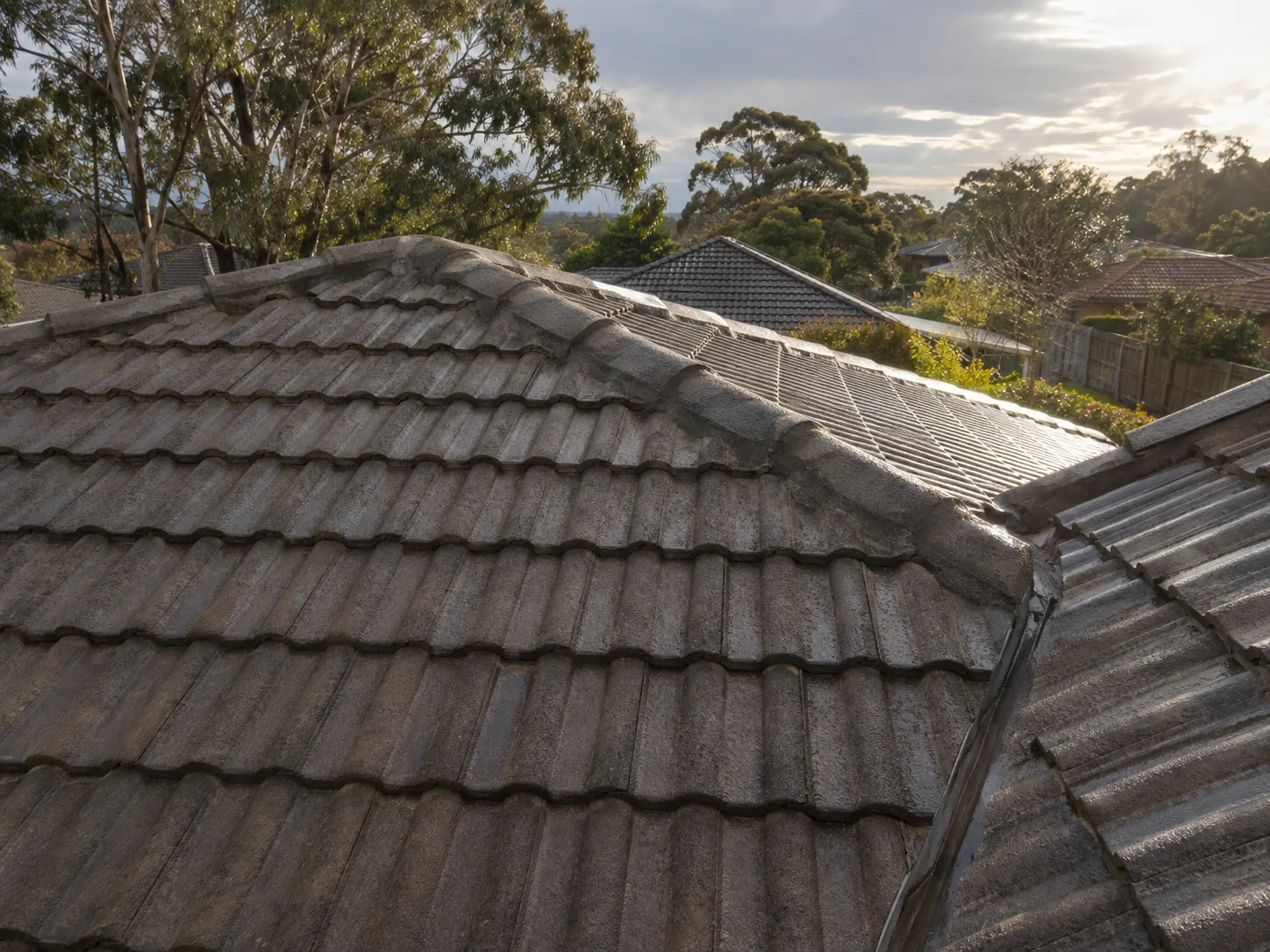
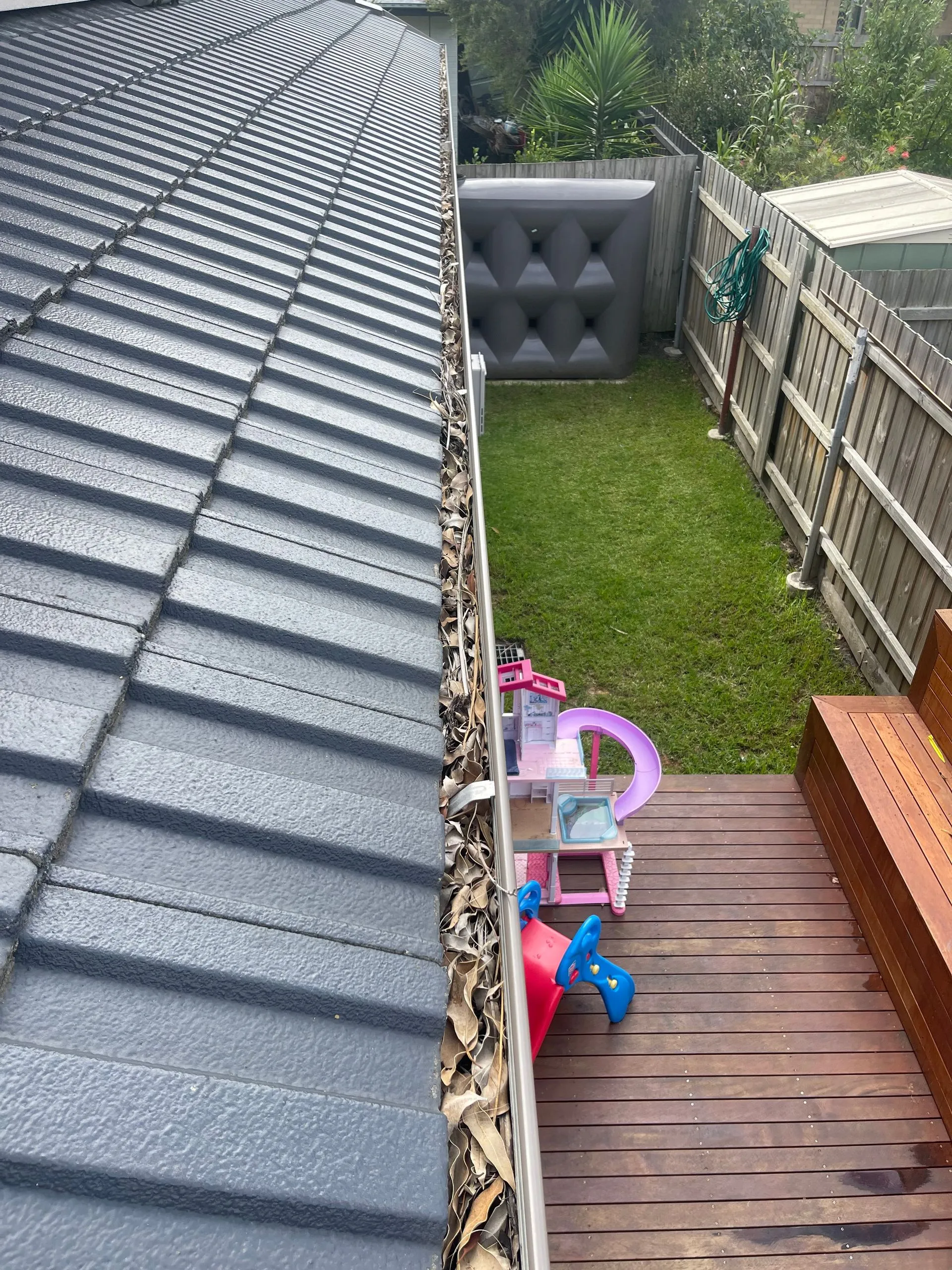
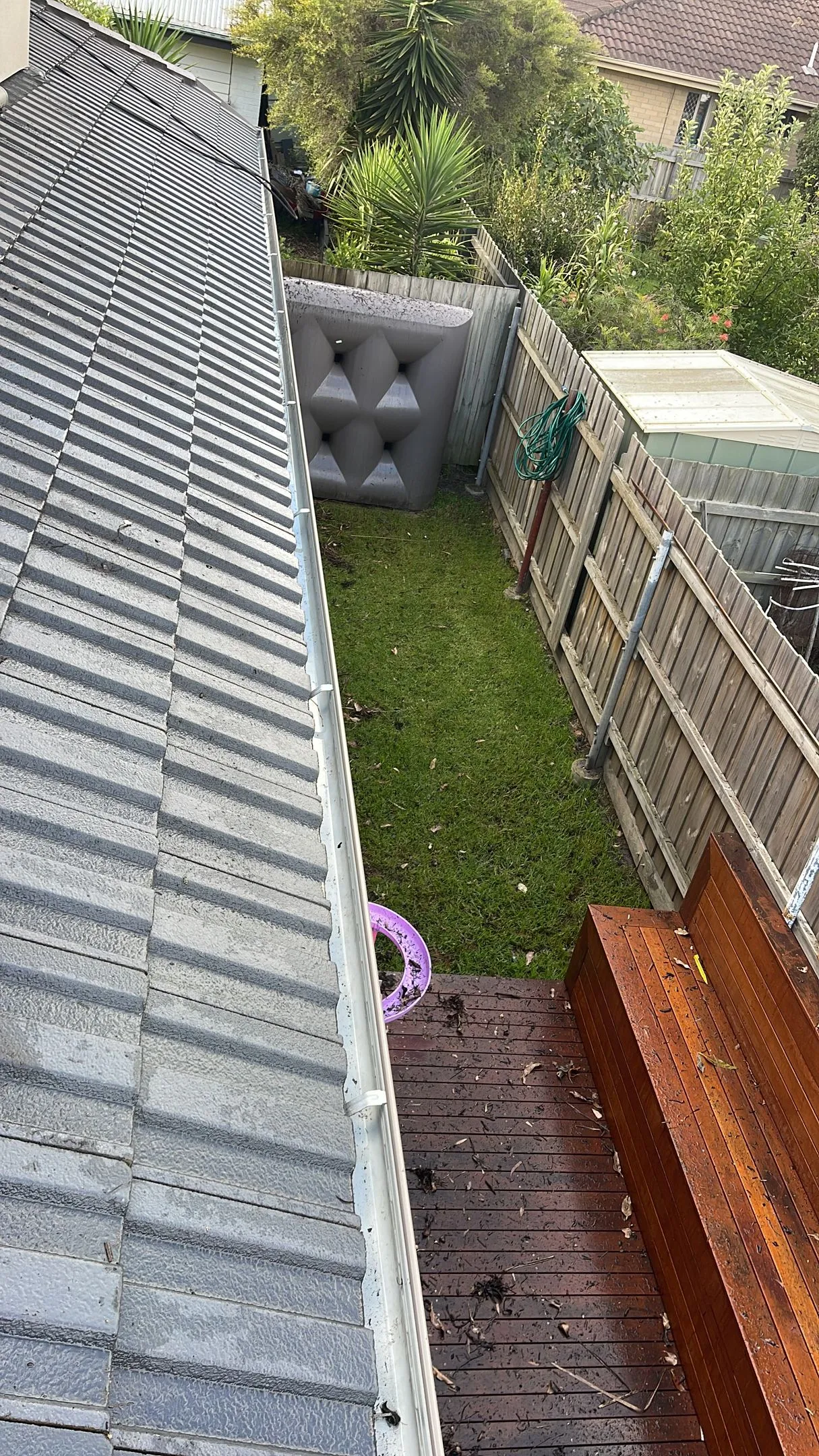
A gutter only has two jobs: catch the water coming off the roof and carry it to a downpipe with enough fall that nothing sits behind. When one of those fails, the symptom tells you which.
Sagging means the brackets have let go or were spaced too far apart to begin with. The gutter dips between them, water ponds in the dips, and ponding water is where rust starts and where mosquitoes breed. It also means the fall to the downpipe has gone, so the whole run drains slowly.
Splits and drips nearly always sit at a join, a mitred corner or a stop end. The sealant that was put in on the day has dried out, or the join was riveted without sealant at all, and every rain the drip lands on the same spot.
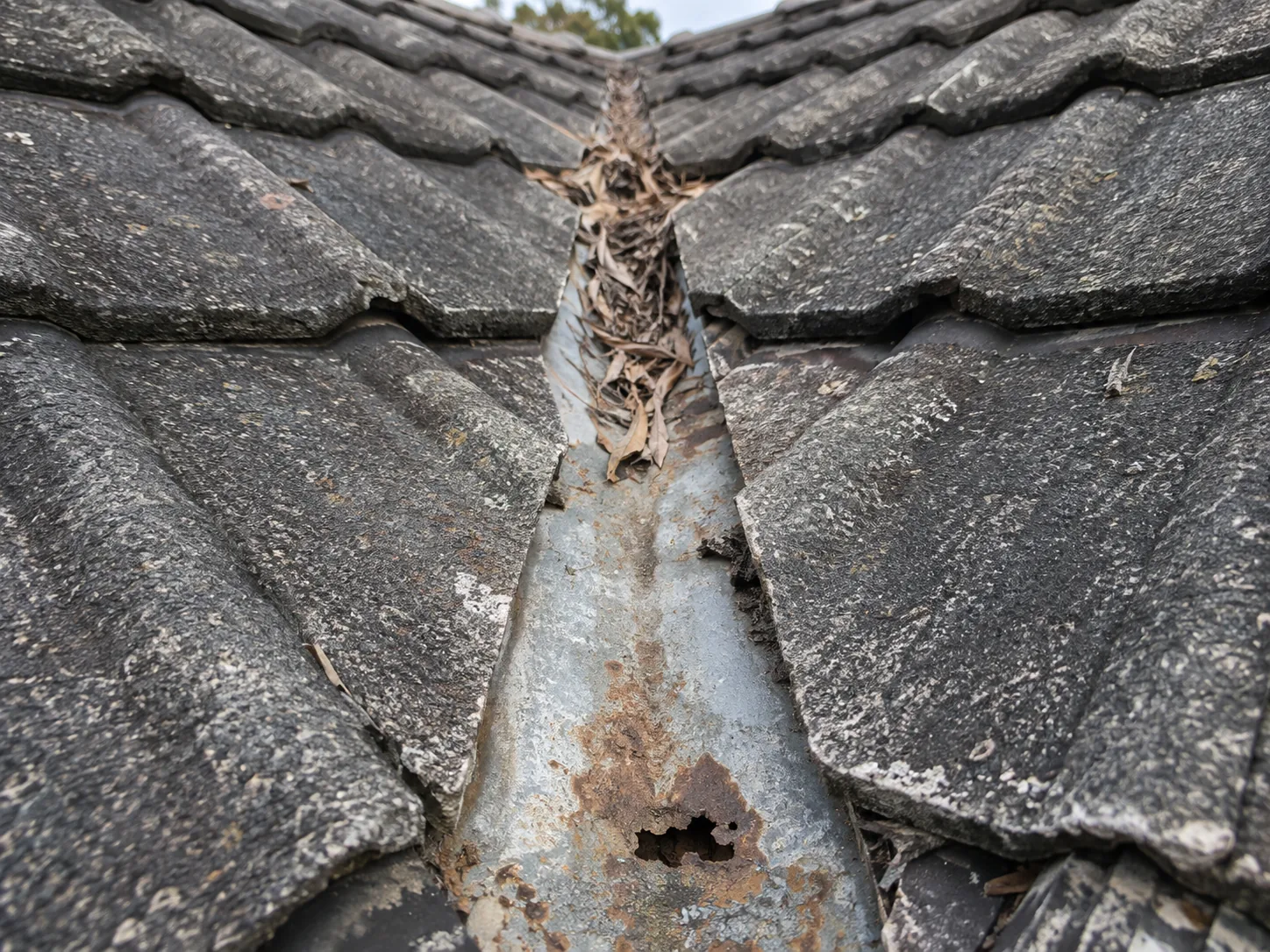
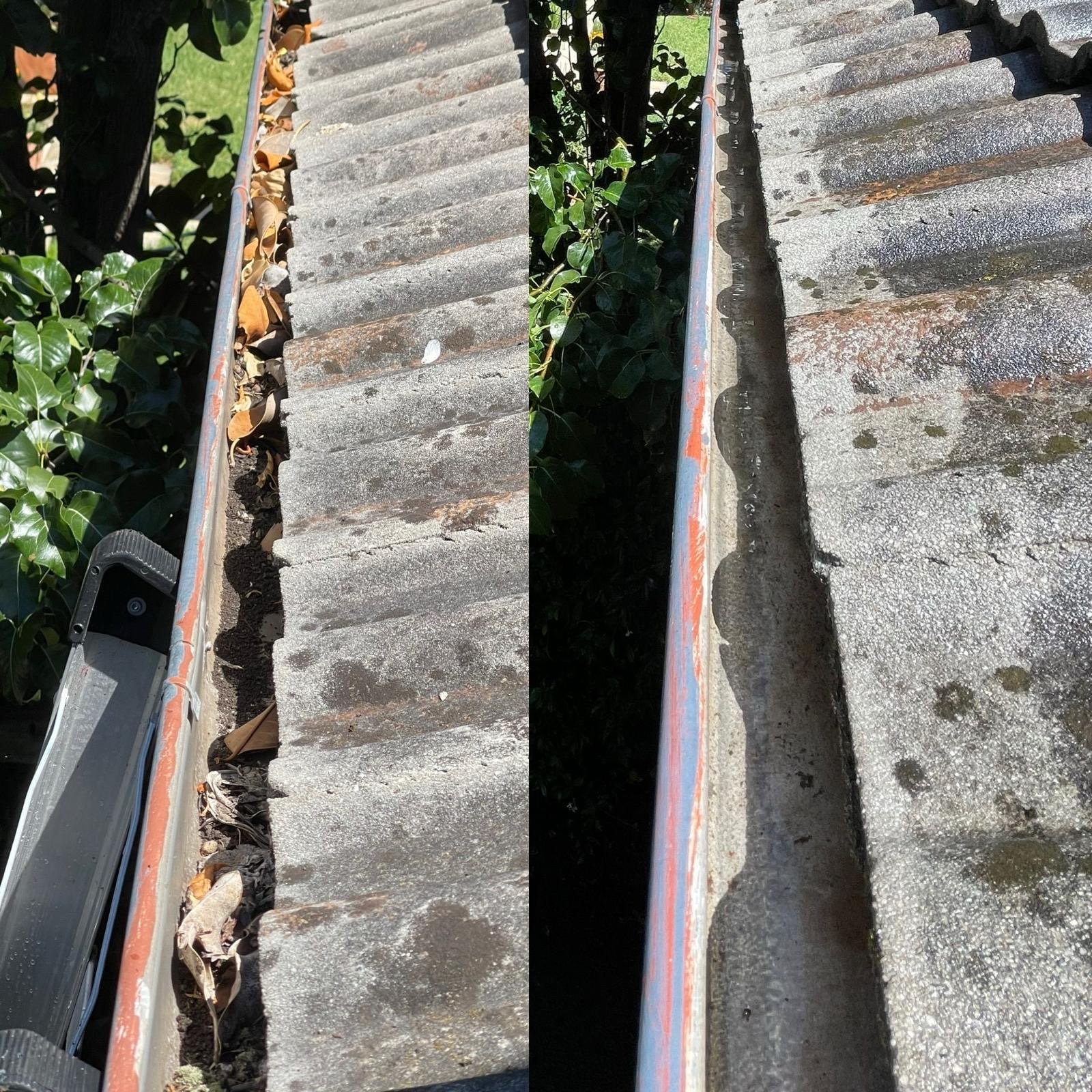
Rust starts from the inside on older galvanised and zinc gutters, under the leaf litter and silt that hold water against the metal long after the rain has gone. By the time you see rust from the ground it has usually pinholed the base. Debris is the cause more often than age, which is why gutter cleaning is the simplest gutter repair there is.
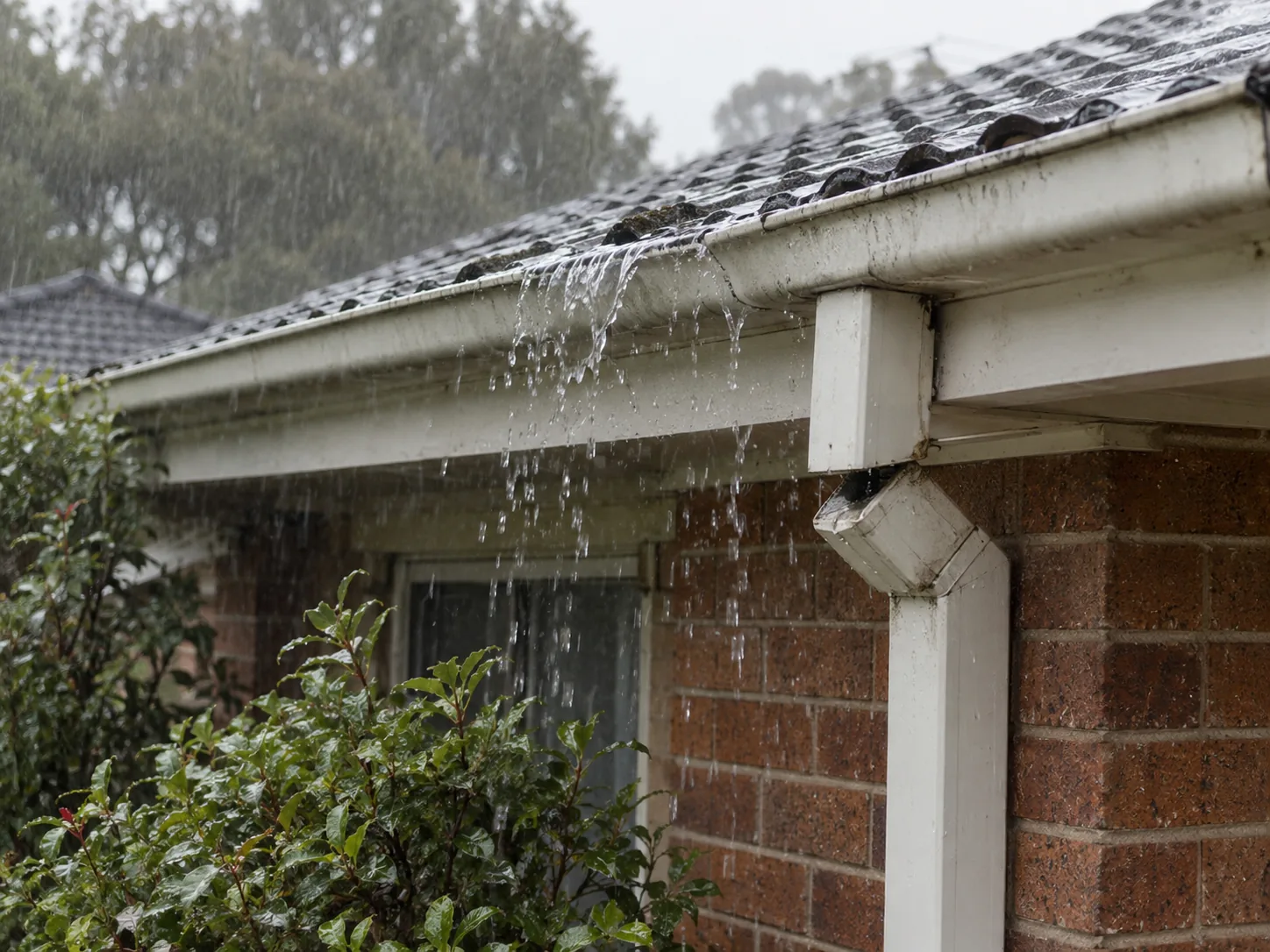
Overflow in heavy rain is a capacity or a fall problem: too few downpipes, outlets that are too small, a blocked run, or water arriving faster than a sagging gutter can move it.
 FreshDuct