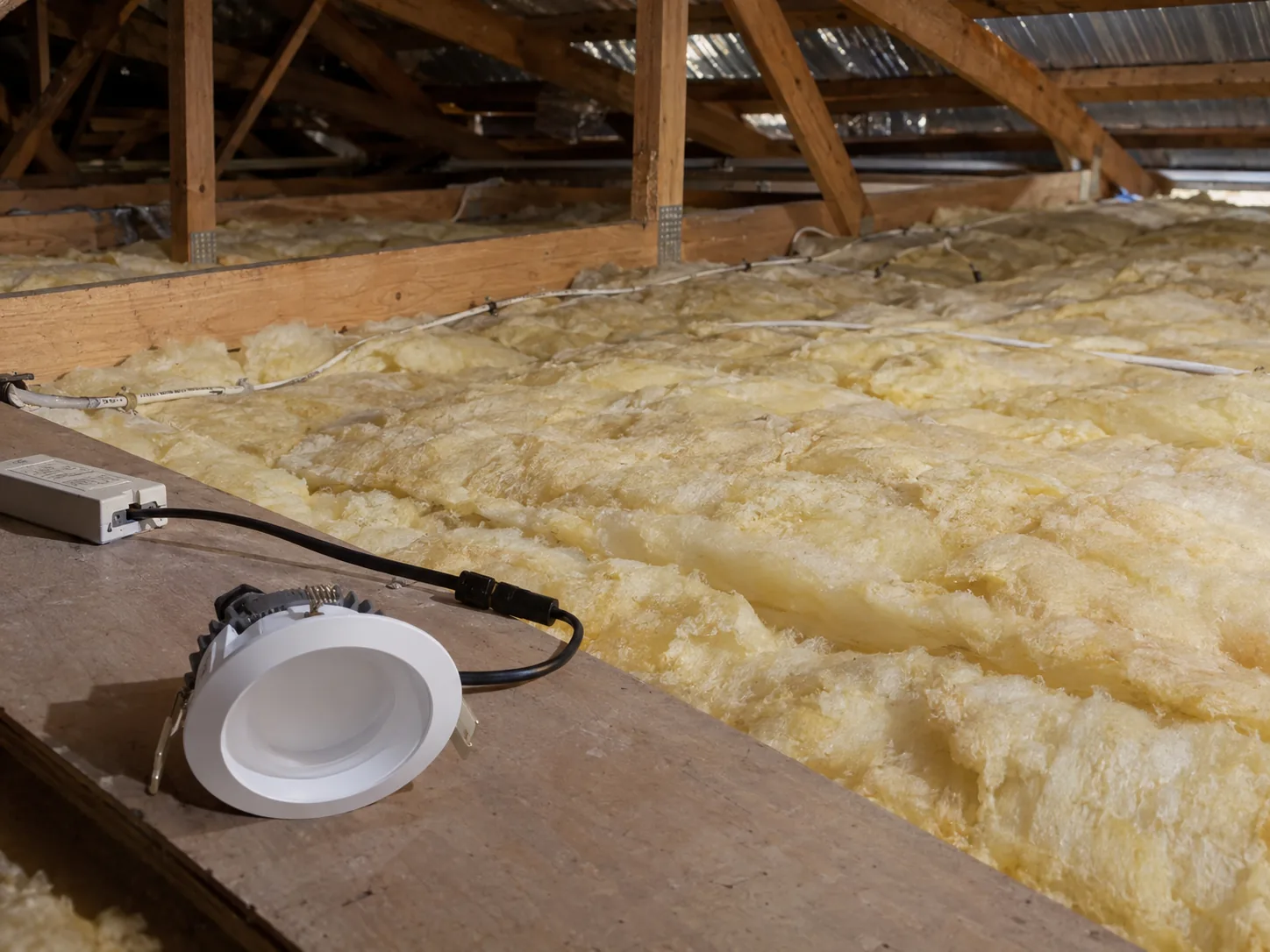
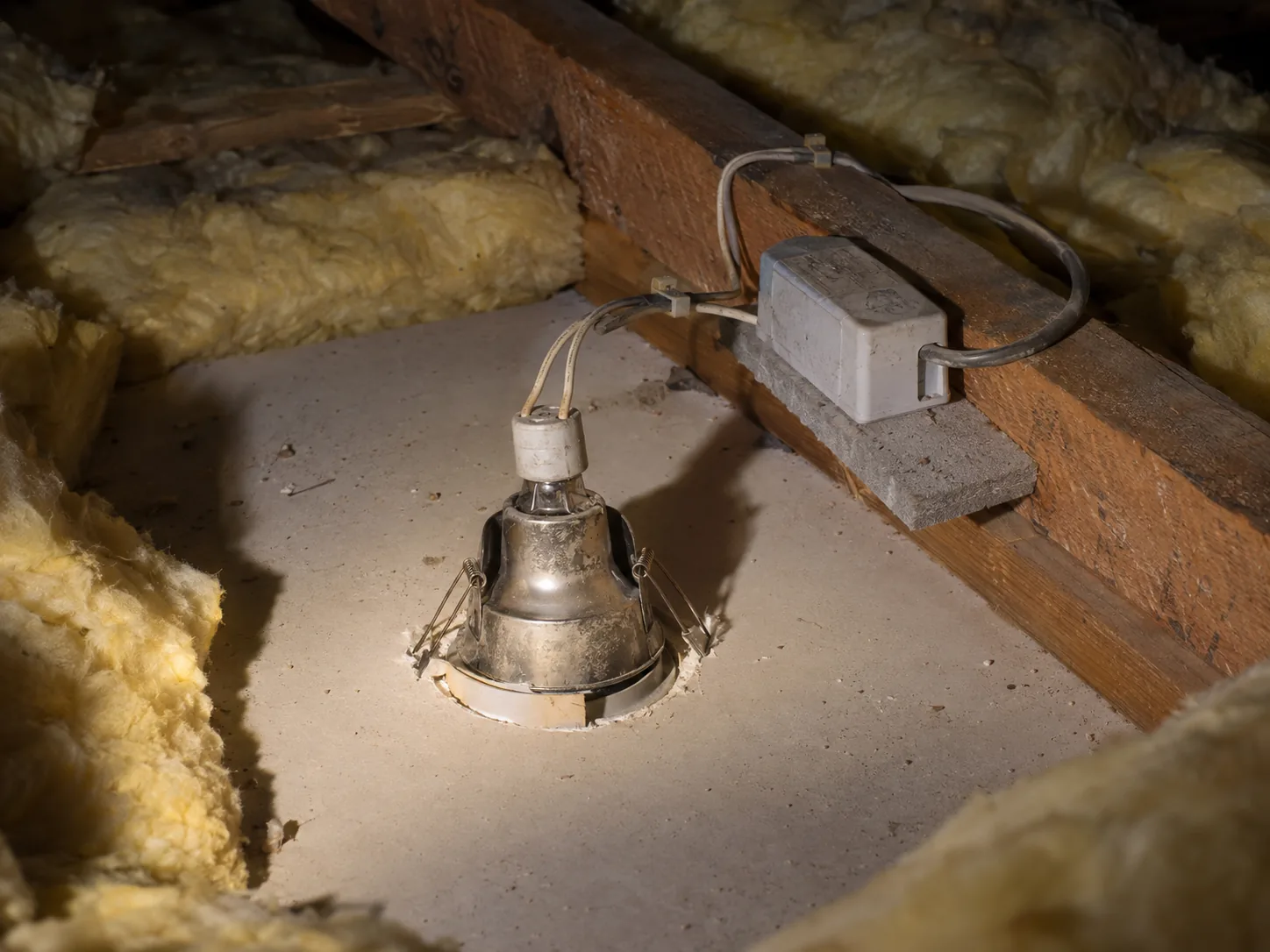
The classification is printed on the fitting itself, usually on the body or the trim ring, and sometimes only on the label inside the box. It comes from the Australian and New Zealand standard for recessed light fittings, and each mark answers one question: what can the insulation do near this light?
IC-4. Insulation may touch the sides and cover the top, and the fitting is sealed so air cannot move between the room and the roof space. It is tested with a fine probe to make sure nothing can reach a hot part. This is the fitting for any home that has, or will have, ceiling insulation.
IC. Insulation may touch and cover it, but the fitting is not sealed. Some air still moves through it, which means some of the heat you paid for still leaves through the ceiling. It qualifies as a fitting that can be covered; it is simply not as good as IC-4.
CA90 (and CA80). Insulation may abut the sides but must not cover the top. In practice that leaves a hole in the blanket above every fitting.
Non-IC. Made for commercial ceilings. Insulation must be kept clear on every side. The standard says these do not belong in a home where insulation may be installed now or in the future.
No mark at all. Treated as a fitting that cannot be covered. An insulation installer keeps the default clearance around it, and the standard says an unmarked recessed light should not be installed in the first place.
 FreshDuct