 FreshDuct
★★★★★
“Allen provided exceptional service — friendly, professional and went above and beyond.”
J
Jane
Verified FreshDuct Customer
Verified
Some people are using the FreshDuct name and pretending to be us to scam customers. Please don't fall for it. We are the only genuine FreshDuct, operating in Melbourne, Sydney, Adelaide and Perth. Only deal with us through freshduct.com.au, or call us directly on 04 3191 8137 or 0480 004 051. We are taking legal action against these impostors. Thank you.
Gas fireplaces have specific servicing and flue requirements that must be handled by licensed gas specialists. FreshDuct arranges and manages your gas fireplace service, flue and chimney work as one coordinated job.
Gas work is licensed work — we coordinate it so it’s done correctly.

Tell us about your chimney and we’ll come back fast with a clear price. 7 days a week.





Gas fireplaces and their flues come with strict safety and licensing requirements — servicing, carbon-monoxide checks and any gas work must be carried out by a licensed gas fitter. FreshDuct doesn’t claim to do gas-certified work ourselves; instead we arrange and manage it through licensed gas specialists, and handle the chimney and flue side, so it’s one coordinated job for you.
That matters because gas fireplaces have different flue requirements to wood, and a poorly vented gas appliance is a carbon-monoxide risk. We make sure the right licensed people do the gas work and that the flue and chimney are sound around it.
If you’re not sure whether you have gas or wood, or want general fireplace advice, just ask — we’ll point you the right way. See our guide to gas fireplace service.
Any new fireplace, flue or wood heater in NSW must meet the relevant Australian Standards and your local council requirements. In humid, coastal Sydney we also favour corrosion-resistant stainless components and a properly fitted cowl to cope with salt air and driving rain — the same fitting that lasts in the Hills District can corrode far faster a few streets back from the beach in the Eastern Suburbs or on the Northern Beaches.
Noticing any of these? It is worth booking an inspection.
Sydney’s short winters mean many gas fireplaces sit unused for most of the year, and the ones near the coast live with salt air on their flue caps and terminals. In apartments, the flue often vents straight through an external wall or onto a balcony. Each of those brings its own faults. Here are the common ones, explained plainly. Any gas-side repair is done by the gas specialist we arrange as part of one coordinated job, and you get a quote to approve before any work starts.
You go to use the fire on the first cool evening and nothing happens. Check the easy things first: is the gas on at the appliance isolation valve, and are the batteries in the remote and receiver fresh? Beyond that, dust or insects in the pilot assembly, a tired igniter or a gas valve fault are the usual causes — and humid air can corrode electrical contacts while the unit sits idle.
If the pilot won’t stay lit, the flame-safety sensor (a thermocouple or thermopile that proves the pilot is alight before gas is allowed to the main burner) may be worn, or the pilot flame may be too weak or dirty to heat it. In coastal suburbs the outside of the flue matters too: a rusted, split or loose terminal or cap can let gusts blow back down the flue and snuff the pilot, and can let rain in. Corroded caps and terminals are covered by our cap repair and flue repair work.
A clicking igniter with no flame means the spark is there but gas isn’t reaching the pilot or isn’t lighting. Common causes are a closed valve, a blocked pilot jet, a valve or solenoid fault, or a spark electrode that has corroded or moved out of position. Stop after a few tries rather than clicking on and on, and book a check.
Many Sydney apartments have a flued gas fire venting through an external wall or onto a balcony. When the terminal is hemmed in by balcony furniture, screens, plants or stored items, the fire can struggle to vent, which shows up as sooting, a pilot that drops out, or the unit shutting itself down. The terminal may also sit on common property, so it is worth checking with your strata manager before any work on the outside terminal is booked.
A fine white film on the glass is normal and is cleaned off at a service. Black soot is not: it means the fire isn’t burning cleanly, usually from displaced logs or coals, blocked burner ports, or a flue or terminal that isn’t venting freely. Treat sooting as a carbon monoxide warning sign and stop using the fire until it is checked.
Fan noise is usually dust and lint on the blades, a worn motor bearing or a loose panel. In humid, salty air, fan motors and their mounting screws can corrode as well. A clean often fixes it; a failed motor is quoted before anything is replaced.
Check the handset and receiver batteries first. After that, the cause can be lost pairing between the remote and receiver, a faulty wall switch or thermostat, or a failed control module — damp and corrosion on connectors are common contributors in coastal homes. The whole control chain is tested before any part is replaced.
Not sure how to light your model safely? Our guide to lighting a gas fireplace walks through the usual sequence. If you ever smell gas, don’t try to light the fire. Turn the gas off at the isolation valve if it is safe to do so, and contact your gas distributor.
You make one call to FreshDuct. We arrange the licensed gas specialist for the appliance servicing and certification, and we look after the chimney and flue around it — so you’re not chasing multiple trades.
It keeps the gas work properly licensed and the chimney work properly done, with the whole job coordinated and documented.
Licensed where it must be, managed throughout:
If you have a wood fireplace or heater instead, that’s our core work — see sweeping, repairs and installation.
Gas work by licensed specialists; chimney and flue handled by FreshDuct.
A safe, documented, end-to-end service — every job.
Visual, camera or drone inspection of the chimney and flue.
We pinpoint the real cause and explain it clearly.
Only what is needed, done properly and safely.
We confirm clearances, draw and a safe result.
Before & after photos so you see the result.
Site left clean, with honest advice.
Gas is not a do-it-yourself or unlicensed area — for good reason. A poorly serviced or badly vented gas fireplace can produce carbon monoxide, an odourless, dangerous gas, which is exactly why servicing and certification must be done by licensed gas fitters.
By managing the job — licensed specialists for the gas work, FreshDuct for the chimney and flue — you get it done correctly and safely without coordinating trades yourself. It’s the responsible way to handle a gas appliance, and it keeps the carbon-monoxide and venting side properly covered.
The cheapest quote rarely includes inspection, containment, photo proof or proper work.
| Standard | Rushed / cheap | FreshDuct |
|---|---|---|
| Inspection | Skipped or rushed | Visual, camera or drone |
| Mess control | Soot left in the room | Drop sheets + contained vacuum |
| Root cause | Symptom only | Diagnosed & explained |
| Workmanship | Patch-ups | Done properly, to standard |
| Proof | None | Before & after photo report |
Gas and wood fireplaces look similar but are worlds apart in how they must be serviced. A wood fire is our core trade — sweeping, flue work, repairs and inspection. A gas appliance is regulated work: the burner servicing, gas connections and safety certification can only legally be done by a licensed gas fitter.
Their flues differ too. Gas appliances have their own flue and venting requirements, and a gas fire that isn’t venting correctly is a carbon-monoxide hazard rather than just a smoky nuisance. That’s why the venting and certification side has to be right, and right means licensed.
Rather than pretend otherwise, FreshDuct takes the honest, safe approach: we coordinate licensed gas specialists for the gas-certified work, and we handle the chimney and flue around it. You get one point of contact and a job that’s correctly licensed where it must be.
If you’re unsure what you have, or you’re weighing up gas versus a wood heater, our guides on gas fireplace service and open versus closed-combustion heaters help — and we’re happy to advise. If you smell gas at any time, turn it off and contact your gas provider immediately.
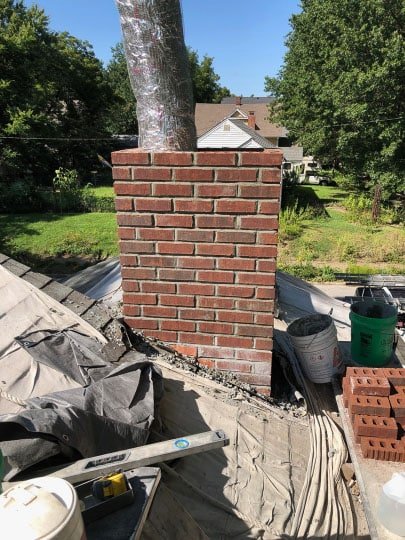
Wood heater and fireplace installation.
View service →
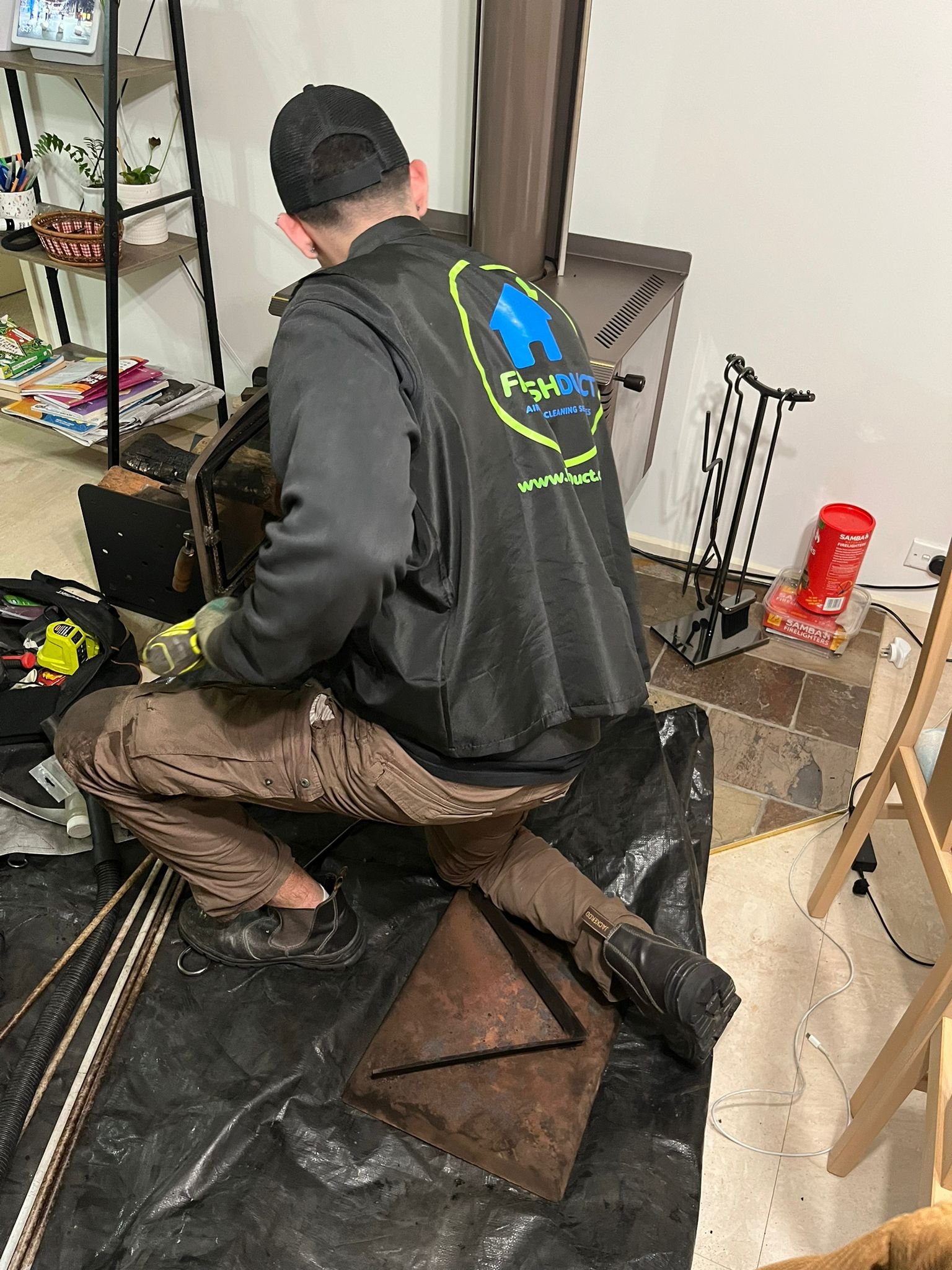
Annual sweep for open fireplaces and wood heaters.
View service →

Visual, camera & drone inspection with photos.
View service →
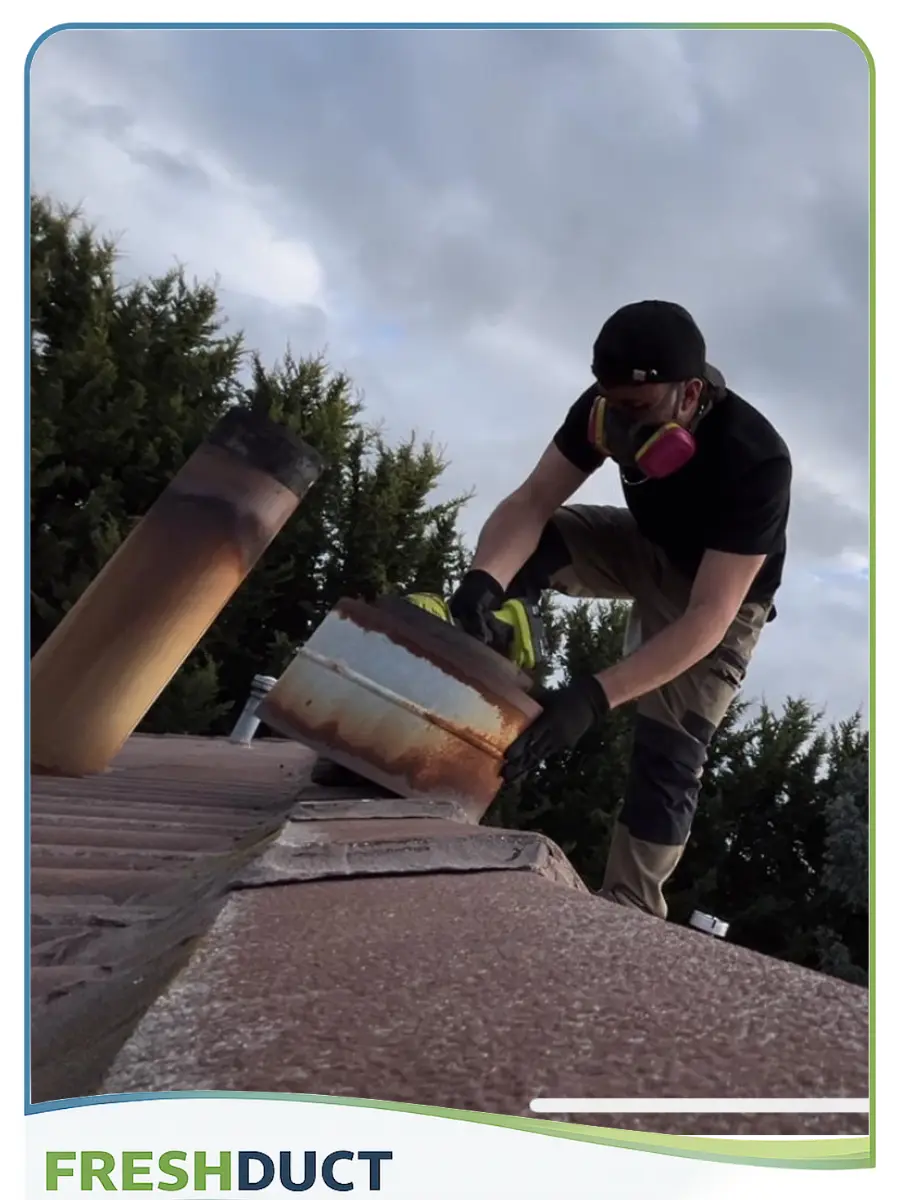
Flue, flashing, cap, brick & damper repairs.
View service →

Repair cracked or corroded flues and liners.
View service →

Keep your chimney safe and winter-ready.
View service →
Free, expert guides from the FreshDuct knowledge library.
Verified 5-star reviews from across FreshDuct’s duct, heating, cooling and chimney services.
“Allen provided exceptional service — friendly, professional and went above and beyond.”
Verified
“Highly impressed with the professionalism and efficiency. On time, and no mess left behind.”
Verified
“Exceeded my expectations. Knowledgeable, meticulous and respectful of our home.”
Verified
“So glad I chose FreshDuct. Knowledgeable team and the whole process was smooth from start to finish.”
Verified
“Quick, efficient and professional — we could immediately feel the difference.”
Verified
“Outstanding service. Professional, polite, and by far the most thorough job we’ve had — left spotless.”
Verified
“The technician arrived on time and was incredibly thorough — the difference at home is obvious.”
Verified
Yes, as one coordinated job. The gas specialist we arrange looks after the appliance, and we check the chimney and flue side, which in apartments often vents through an external wall or onto a balcony. If the terminal is on common property, check access with your strata manager first. You get a quote to approve before any work starts.
It can. Salt air corrodes flue caps and terminals, fan motors and electrical contacts. That can mean a pilot that blows out on windy days, rain getting into the flue, or controls that stop responding. If you live near the coast, ask for the outside terminal to be checked whenever the fireplace is looked at.
Stop after a few tries. Check the gas is on at the appliance isolation valve and the remote and receiver batteries are fresh. If it still won’t light, book a check — the cause is usually a blocked pilot jet, a valve fault or a corroded spark electrode. If you smell gas, turn it off at the isolation valve if it is safe to do so and contact your gas distributor.
We manage gas fireplace service: the gas-certified work is done by licensed gas specialists we coordinate, while we handle the chimney and flue — one job, correctly licensed.
Gas servicing and certification must legally be carried out by a licensed gas fitter. We don’t claim gas certification — we arrange the right licensed people and handle the chimney side.
A poorly serviced or badly vented gas fireplace can produce carbon monoxide, which is why licensed servicing and correct venting matter. See our CO safety guide.
Turn off the gas if safe to do so and contact your gas distributor straight away. Don’t use the fireplace until it’s checked.
Yes — gas appliances have specific flue and venting requirements, and correct venting is essential for safety. We handle that side.
Wood fireplaces and heaters are our core work — sweeping, repairs, flues and installation. Gas we manage via licensed specialists.
Licensed specialists for the gas work, FreshDuct managing the chimney and flue. Across Sydney.
Sydney-wide, 7 days. Send a few details and we’ll be in touch shortly.