 FreshDuct
Melbourne spring storms have a habit of finding every weak spot in a roof. A cracked tile, a slipped ridge cap, a rusted section of flashing or a gutter overflowing back under the roof line can let water into the ceiling space, and the first thing it lands on is usually the insulation. By the time you notice a damp patch or a brown stain on the ceiling below, the insulation above it has often been sitting wet for a while.
Quick answer: Insulation that was only lightly damped by a brief leak, dries out completely and keeps its original shape can sometimes stay in place once the leak is fixed. Batts that were soaked, have slumped or compressed, are stained, smell musty or show mould, and any loose-fill insulation that has clumped, should be removed and replaced, because they no longer insulate properly and can keep the ceiling damp.
The question that follows is always the same: can it be left to dry out, or does it need to come out? The honest answer depends on how wet it got, how long it stayed wet, and what kind of insulation it is.
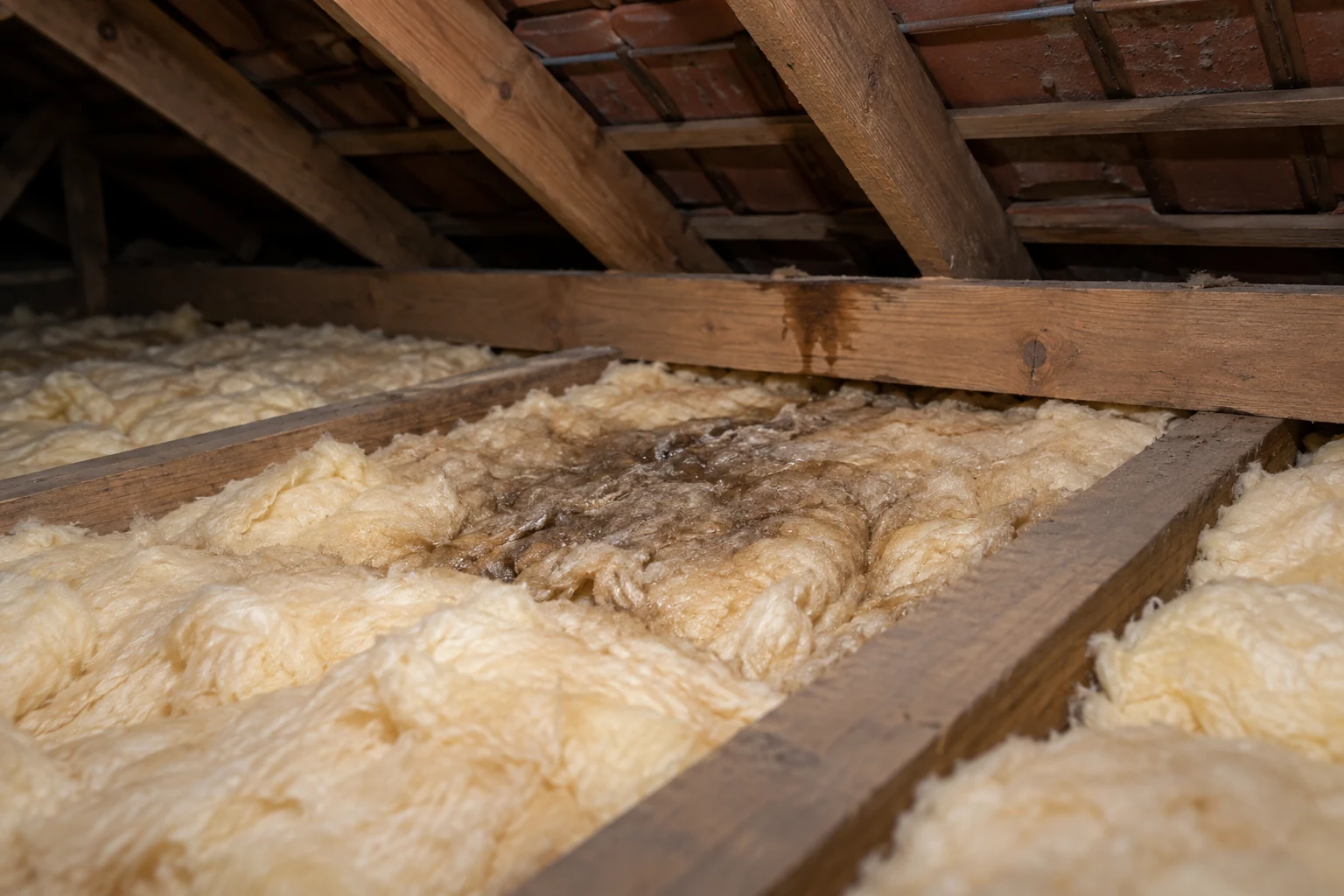
First, make the area safe
Before thinking about the insulation, deal with the hazards that come with water in a ceiling.
- Electricity. If water is coming through a light fitting, a fan or anywhere near wiring, turn off that circuit at the switchboard and leave it off until a licensed electrician has checked it.
- A sagging ceiling. Wet insulation is heavy, and plasterboard that has absorbed water loses strength. If part of the ceiling is bulging or sagging, keep people and pets out from under it and move anything valuable.
- The roof space itself. Do not go up into a wet roof space unless you are confident doing so. Step only on the ceiling joists, never on the plasterboard between them, and take a good torch.
Put a bucket under any drip and photograph everything, inside and up in the roof if it is safe to do so. Those photos are useful for your insurer and for whoever repairs the roof.
What water does to ceiling insulation
Insulation works by trapping still air in a light, lofty structure. Glasswool and polyester batts rely on their thickness and springiness; loose-fill products rely on an even, fluffy layer. Water undermines all of that. Wet fibres become heavy and settle, batts compress and lose their thickness, and loose-fill insulation tends to clump and mat down into a dense layer with gaps around it.
Once insulation has been flattened, it does not insulate the way it did when it was installed, and drying it out does not necessarily restore its shape. A wet patch also tends to hold moisture against the top of the plasterboard for days, which is how ceiling stains, sagging and mould develop. Water can also carry dust, dirt and debris from the roof into the insulation, which leaves it stained and smelling stale even after it dries.
When it may be fine to leave it
Not every damp batt has to go. Insulation may be able to stay where it is if all of these are true:
- The leak was brief and has now been properly fixed.
- The insulation was only lightly damp rather than soaked.
- It dries out completely within a short time once the leak is stopped.
- Once dry, it has kept its original thickness and shape.
- There is no staining, no musty smell and no sign of mould on the insulation, timbers or ceiling.
Lift the affected batts if you can do so safely, so air can reach both sides, and check again once they are dry. If you are not sure, have someone who works in roof spaces regularly look at it before you decide.
Allow more time than you might expect. In a Melbourne spring, a roof space can stay cool and humid for days after a storm, and insulation lying flat on plasterboard dries slowly from underneath. A batt that feels dry on top can still be damp where it touches the ceiling, which is exactly where staining and mould start.
When it should come out
In most real leaks, at least some of the insulation is better replaced. Remove and replace it if:
- It was soaked, or stayed wet for more than a short time.
- It has slumped, compressed, matted or torn.
- It is stained, smells musty or shows any mould.
- It is loose-fill and has clumped or been washed into piles.
- The plasterboard below is stained, soft or sagging.
- You cannot be confident the area has dried right through.
Replacing only the damaged section is usually possible, as long as the new insulation is matched to the old and laid without gaps. Gaps at the edges of a patch let heat through and undo part of the benefit.
It is also worth looking at the insulation beyond the obvious wet patch while the roof space is open. Older insulation that was already thin, gappy or disturbed by previous trades may be better topped up or replaced at the same time, rather than leaving a new section sitting in the middle of a layer that is underperforming.
The right order of work
Doing the jobs in the wrong order is how people end up paying twice. New insulation laid under a roof that still leaks will be ruined by the next storm, and insulation laid over damp timbers or plasterboard traps that moisture in.
Start with the roof: find and fix the cause, whether that is a tile, flashing, a valley or an overflowing gutter. Make the electrics safe and have them checked. Remove insulation that is wet or damaged. Let the ceiling and timbers dry out completely, and look closely for mould before anything goes back. Repair or replace any damaged plasterboard. Only then is it time to install new insulation, with proper clearance around downlights and other fittings that need it.
Getting it put right
If the leak has left you with stained, slumped or musty insulation, it is worth having the whole affected area looked at rather than just the visible patch. Water travels along timbers and across the top of the plasterboard, so the wet area in the roof space is often bigger than the stain on the ceiling below.
A good assessment checks how far the water spread, which insulation can stay and which should go, whether there is any mould, and what is needed so the replacement performs properly. Keep your photographs and any roofer or electrician reports together, and speak to your insurer early if you plan to claim.
Finally, keep an eye on the ceiling for a few weeks after the work is done. A stain that grows, a new damp patch or a musty smell returning after rain means water is still getting in somewhere, and it is far cheaper to find that early than after the next round of storms.
Helpful FreshDuct services & guides
Frequently asked questions
Will wet ceiling insulation dry out on its own?
Lightly damp insulation can dry out once the leak is stopped and air can move through the roof space, especially in warmer weather. The question is what condition it is in afterwards. If the batts have flattened, matted together, stained or picked up a musty smell, drying them out does not bring back their performance, and they are better replaced. Loose-fill insulation that has clumped generally does not recover either.
Is it dangerous to have wet insulation in the ceiling?
It can be. Wet insulation is heavy, and its weight on a ceiling that has also absorbed water can make plasterboard sag or, in the worst case, come down. Water near light fittings or wiring is an electrical hazard. Damp insulation can also grow mould. Stay out from under any sagging or bulging section of ceiling, turn off power at the switchboard to any circuit where water is coming through a fitting, and have an electrician check it before switching back on.
Should the roof be fixed before the insulation is replaced?
Yes, always. New insulation laid under a roof that still leaks will be damaged by the next storm. The usual order is to stop the leak, make the area electrically safe, remove insulation that is wet or damaged, let the timbers and ceiling dry out completely, check for mould, and only then install new insulation.
Will home insurance cover wet insulation after a storm?
That depends entirely on your policy and the cause of the leak, so it is a question for your insurer. What helps in every case is good records. Photograph the leak, the ceiling and the insulation before anything is removed, keep any reports from roofers or electricians, and contact your insurer early.
Get a fast, free quote
Talk to FreshDuct about attic insulation across Melbourne — 7 days a week, clear upfront pricing, 600+ 5-star reviews.