★★★★★
“Allen provided exceptional service — friendly, professional and went above and beyond.”
JVerified
Jane
Wantirna South, VIC

FreshDuct services inbuilt fireplaces and insert cassettes across Melbourne. The appliance you can see is the easy part — everything that matters is in the cavity behind it.
Insert fitted into an old fireplace? There is a void behind it nobody has looked into.
An inbuilt fireplace, insert or cassette is a closed appliance fitted into an opening rather than standing in the room. In Melbourne the overwhelming majority have been retrofitted into an existing masonry fireplace: the old open hearth was there, a modern efficient firebox went into it, a flue liner was run up inside the chimney, and a decorative fascia was fitted across the front to cover the gap.
It is an excellent upgrade and we recommend it regularly. It is also, from a maintenance perspective, an installation that hides itself. Everything that determines whether the appliance is operating safely sits behind that fascia: where the appliance flue connects to the liner, the seal at that connection, the register or closure plate across the old throat, and the annular void between the liner and the original brick shaft.
That void is worth understanding, because it is where problems accumulate literally. Mortar dropping out of an old flue, fallen debris, and material dislodged from the stack above all come down and land on the register plate. Over years it banks up. It can restrict the liner, it can bear weight on a plate that was never designed for it, and it is entirely invisible from the room.
The other consequence is a thermal one. A liner running inside a much wider masonry shaft has an insulating air gap around it, which is fine, but if the installation left that void open at the bottom and top it becomes a convective path drawing warm air out of the building. Whether it was done well or badly, nobody knows until somebody takes the fascia off and looks.
The concealed parts of the installation that determine whether it is safe.
The concealed installation, inspected properly rather than assumed.
The joint between the appliance outlet and the flue liner is the most important connection in the installation and it is completely hidden. We remove the fascia, inspect the connection and its seal, and photograph it. A leaking connection vents into the cavity rather than up the flue, which is not something you would ever notice from the room.
Material falling from the old masonry shaft above lands on the register plate and accumulates there over years. We check it, clear it, and assess whether the plate is still sound and properly sealed. On some installations we find enough accumulated debris to be a genuine concern in its own right.
The masonry shaft carrying the liner is usually the original unlined chimney, often over a century old, and it continues to deteriorate independently of the appliance. We inspect it where access allows, because it is the source of everything landing on the register plate.
The seal between the firebox and the surrounding opening stops room air being drawn into the cavity and stops anything from the cavity entering the room. It is behind the fascia, it degrades, and it is checked on essentially no routine service that does not remove the fascia.
Once access is established the appliance service is conventional: baffle out and inspected, firebricks checked, secondary air and airwash passages cleared, ash removed, door rope tested and replaced, glass and retainers checked. Straightforward, once you can actually get to it.
FreshDuct recommends an annual sweep and service including fascia removal. If a service has never included taking the fascia off, then no matter how many times the appliance has been swept, the installation behind it has never been inspected.
Real FreshDuct chimney and flue photography from Melbourne homes.

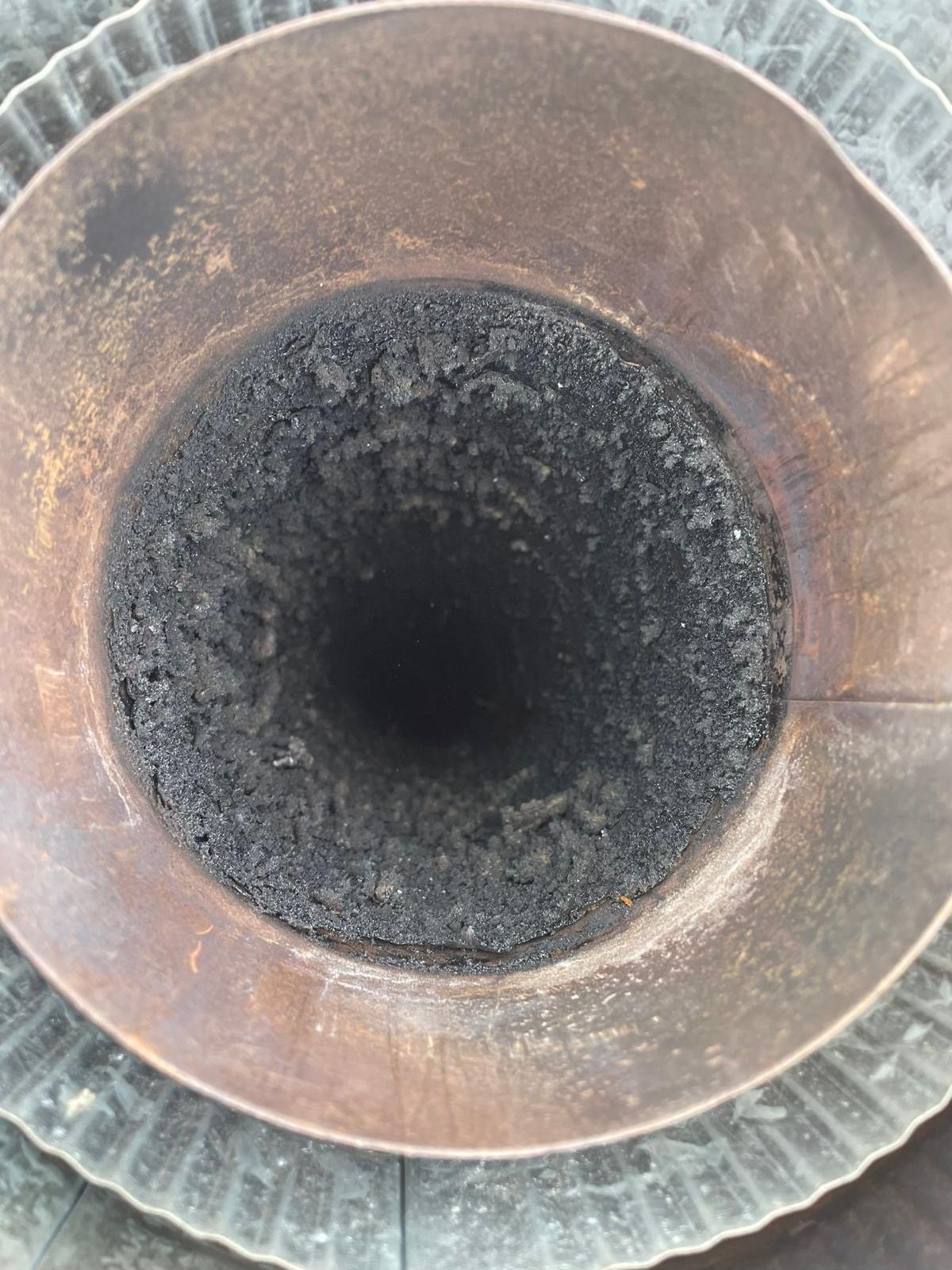
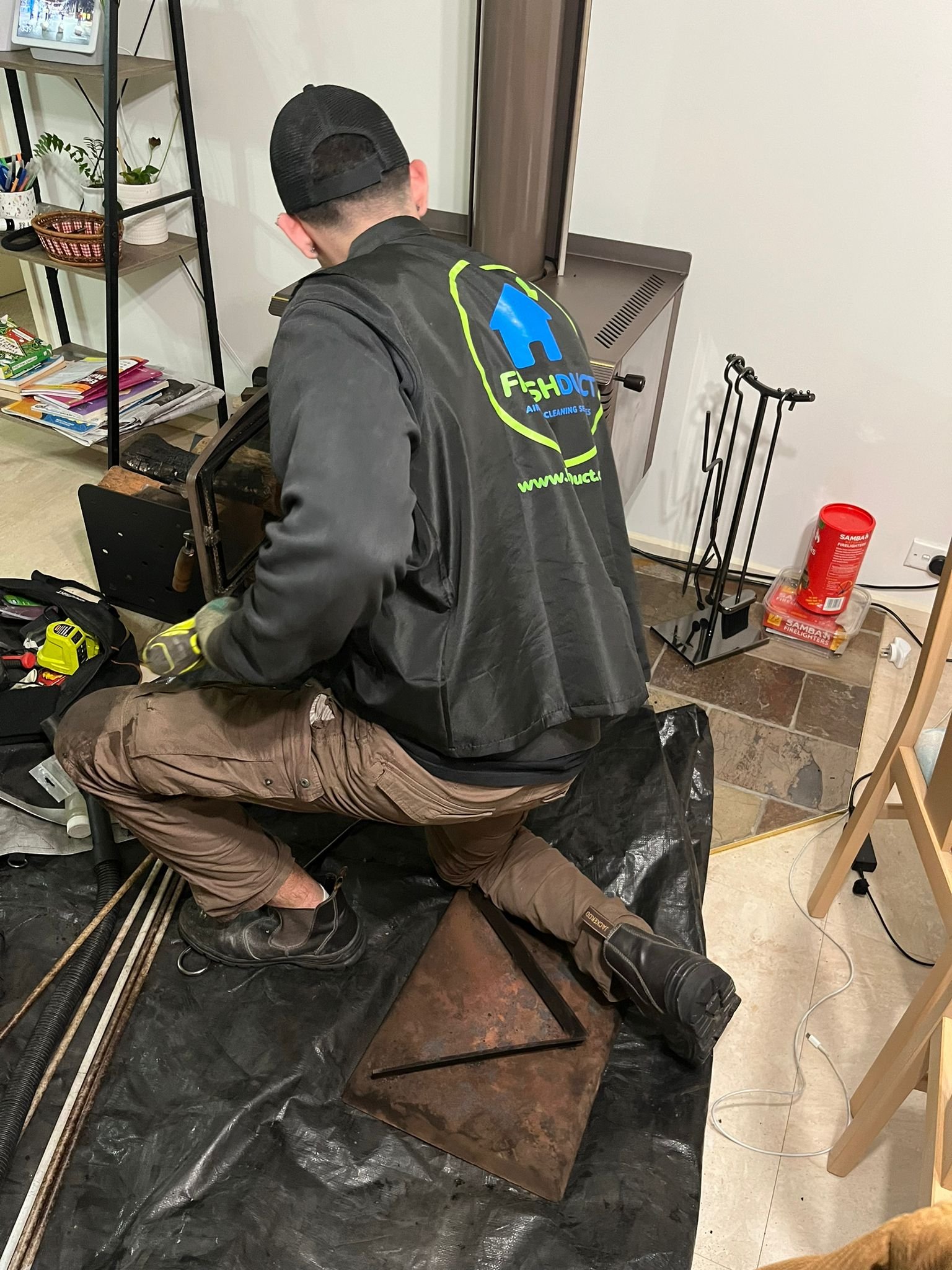
On an inbuilt fireplace we remove the fascia wherever it is removable, sweep the liner from the appliance, inspect and photograph the spigot connection, check and clear the register plate, assess the annular void and the masonry shaft above, service the firebox fully, then refit the fascia and hand over the photographs.
Where a fascia is genuinely fixed or the installation prevents access, we say so explicitly in the report rather than implying an inspection we did not do. A service report on an insert that never got behind the fascia has inspected the front of a metal box and nothing else, and it should not be presented as more than that.
Book an Inbuilt Fireplace ServiceWe service inbuilt fireplaces across Melbourne, concentrated wherever period housing meets renovation: Fitzroy, Carlton, Collingwood, Northcote, Brunswick, Kew, Hawthorn, Camberwell, Malvern, Brighton, Williamstown and Essendon, where an original open fireplace has been converted with a modern cassette.
They are also common through the eastern middle ring and out to Ringwood, Croydon, Doncaster and Eltham, sometimes in purpose-built openings rather than original masonry. Those are generally simpler installations, but the principle is identical: the important parts are behind the fascia and the only way to inspect them is to remove it.
Get behind the fascia first, then everything else follows.
Wherever removable, because nothing useful is visible without it.
Opening sealed and extraction running before the cavity is opened.
Flue liner swept from the appliance, full length.
Accumulated debris removed, plate condition and seal assessed.
Baffle, air passages, bricks, ash, door rope and glass.
Fascia refitted, with photographs of everything behind it.
Verified 5-star reviews from across FreshDuct’s chimney, fireplace, duct, heating and insulation services. These are company-wide reviews from our Melbourne customer base — not reviews of any particular appliance brand.
“Allen provided exceptional service — friendly, professional and went above and beyond.”
“Highly impressed with the professionalism and efficiency. On time, and no mess left behind.”
“Exceeded my expectations. Knowledgeable, meticulous and respectful of our home.”
“So glad I chose FreshDuct. Knowledgeable team and the whole process was smooth from start to finish.”
“Quick, efficient and professional — we could immediately feel the difference.”
“The technician arrived on time and was incredibly thorough — the difference at home is obvious.”
What retrofitted insert installations most often need.
Because everything that determines whether the installation is safe is behind it: the flue connection, its seal, the register plate and the void around the liner. A sweep that leaves the fascia in place cleans the flue and inspects nothing. If it has never come off, that installation has never actually been inspected.
It is the plate fitted across the old fireplace throat to seal the opening around the appliance flue when an insert is installed. It should be sealed, sound and accessible. In practice it also collects everything that falls out of the old chimney above, which is why it needs checking and clearing.
For heating, substantially. A closed appliance burns fuel at a controlled rate and delivers a large share of that heat into the room, where an open fire sends most of it and a great deal of warm room air up the chimney. The trade-off is that a closed appliance produces creosote in a way an open fire largely does not.
Yes. Material falling from an old masonry shaft accumulates on the register plate over years. It can bear weight on a plate never designed to carry it, it can restrict the liner, and in sufficient quantity it becomes a real concern. It is also completely invisible from the room, which is why it is usually found late.
FreshDuct recommends annually before the season, with the fascia removed as part of it. The appliance itself may not need much on a lightly used installation, but the concealed parts of the system continue to accumulate debris and deteriorate whether the fire is lit or not.
Fascia removed, liner swept, register plate cleared and the concealed installation photographed properly.
Tell us if it was retrofitted into an existing masonry fireplace.