 FreshDuct
★★★★★
“Allen provided exceptional service — friendly, professional and went above and beyond.”
J
Jane
Verified FreshDuct Customer
Verified
Some people are using the FreshDuct name and pretending to be us to scam customers. Please don't fall for it. We are the only genuine FreshDuct, operating in Melbourne, Sydney, Adelaide and Perth. Only deal with us through freshduct.com.au, or call us directly on 04 3191 8137 or 0480 004 051. We are taking legal action against these impostors. Thank you.
A cracked, corroded or unlined flue is a smoke, leak and carbon-monoxide risk. FreshDuct repairs damaged flues and installs new liners so your chimney vents safely and draws properly.
Unlined or old flue? An inspection tells you what it needs.

Tell us about your chimney and we’ll come back fast with a clear price. 7 days a week.





The flue is the lining that carries smoke and combustion gases safely up and out. Over decades it can crack, corrode, or — in many older Sydney chimneys — never have been lined at all. A compromised flue can let heat reach nearby timber and allow carbon monoxide to seep into the home, which is why it’s treated as a safety repair.
Depending on the condition, the fix is either a targeted repair or a new liner. Our guide on relining — when and what it costs explains the options, and we’ll recommend the right one after a camera inspection.
A relined flue doesn’t just make the chimney safe — it usually improves the draught too, so the fire lights and burns better.
Sydney’s coastal, humid climate is hard on masonry chimneys. Salt-laden air across the Eastern Suburbs, Northern Beaches and Sutherland Shire accelerates rust in caps, flashing and steel components, while heavy NSW downpours and high humidity work into cracked crowns and open mortar joints. That is why weatherproofing and prompt repair matter more here than in drier inland cities — small faults let water in and spread quickly.
Noticing any of these? It is worth booking an inspection.
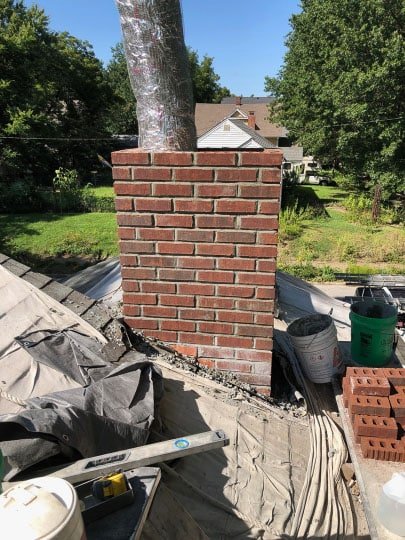
We inspect the flue with a camera so the recommendation is based on its actual condition, not guesswork. Minor damage may be repairable; a cracked, corroded or unlined flue is usually best resolved with a new liner sized to your appliance.
Where you’re installing or upgrading a wood heater, a correctly sized liner is often part of doing the job properly — we’ll explain what your setup needs.
Getting the chimney’s safety core right:
If the chimney structure itself is failing around the flue, that points to brick or masonry repair as well — we’ll cover that in the same assessment.
Cracks and corrosion compromise venting — a new liner restores it.
A safe, documented, end-to-end service — every job.
Visual, camera or drone inspection of the chimney and flue.
We pinpoint the real cause and explain it clearly.
Only what is needed, done properly and safely.
We confirm clearances, draw and a safe result.
Before & after photos so you see the result.
Site left clean, with honest advice.
A flue does two safety jobs: it keeps the intense heat of the fire away from the surrounding structure, and it carries combustion gases — including carbon monoxide — safely outside. A crack or gap undermines both.
That’s why an unlined or damaged flue isn’t just an efficiency issue; it’s a genuine safety one, especially with closed wood heaters that run hot for long periods. An inspection removes the uncertainty.
A sound, correctly sized liner also improves draught, so you get a fireplace that’s both safer and nicer to use — see how liners and their lifespan work.
The cheapest quote rarely includes inspection, containment, photo proof or proper work.
| Standard | Rushed / cheap | FreshDuct |
|---|---|---|
| Inspection | Skipped or rushed | Visual, camera or drone |
| Mess control | Soot left in the room | Drop sheets + contained vacuum |
| Root cause | Symptom only | Diagnosed & explained |
| Workmanship | Patch-ups | Done properly, to standard |
| Proof | None | Before & after photo report |
Not every flue fault needs a full reline. Minor surface damage or a localised crack can sometimes be repaired in place. But a flue that’s cracked along its length, badly corroded, or unlined altogether is usually best resolved with a new liner sized to the appliance.
Liner choice depends on the setup. Flexible stainless-steel liners suit most wood-heater and open-fire conversions and follow bends in the chimney; rigid liners suit straight runs; and the diameter must match the appliance so the draught is right. Our guide on liner types and lifespan goes deeper.
Relining is also commonly part of installing or upgrading a wood heater — a correctly sized liner is what makes the new appliance vent safely and draw well, rather than smoking or running inefficiently.
Because the flue is the chimney’s safety core — containing heat and carrying carbon monoxide outside — we base the recommendation on a camera inspection, not guesswork, and explain exactly why repair or relining is the right call for your chimney.
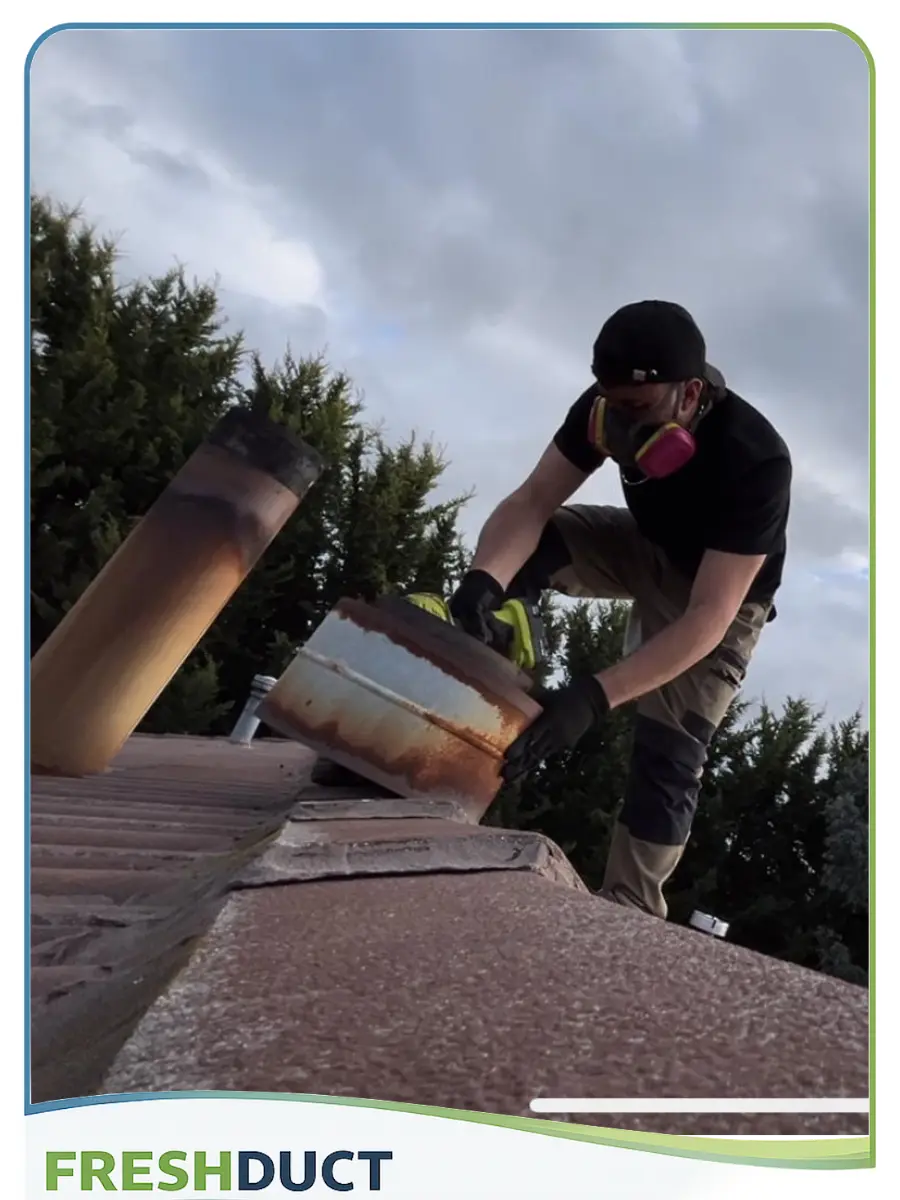
Flue, flashing, cap, brick & damper repairs.
View service →
Stop leaks where the chimney meets the roof.
View service →

Restore failing mortar joints.
View service →
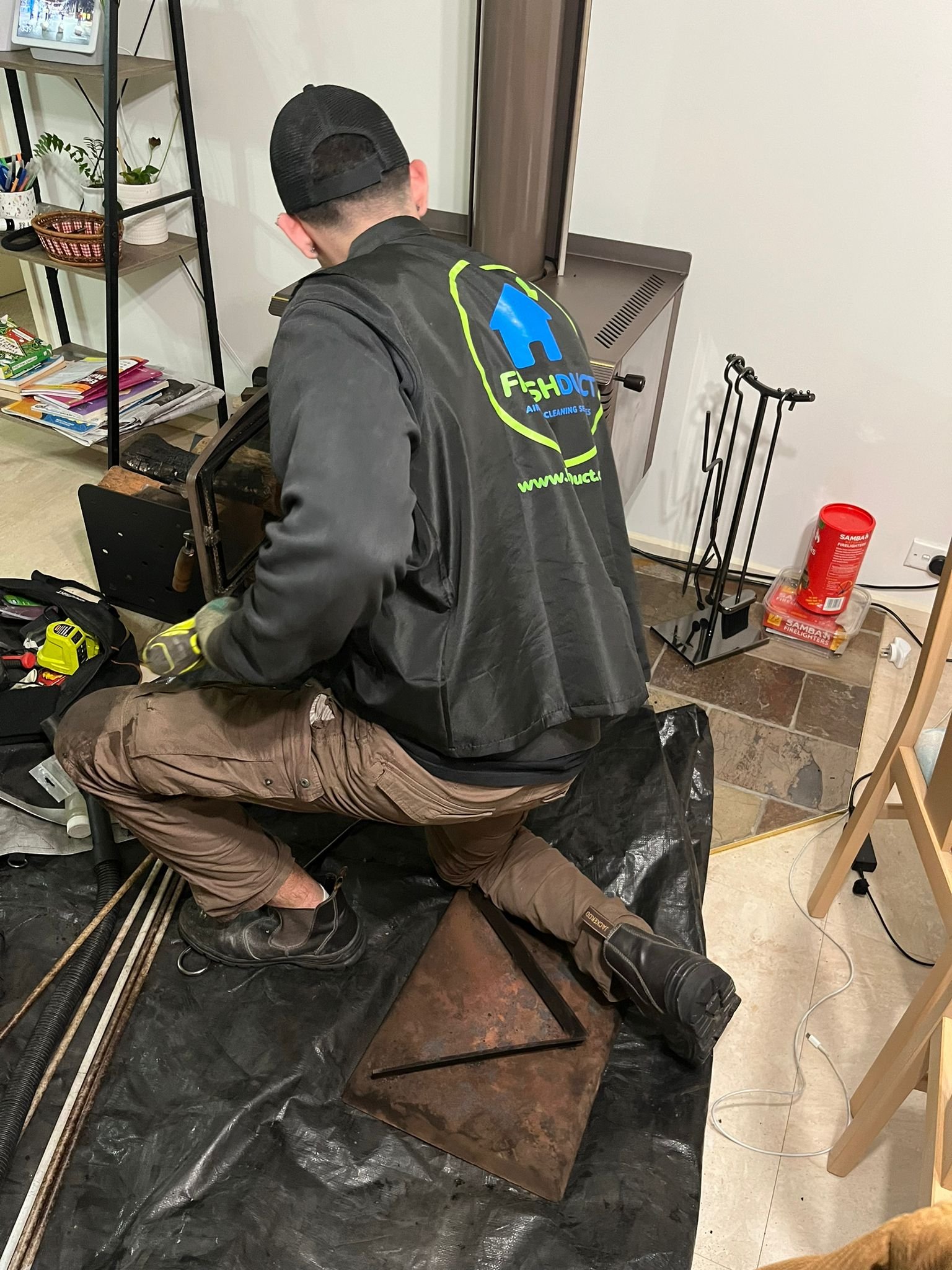
Annual sweep for open fireplaces and wood heaters.
View service →

Visual, camera & drone inspection with photos.
View service →
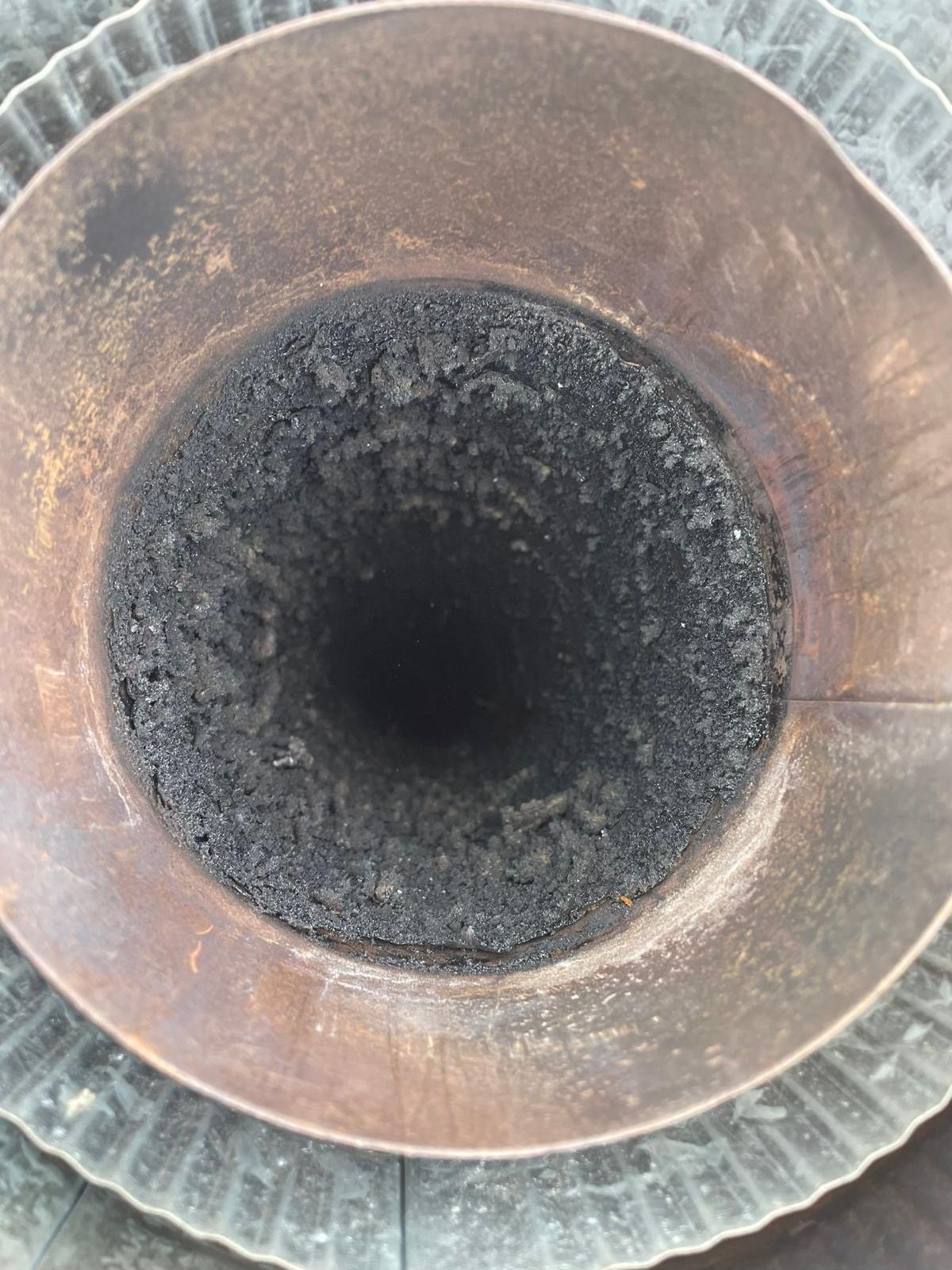
For heavy or glazed creosote build-up.
View service →
Free, expert guides from the FreshDuct knowledge library.
Verified 5-star reviews from across FreshDuct’s duct, heating, cooling and chimney services.
“Allen provided exceptional service — friendly, professional and went above and beyond.”
Verified
“Highly impressed with the professionalism and efficiency. On time, and no mess left behind.”
Verified
“Exceeded my expectations. Knowledgeable, meticulous and respectful of our home.”
Verified
“So glad I chose FreshDuct. Knowledgeable team and the whole process was smooth from start to finish.”
Verified
“Quick, efficient and professional — we could immediately feel the difference.”
Verified
“Outstanding service. Professional, polite, and by far the most thorough job we’ve had — left spotless.”
Verified
“The technician arrived on time and was incredibly thorough — the difference at home is obvious.”
Verified
Older chimneys were sometimes built without a liner. That can allow heat and gases to reach the structure and home, so an inspection and, often, a new liner is recommended.
A camera inspection is the reliable way. Signs include smoke or odour seeping in, white staining, or pieces of liner in the firebox.
Installing a new liner inside the flue to restore safe venting and improve draught. Our guide explains when it’s needed and the costs.
It can be — a cracked or unlined flue can let heat reach timber and carbon monoxide enter the home, so it’s treated as a safety repair.
Often yes — a correctly sized liner is usually part of installing a wood heater properly. We’ll advise based on your appliance and chimney.
It depends on the flue length, access and liner type, and is quoted after a camera inspection. Call 04 3191 8137.
Usually yes — a sound, correctly sized liner improves draught, so the fire lights and burns better as well as venting safely.
Restore safe venting and better draught, confirmed by camera. 7 days across Sydney.
Sydney-wide, 7 days. Send a few details and we’ll be in touch shortly.
A cracked, corroded or unlined flue is a smoke, leak and carbon-monoxide risk. FreshDuct repairs damaged flues and installs new liners so your chimney vents safely and draws properly.
Unlined or old flue? An inspection tells you what it needs.
Tell us a little about the job and we’ll reply with your quote — usually within minutes.

The flue is the lining that carries smoke and combustion gases safely up and out. Over decades it can crack, corrode, or — in many older Melbourne chimneys — never have been lined at all. A compromised flue can let heat reach nearby timber and allow carbon monoxide to seep into the home, which is why it’s treated as a safety repair.
Depending on the condition, the fix is either a targeted repair or a new liner. Our guide on relining — when and what it costs explains the options, and we’ll recommend the right one after a camera inspection.
A relined flue doesn’t just make the chimney safe — it usually improves the draught too, so the fire lights and burns better.
Noticing any of these? It is worth booking an inspection.
We inspect the flue with a camera so the recommendation is based on its actual condition, not guesswork. Minor damage may be repairable; a cracked, corroded or unlined flue is usually best resolved with a new liner sized to your appliance.
Where you’re installing or upgrading a wood heater, a correctly sized liner is often part of doing the job properly — we’ll explain what your setup needs.
Getting the chimney’s safety core right:
If the chimney structure itself is failing around the flue, that points to brick or masonry repair as well — we’ll cover that in the same assessment.
Cracks and corrosion compromise venting — a new liner restores it.
A safe, documented, end-to-end service — every job.
Visual, camera or drone inspection of the chimney and flue.
We pinpoint the real cause and explain it clearly.
Only what is needed, done properly and safely.
We confirm clearances, draw and a safe result.
Before & after photos so you see the result.
Site left clean, with honest advice.
A flue does two safety jobs: it keeps the intense heat of the fire away from the surrounding structure, and it carries combustion gases — including carbon monoxide — safely outside. A crack or gap undermines both.
That’s why an unlined or damaged flue isn’t just an efficiency issue; it’s a genuine safety one, especially with closed wood heaters that run hot for long periods. An inspection removes the uncertainty.
A sound, correctly sized liner also improves draught, so you get a fireplace that’s both safer and nicer to use — see how liners and their lifespan work.
The cheapest quote rarely includes inspection, containment, photo proof or proper work.
| Standard | Rushed / cheap | FreshDuct |
|---|---|---|
| Inspection | Skipped or rushed | Visual, camera or drone |
| Mess control | Soot left in the room | Drop sheets + contained vacuum |
| Root cause | Symptom only | Diagnosed & explained |
| Workmanship | Patch-ups | Done properly, to standard |
| Proof | None | Before & after photo report |
Not every flue fault needs a full reline. Minor surface damage or a localised crack can sometimes be repaired in place. But a flue that’s cracked along its length, badly corroded, or unlined altogether is usually best resolved with a new liner sized to the appliance.
Liner choice depends on the setup. Flexible stainless-steel liners suit most wood-heater and open-fire conversions and follow bends in the chimney; rigid liners suit straight runs; and the diameter must match the appliance so the draught is right. Our guide on liner types and lifespan goes deeper.
Relining is also commonly part of installing or upgrading a wood heater — a correctly sized liner is what makes the new appliance vent safely and draw well, rather than smoking or running inefficiently.
Because the flue is the chimney’s safety core — containing heat and carrying carbon monoxide outside — we base the recommendation on a camera inspection, not guesswork, and explain exactly why repair or relining is the right call for your chimney.
Flue, flashing, cap, brick & damper repairs.
View service →
Stop leaks where the chimney meets the roof.
View service →
Restore failing mortar joints.
View service →
Annual sweep for open fireplaces and wood heaters.
View service →
Visual, camera & drone inspection with photos.
View service →
For heavy or glazed creosote build-up.
View service →
Free, expert guides from the FreshDuct knowledge library.
Verified 5-star reviews from across FreshDuct’s duct, heating, cooling and chimney services.
“Allen provided exceptional service — friendly, professional and went above and beyond.”
Verified
“Highly impressed with the professionalism and efficiency. On time, and no mess left behind.”
Verified
“Exceeded my expectations. Knowledgeable, meticulous and respectful of our home.”
Verified
“So glad I chose FreshDuct. Knowledgeable team and the whole process was smooth from start to finish.”
Verified
“Quick, efficient and professional — we could immediately feel the difference.”
Verified
“Outstanding service. Professional, polite, and by far the most thorough job we’ve had — left spotless.”
Verified
“The technician arrived on time and was incredibly thorough — the difference at home is obvious.”
Verified
Older chimneys were sometimes built without a liner. That can allow heat and gases to reach the structure and home, so an inspection and, often, a new liner is recommended.
A camera inspection is the reliable way. Signs include smoke or odour seeping in, white staining, or pieces of liner in the firebox.
Installing a new liner inside the flue to restore safe venting and improve draught. Our guide explains when it’s needed and the costs.
It can be — a cracked or unlined flue can let heat reach timber and carbon monoxide enter the home, so it’s treated as a safety repair.
Often yes — a correctly sized liner is usually part of installing a wood heater properly. We’ll advise based on your appliance and chimney.
It depends on the flue length, access and liner type, and is quoted after a camera inspection. Call 04 3191 8137.
Usually yes — a sound, correctly sized liner improves draught, so the fire lights and burns better as well as venting safely.
Restore safe venting and better draught, confirmed by camera. 7 days across Melbourne.
Tell us about your chimney — we respond fast, 7 days a week.
Cracks, blockages and deteriorated liners all compromise a flue’s safety. The repair options for a damaged Melbourne flue, when a fireplace cannot be used safely, and what repairs cost.
The flue is the working heart of a chimney — the channel that carries heat and combustion gases safely up and out, keeping them away from the structure of your home. When it is damaged, that protection fails, and a damaged flue is not a cosmetic problem but a safety one. Cracks, blockages and deteriorated liners each compromise the flue in their own way, and each has its own repair.
This guide covers the common flue problems, the repair options from a targeted fix to a full reline, the point at which a flue is unsafe to use at all, and what repairs involve and cost in Melbourne. The constant theme is that a flue fault is a reason to stop and assess, not to keep burning and hope. A camera inspection, as described in Level 2 chimney inspection, is what reveals the true extent of any flue damage.
Most flue repairs address one of four problems, and a camera inspection identifies which you are dealing with.
Cracks. The flue endures constant stress from heating and cooling, and cracks develop from that thermal cycling, from movement in the structure, or from the intense heat of a chimney fire. A crack breaches the flue’s ability to contain heat and gases. Blockages. Heavy creosote, fallen debris, animal nests or collapsed masonry can obstruct the flue, stopping it drawing and creating both a smoke and a fire risk. Deteriorated liner. Liners age and break down over time, attacked by the acidic by-products of combustion, eventually cracking or crumbling.
Failed joints. Where a flue is made up of sections, the joints between them can open up over time, creating gaps that let gases escape. Each of these defeats the flue’s core job of safely containing the fire’s heat and exhaust, and each is a legitimate reason for repair. The role and lifespan of the liner that several of these problems affect is covered in chimney liners, types and lifespan.
The right repair depends on the fault and its extent. The main options run from the simple to the comprehensive.
A blockage can be cleared by professional sweeping and removal. A minor, localised crack can sometimes be sealed or patched, restoring the flue’s integrity without replacing the whole liner. These are the lower-cost repairs, appropriate when the damage is contained.
When the liner is cracked along its length, badly deteriorated, missing, or damaged by a chimney fire, relining is the remedy — a new correctly sized stainless steel liner run down the chimney to give a continuous, sound inner surface. The full detail is in chimney relining: when and what it costs.
Failed joints between flue sections and damaged surrounding masonry — crown, cap and brickwork — are repaired as part of restoring a sound flue, often alongside the flue work itself.
The distinction between a repair and a reline matters: a contained fault may be fixed in place, while widespread liner failure calls for a full reline. A camera inspection is what tells the two apart, which is why any flue repair should start with one rather than a guess.
Some flue faults mean the fireplace should not be used at all until it is repaired. The clearest case is a cracked or breached flue. The flue’s whole purpose is to contain heat and gases; a crack lets heat reach combustible timber framing, creating a fire risk, and lets carbon monoxide — an odourless, colourless, potentially fatal gas — seep into the living space. A breached flue creates both of the two most serious chimney hazards at once.
A significant blockage is the other clear case. A flue that cannot draw properly because it is obstructed will push smoke and combustion gases back into the room, and the obstruction itself — particularly a creosote or nest blockage — is a fire hazard. Using a blocked flue is both immediately unpleasant and genuinely dangerous.
Flue repair costs vary widely with the type and extent of the problem. A minor repair — clearing a blockage or sealing a small, localised defect — sits at the lower end. A full reline with a stainless steel liner typically runs around $1,500 to $4,000, depending on the chimney’s height, access and the liner required, and crown, cap or masonry repairs that often accompany flue work add to the total. Because the right repair depends entirely on what the camera inspection reveals, an accurate price needs an on-site assessment — flue repair sits within the broader picture of common chimney repairs and costs.
The process is logical: a camera inspection first establishes the fault and its extent, the appropriate repair is recommended and quoted, the work is carried out by qualified professionals, and a follow-up confirms the flue is sound and safe to use again. The order matters — diagnosis before repair — because a flue that looks like it needs a simple seal may, on inspection, turn out to need relining, or vice versa.