 FreshDuct
★★★★★
“Allen provided exceptional service — friendly, professional and went above and beyond.”
JVerified
Jane
Wantirna South, VIC
Some people are using the FreshDuct name and pretending to be us to scam customers. Please don't fall for it. We are the only genuine FreshDuct, operating in Melbourne, Sydney, Adelaide and Perth. Only deal with us through freshduct.com.au, or call us directly on 04 3191 8137 or 0480 004 051. We are taking legal action against these impostors. Thank you.
FreshDuct cleans slow combustion wood heaters across Melbourne, including flues where long shut-down burning has laid down hard glazed creosote that a sweeping brush cannot touch.
Shiny black tar in the flue rather than loose soot? That is glaze, and it needs different tooling.
A slow combustion heater is a sealed firebox with controllable air, and it is dramatically more efficient than an open fire because it burns fuel at a rate you choose rather than a rate the chimney dictates. That control is the entire value proposition, and it is also the source of the one problem these appliances reliably create.
When you close the air down, combustion becomes incomplete. Wood does not simply burn slower; it releases volatile gases that no longer have enough oxygen or temperature to burn, and those gases go up the flue unburnt. The flue is also running cooler, because you have reduced the fire. Unburnt volatiles meeting a cool flue wall condense onto it as tar, and that is creosote.
Creosote comes in stages and the stage matters enormously to how it is removed. Early creosote is a light, flaky, sooty deposit that a brush removes easily. Continued slow burning builds it into a thicker, tarry layer. Repeated heating and cooling then bakes that layer into a hard, shiny, bonded glaze that a brush slides straight over. Glaze is the deposit most associated with flue fires, and it needs rotary tooling rather than brushes.
This is why we ask how you burn before quoting, and why we look at the deposit before choosing a method. Someone who burns hot fires and lets them go out has a flue that a standard sweep handles perfectly. Someone who packs it out and shuts it down every night through a Melbourne winter may well have glaze, and quoting them a standard sweep would be quoting them a job that does not fix their problem.
The mechanism behind creosote, and why the stage determines the method.
Reading the deposit first, then doing the job it actually requires.
Before we choose a method we look at what is on the flue wall. Flaky and sooty means a standard sweep. Tarry and thick means a heavier clean. Hard, shiny and bonded means glaze and rotary tooling. We photograph it and show you, because the price difference between those jobs is real and you should be able to see why.
Glaze is bonded to the flue wall and must be cut off rather than brushed. That takes specific rotary equipment, considerably more time, and it is quoted separately from a standard sweep. We do not brush glaze and declare a flue clean, because that leaves the most flue-fire-prone deposit exactly where it was.
Modern slow combustion heaters burn their own smoke using preheated secondary air above the fuel bed. Those passages block with ash, at which point the appliance stops burning cleanly and the flue starts loading faster. Removing the baffle and clearing those passages is part of every service we do.
The whole appliance depends on being genuinely airtight, because that is what makes the air control mean anything. A hardened rope seal or a door that no longer closes true lets in uncontrolled air, and the heater becomes unpredictable and much harder to run cleanly. We test the seal all the way round.
Unseasoned wood is the fastest way to fill a flue. Energy that should be making heat goes into boiling off water, the firebox runs cooler, combustion stays incomplete and deposit accelerates. We will tell you honestly what your deposit suggests about your fuel.
FreshDuct recommends an annual sweep before the season as a baseline. For a household that loads up and shuts down overnight through the whole winter, we often recommend a mid-season check as well — based on what came out of your flue, with photographs, not as a standing upsell.
Real FreshDuct flue photography from Melbourne jobs, documented before and after.
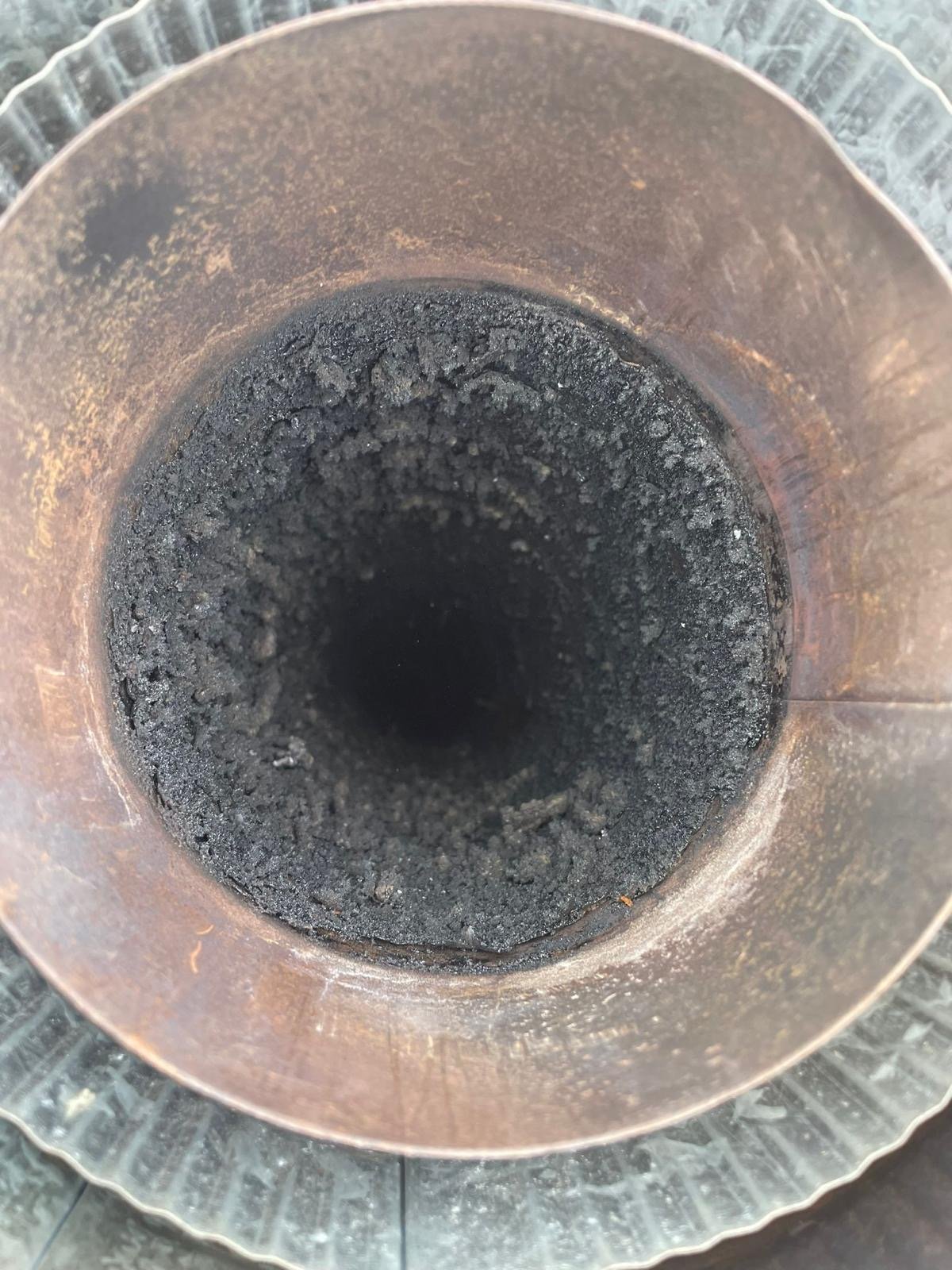
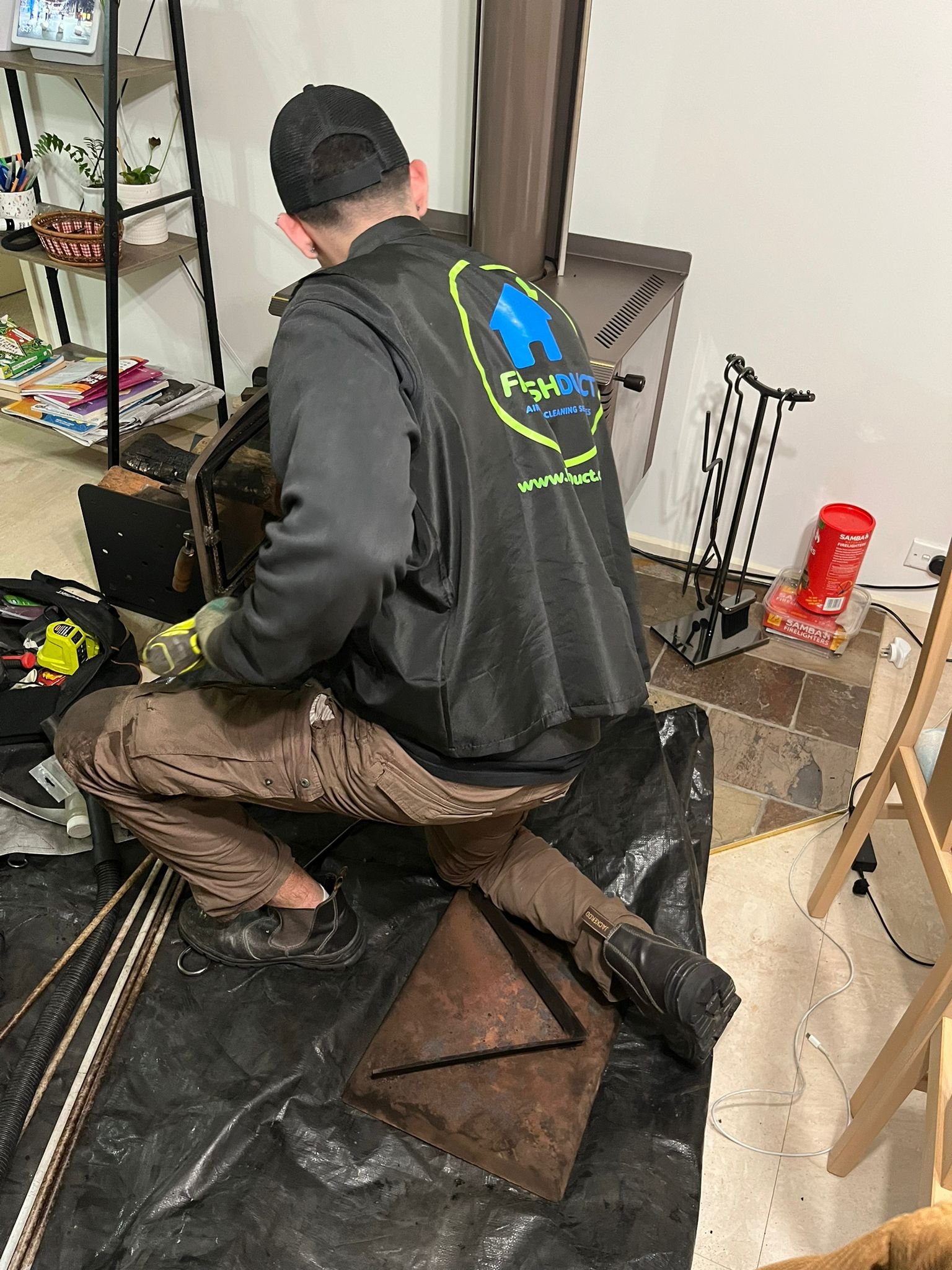
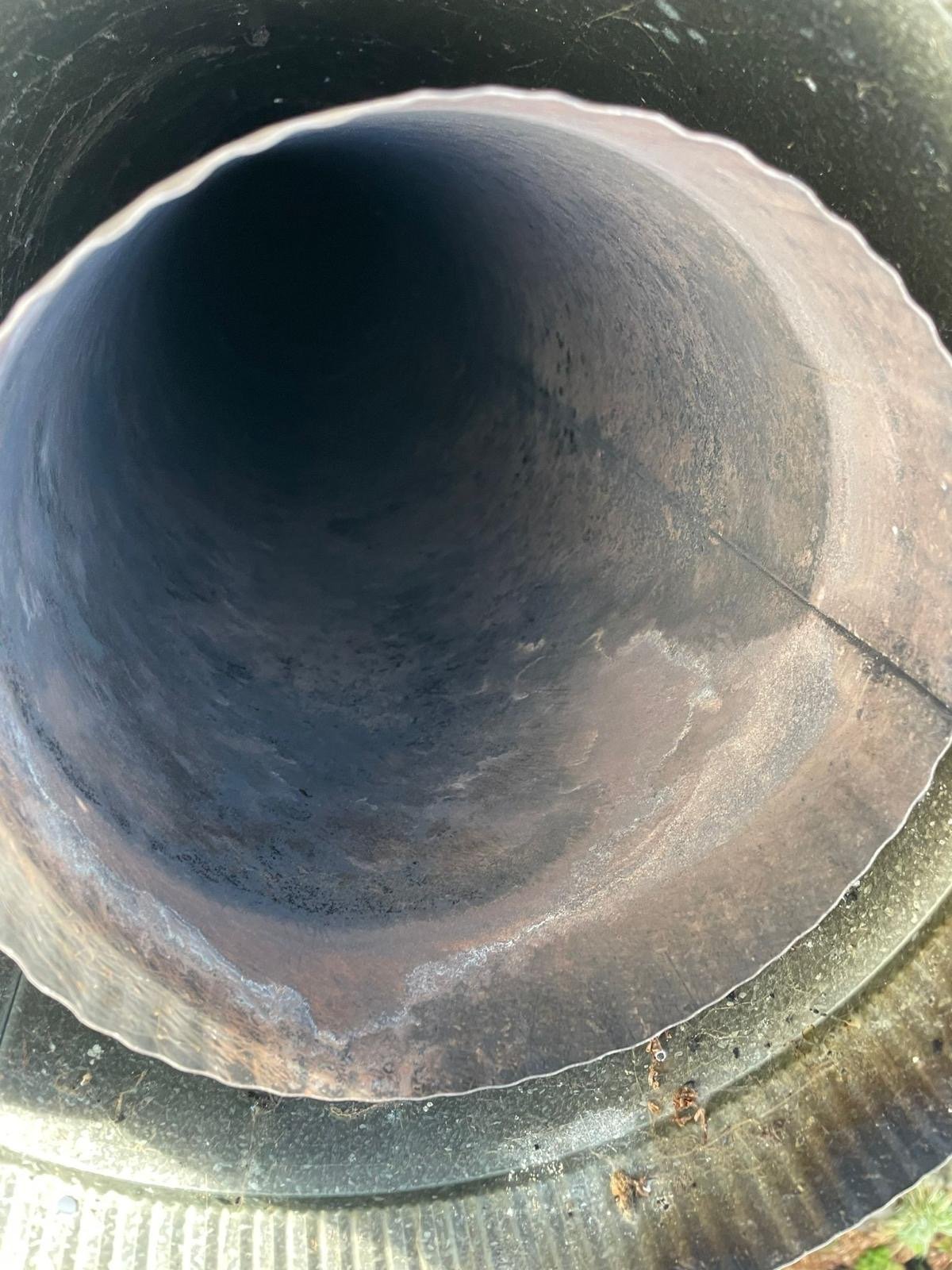
We inspect the flue before quoting the clean. A standard sweep uses brushes to remove loose and lightly adhered soot and is the correct, cost-effective answer for most flues. A deep clean uses rotary tooling to cut hardened glaze off the flue wall, takes considerably longer, and is quoted separately because it is genuinely a different job.
Alongside the flue we service the appliance: baffle out and inspected, secondary air passages cleared, firebricks checked, airwash channels opened, ash and clinker removed, door rope tested and replaced where needed, glass and retainers checked. Everything photographed and handed over with a written condition note.
Book a Slow Combustion CleanWe clean slow combustion heaters right across Melbourne, with the heaviest deposits reliably coming from the colder outer areas where these appliances are the primary heat source: the Dandenong Ranges, the Macedon Ranges, the Yarra Valley, Warrandyte, Eltham, Healesville and out past Lilydale and Gisborne.
Closer in, through Ringwood, Croydon, Greensborough, Doncaster and the eastern middle ring, these heaters are more often a supplementary heat source and are typically burnt hotter and for shorter periods, which produces markedly less glaze. Same appliance type, genuinely different flue condition, and we quote accordingly rather than at a flat rate.
Inspect, identify the deposit, then clean it properly.
What is actually on the wall decides the method and the price.
Opening sealed, extraction running, floor and hearth protected.
Brushes for soot, rotary tooling for bonded glaze.
Baffle out, secondary air cleared, bricks and ash dealt with.
Door rope and closure checked all the way round.
Before and after images plus an honest interval recommendation.
Verified 5-star reviews from across FreshDuct’s chimney, fireplace, duct, heating and insulation services. These are company-wide reviews from our Melbourne customer base — not reviews of any particular appliance brand.
“Allen provided exceptional service — friendly, professional and went above and beyond.”
“Highly impressed with the professionalism and efficiency. On time, and no mess left behind.”
“Exceeded my expectations. Knowledgeable, meticulous and respectful of our home.”
“So glad I chose FreshDuct. Knowledgeable team and the whole process was smooth from start to finish.”
“Quick, efficient and professional — we could immediately feel the difference.”
“The technician arrived on time and was incredibly thorough — the difference at home is obvious.”
What slow combustion heaters most commonly need.
A sweep uses brushes to remove loose and lightly adhered soot, which is the correct method for most flues. A deep clean uses rotary tooling to cut hardened, bonded glaze off the flue wall. It takes considerably longer and is quoted separately. We only recommend it after photographing deposit that genuinely requires it.
It is hard on the flue rather than on the appliance. Long shut-down burns keep both the fire and the flue below the temperature at which combustion is clean, so more tar condenses and hardens into glaze. If overnight burning is what your household needs, keep doing it and service the flue on a schedule that reflects it.
Glaze is hard, shiny and black or dark brown, bonded to the flue wall rather than sitting on it, and a brush passes straight over it. Loose soot is dull, powdery and comes away easily. We photograph the flue interior on every visit so you can see which one you have rather than take our word for it.
Yes, more than any other single factor you control. Unseasoned wood can be a third or more water by weight, and boiling that water off consumes energy that should be producing heat. The firebox runs cooler, combustion stays incomplete and deposit accumulates far faster. Dry hardwood is the cheapest flue maintenance available.
FreshDuct recommends annually before the season as a baseline. Households that burn overnight through a full winter, burn unseasoned wood, or run an oversized heater permanently shut down often need a mid-season check as well. We base that recommendation on what actually came out of your flue.
Flue swept or deep cleaned depending on what is actually in it, appliance serviced, everything photographed.
Tell us how you burn it, especially if you burn overnight.