 FreshDuct
Most Melbourne summers bring at least a few days when the air turns hazy, whether from bushfires, planned burns or smoke drifting in from further away. On those days, the cooling system you choose to run matters. Evaporative coolers and refrigerated air conditioners such as split systems cool a house in very different ways, and on a smoky day one of them is far more likely to bring the smoke inside.
Quick answer: On smoky days a refrigerated system such as a split system is generally the better choice, because it cools and recirculates the air already inside the house. An evaporative cooler works by drawing large amounts of outside air in through wet pads, and those pads do not stop fine smoke particles, so it can bring smoke straight inside. When smoke is heavy, the usual advice is to turn the evaporative cooler off, close up the house and follow current guidance from EPA Victoria and health authorities.
Here is how each system handles smoke, what to do if your only cooling is an evaporative cooler, and what to check once the air clears.
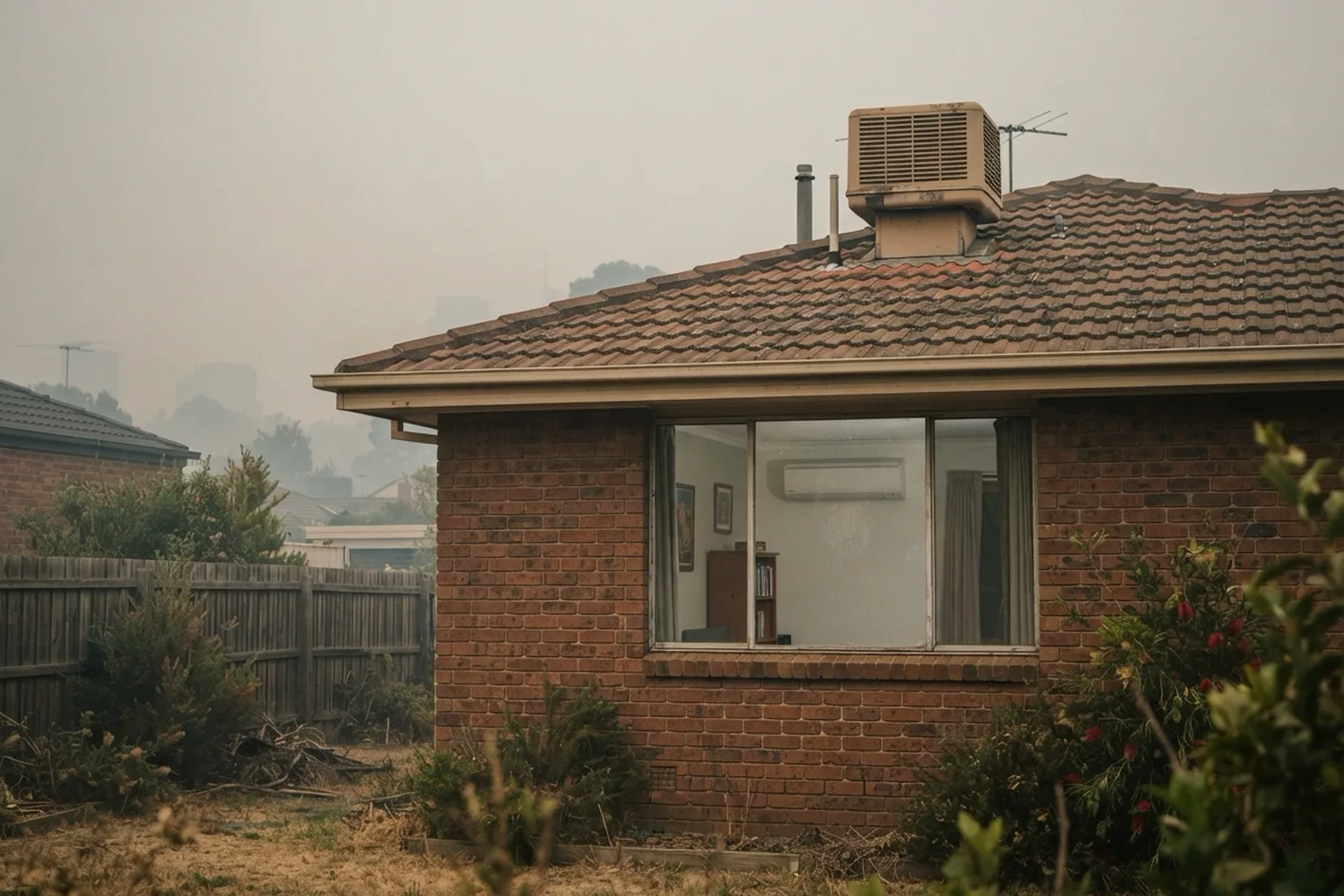
How each system moves air
An evaporative cooler works by drawing outside air through wet pads on the roof unit. As the water evaporates, it cools the air, which is then pushed through the ducts into the house. It relies on a constant supply of fresh outside air and needs doors or windows partly open so stale air can escape. That is what makes it cheap to run and pleasant on a dry, hot day.
A refrigerated system, such as a wall-mounted split system or most ducted reverse cycle systems, works differently. It takes air from inside the room, passes it over a cold coil and sends it back into the same space. A typical split system does not bring in outside air at all. The house stays closed up, and the same indoor air is cooled over and over again.
Ducted refrigerated systems usually work the same way, with a return air grille drawing air back from inside the house. Some installations also include an outside air intake or a fresh air damper, which brings in a share of outside air. If you are not sure how yours is set up, check the controller settings or the manual, or ask whoever services it.
Why an evaporative cooler can bring smoke inside
The wet pads on an evaporative cooler catch some larger dust and debris, but they are not a smoke filter. The fine particles in bushfire smoke pass through them. Because the cooler is constantly pulling in outside air and pushing it through the house, on a smoky day it can deliver that smoke straight into every room it serves.
Opening windows to let the air escape, as an evaporative system needs, makes things worse again, because it lets more smoky air in. Some people also find the smoky smell lingers in the pads after a smoke event, so the cooler can keep releasing it for a while after the air outside has cleared.
What to run on a smoky day
Public health advice in Victoria on smoky days has consistently focused on keeping smoke out of the house. Check the current air quality on EPA Victoria AirWatch, and follow the latest advice from EPA Victoria and the health department, because guidance can change and individual circumstances matter. In general terms:
- Close windows and doors to keep as much smoke out as possible.
- Turn the evaporative cooler off when the air outside is smoky.
- If you have a refrigerated system, run it in its normal cooling mode with the house closed up. If it has an outside air or fresh air setting, switch it to recirculate.
- Keep the indoor unit filters clean, so the system can move air properly without straining.
A refrigerated system is not an air purifier and does not remove all smoke from the house, but it does not actively pull outside air in, which is the main difference on a smoky day.
If an evaporative cooler is your only cooling
This is the hard case, because heat and smoke often arrive together. Turning the cooler off on a hot day can make the house uncomfortable quickly, and heat itself is a health risk, especially for older people, young children, pregnant people and anyone with heart or lung conditions.
Practical options include cooling one room with a portable or split system if you have one, spending the hottest part of the day somewhere cool with filtered air such as a library, shopping centre or cinema, keeping blinds and curtains closed on the sunny side of the house, and drinking plenty of water. If anyone in the house feels unwell, seek medical advice rather than waiting it out.
Once the air outside improves, open up the house to air it out, and only then turn the evaporative cooler back on.
It also helps to think about this before summer rather than on the day. Work out which room in the house stays coolest, have a plan for where you would go if the house got too hot, and check on neighbours or family members who live alone or are more vulnerable to heat and smoke.
After the smoke clears: what to check
Smoke and ash do not simply disappear when the haze lifts. Ash and fine residue settle on the roof unit, in the pads and in the water tank of an evaporative cooler, and some of it finds its way into ducts and onto outlets. Indoor units on split systems can also collect a fine layer of dust on their filters and coils after smoky weeks.
Before relying on the evaporative cooler again, have the pads, water tank, pump and roof unit checked and cleaned, so it is not drawing that residue back inside. For split systems, clean the filters and, if the unit smells stale or has not been serviced for a while, have the coil and fan cleaned as well.
Wipe down the ceiling outlets of a ducted evaporative system too, and run the cooler with the house opened up on the first clear day back, so any lingering smell is flushed out rather than trapped inside.
Getting ready before the smoky days arrive
The best time to sort out your cooling is before summer starts. A pre-season service on an evaporative cooler means it is clean and running well for the hot dry days when it is the right choice. Cleaning and checking a split system makes sure the system you will rely on during smoke is ready to go.
Knowing which system to run on a smoky day, and having both in good order, means you can make the call quickly when the air turns, without having to think about it in the middle of a hot, hazy afternoon.
Helpful FreshDuct services & guides
Frequently asked questions
Does an evaporative cooler filter bushfire smoke?
No. The wet pads in an evaporative cooler cool the air and catch some larger dust and debris, but they are not designed to remove the fine particles in smoke. Because the cooler is constantly drawing in outside air, it can bring smoky air into the house when the air outside is poor.
Is a split system safe to run when it is smoky outside?
A typical wall-mounted split system recirculates the air inside the room rather than drawing in outside air, which is why it is generally the better option on smoky days. Keep windows and doors closed, and make sure the indoor unit filters are clean so the system runs efficiently. Ducted refrigerated systems usually recirculate too, but some have an outside air intake, so check how yours is set up.
What should I do if my only cooling is an evaporative cooler and it is hot and smoky?
Heat and smoke together are hard on the body, particularly for older people, young children, pregnant people and anyone with heart or lung conditions. If the house is getting too hot with the cooler off, consider spending the hottest part of the day somewhere cool with good indoor air, such as a library or shopping centre, drink plenty of water, and seek medical advice if anyone feels unwell.
Should the evaporative cooler be checked after a smoky period?
It is a good idea. Ash and smoke residue can settle on the roof unit and in the pads, and pads can hold a smoky smell for a while. Before relying on the cooler again, have the pads, water tank and roof unit checked and cleaned so it is not pulling that residue back into the house.
Get a fast, free quote
Talk to FreshDuct about air conditioning across Melbourne — 7 days a week, clear upfront pricing, 600+ 5-star reviews.