 FreshDuct
★★★★★
“Allen provided exceptional service — friendly, professional and went above and beyond.”
JVerified
Jane
Wantirna South, VIC
Some people are using the FreshDuct name and pretending to be us to scam customers. Please don't fall for it. We are the only genuine FreshDuct, operating in Melbourne, Sydney, Adelaide and Perth. Only deal with us through freshduct.com.au, or call us directly on 04 3191 8137 or 0480 004 051. We are taking legal action against these impostors. Thank you.
Canberra is the one Australian capital where a roof genuinely freezes and thaws, and where moss holds on because there is no dry season. FreshDuct cleans roofs, gutters, render and solar — and photographs the damage nobody has been up there to see.
Gutters full going into summer is a risk you can remove in an afternoon.
Roof advice written for Sydney or Brisbane does not describe what happens to a Canberra roof. The Bureau of Meteorology long record for Canberra Airport shows 92 days a year at or below 2°C, 59 nights at or below 0°C, a mean daily ground minimum in July around -2.8°C and a lowest recorded temperature of -10.0°C. That is a genuine, repeated freeze-thaw cycle, and it is a material-degradation mechanism the rest of the country largely does not have.
The way it works is simple and relentless. Water is absorbed into a porous concrete tile, a weathered mortar bed, a hairline crack in render or a chimney crown. Overnight it freezes and expands by roughly nine per cent. During the day it thaws. Repeat that dozens of times a year for decades and you get spalled tile faces, crumbling ridge capping mortar, opened render cracks and pointing that has quietly turned to sand.
Then there is the biological side, and this is where Canberra differs from the dry-summer capitals. The ACT’s 616 mm of annual rain is spread right across the calendar rather than concentrated in one season — the wettest month averages about 64 mm, the driest about 41 mm. There is no long dry stretch to kill off moss and lichen, so on shaded southern roof pitches they establish, hold moisture against the tile surface, and accelerate exactly the freeze-thaw damage described above.
What a Canberra year does to a roof, in Bureau of Meteorology numbers.
Freeze-thaw, biological growth and ember risk — the three things an ACT roof actually faces.
Spalled and flaking tile faces, ridge capping mortar that has gone powdery, and pointing you can rub away with a thumb are all the same mechanism. It concentrates where water sits longest — under moss, in valleys, at the crown of a chimney and along shaded ridges. Cleaning these areas is worth doing on its own, and it also lets us photograph the underlying condition so you know what you are dealing with.
Because Canberra has no long dry season, moss and lichen survive year-round on southern and shaded roof pitches in a way they simply cannot in a dry-summer capital. They are not just unsightly — a moss mat holds water against the tile surface indefinitely, which is the ideal condition for freeze-thaw damage and for water tracking under the tile laps.
On 18 January 2003 the firestorm reached Canberra’s suburbs, and ember attack into gutters and roof cavities is a well-understood part of how fires take houses. Clearing gutters and valleys before summer removes fuel from the most vulnerable part of the building. It is simple, cheap and it is the recommendation we make most often on an ACT roof.
With rain in every month, a blocked gutter in Canberra is not a problem that waits for a wet season — it is overflowing periodically all year. Water then runs down the fascia and the wall, saturates eaves and, in winter, freezes in the gutter and downpipe. Ice in a gutter is heavy and it splits joints and pulls brackets, which is a failure mode most Australian roof plumbers never see.
The same year-round moisture that suits moss suits algae and grime on render, painted brick and rendered fences and retaining walls. Cleaned carefully — at pressures matched to the substrate, not blasted — those surfaces come back dramatically. Cleaned carelessly, you drive water into a render crack that will freeze in July. Method matters here more than it does in a warm climate.
Panels are common across Canberra rooftops and they lose output to dust, pollen, bird mess and the shading edge of lichen growth. Panels are also glass and electrical equipment on a slippery pitched surface, so they need cleaning with the right water, the right pressure and the right access rather than a hose and a broom on a frosty morning.
Real FreshDuct roof and exterior work, photographed before and after on every job.
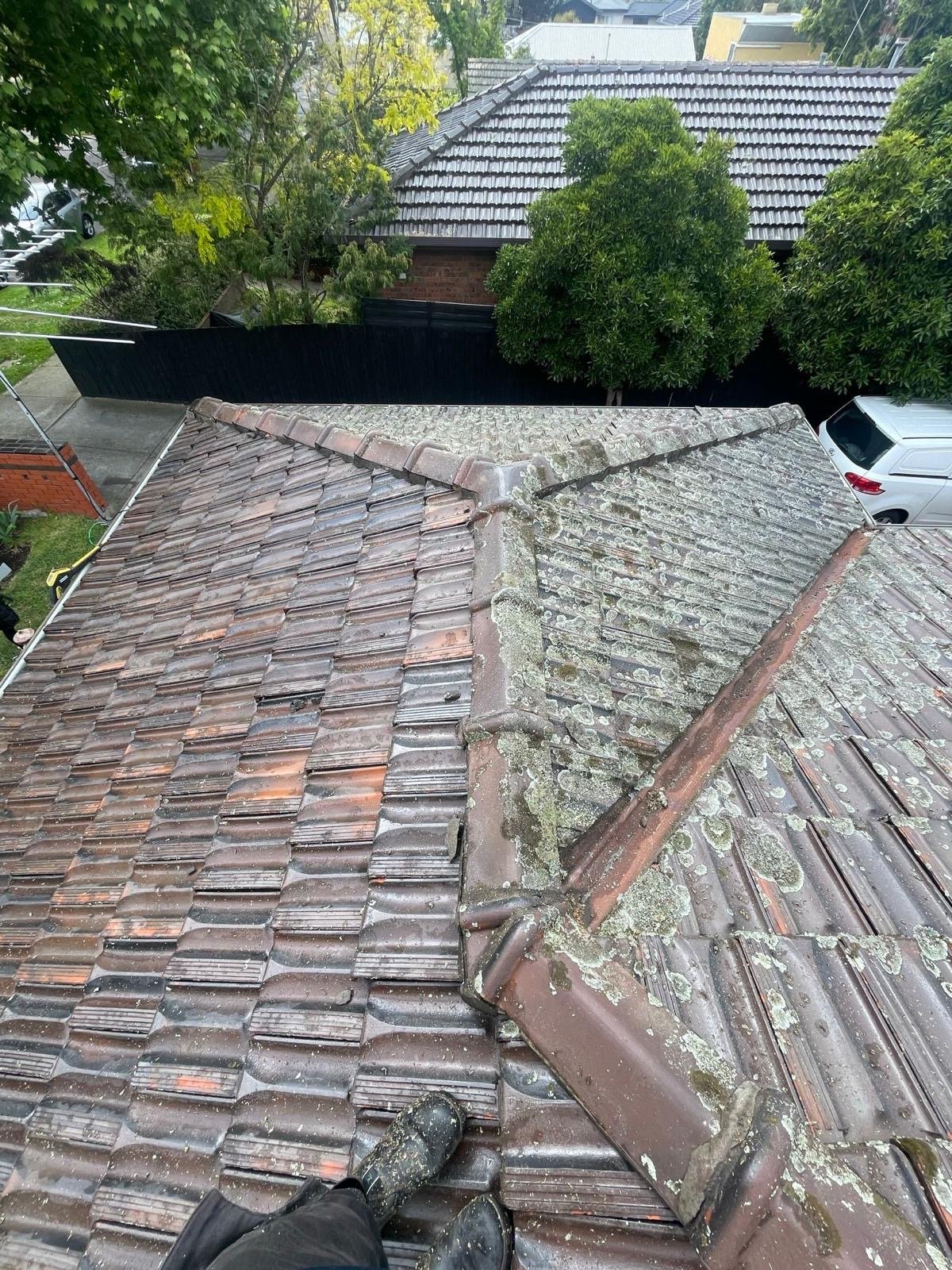

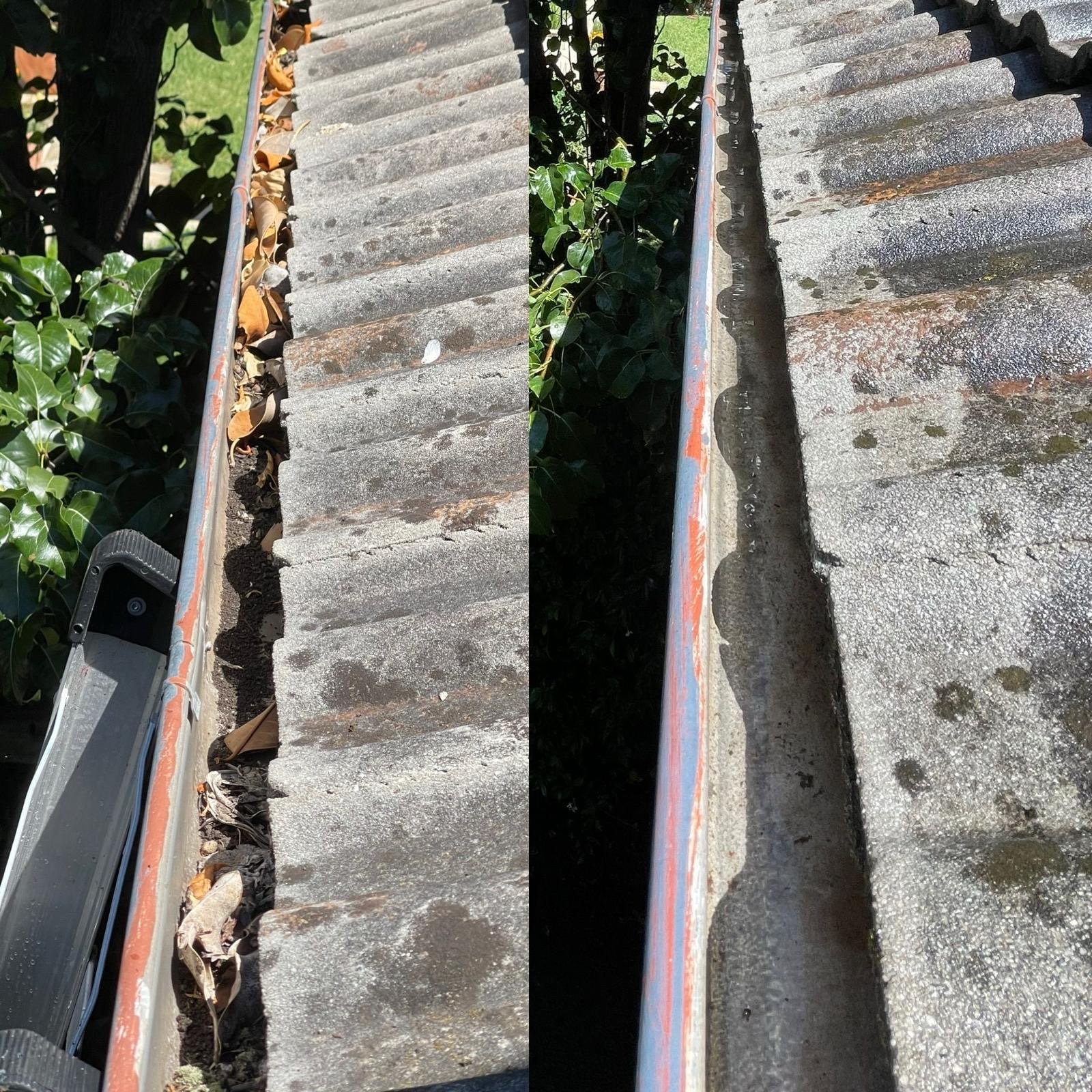
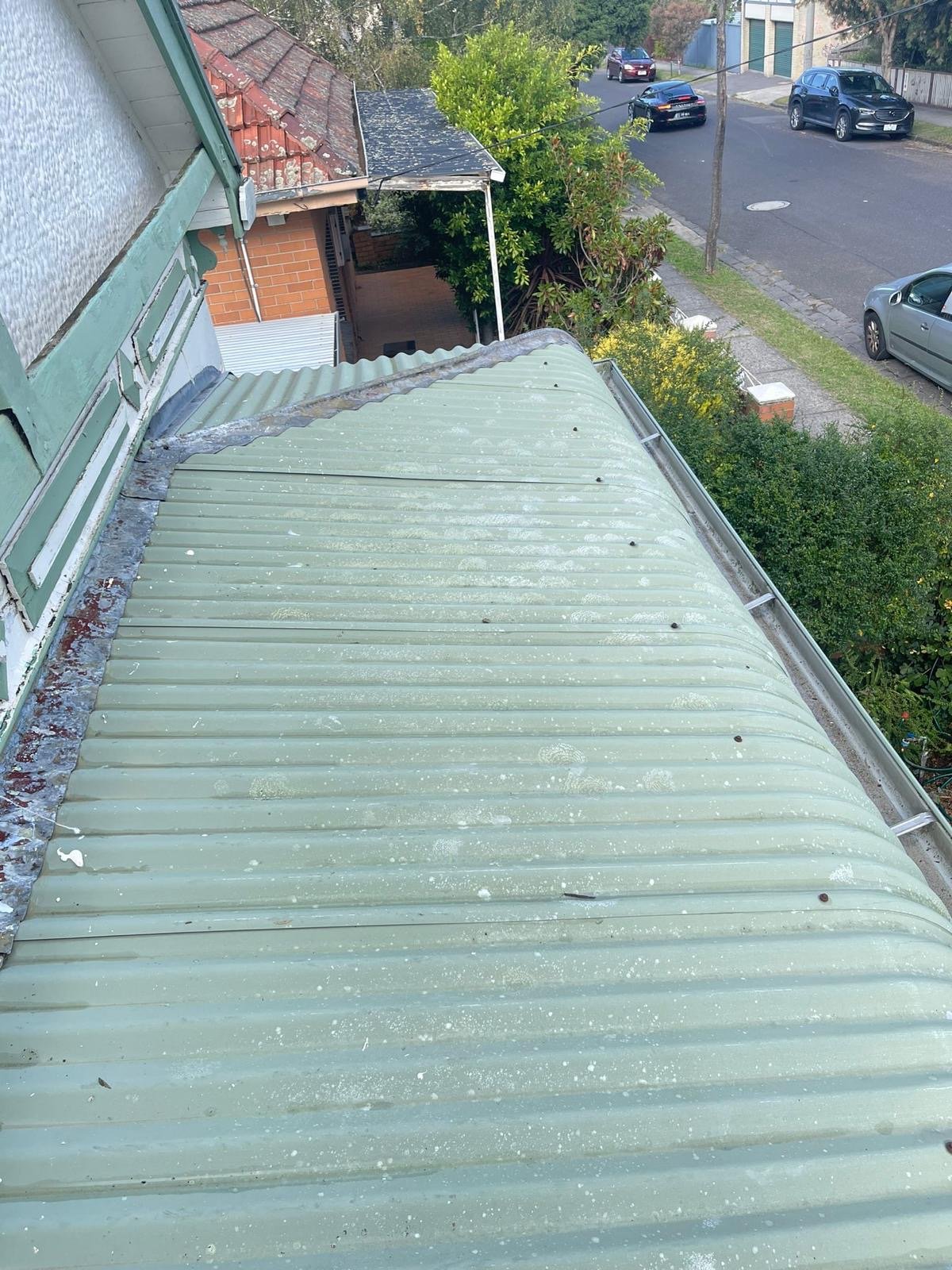
Different surfaces take different treatment. Concrete and terracotta tiles, colorbond sheeting, render, painted brick and solar glass each have a pressure and a method that cleans them without damaging them, and in a freeze-thaw climate getting that wrong has consequences that show up next July rather than next week. We clear gutters, valleys and downpipes first, then clean the surface, then check that what we have washed off has actually gone somewhere sensible.
Along the way we photograph the condition of everything we can see — ridge capping mortar, pointing, tile spalling, flashings, the chimney crown and cap, valley condition and gutter joints. That report is often the most valuable part of the job, because almost nobody has been on their own roof and Canberra’s freeze-thaw damage progresses quietly until it is expensive.
Book an Exterior CleanWe clean roofs, gutters, render and solar across every Canberra district — the Inner North through Braddon, Turner, Dickson, Ainslie and O’Connor; the Inner South through Kingston, Manuka, Griffith, Narrabundah, Yarralumla and Deakin; Woden and Weston Creek including Curtin, Phillip, Weston and Holder; Belconnen including Bruce and Kaleen; Gungahlin through Ngunnawal and Amaroo; and Tuggeranong including Kambah. Queanbeyan included.
Timing is worth thinking about. Gutter clearing is best done heading into summer, both to remove ember fuel and because it is the season a blocked gutter causes the most damage. Roof and render cleaning is best avoided in the depths of winter, when a frosted pitch is genuinely dangerous to work on and washing water can freeze in a crack overnight. Spring and autumn suit most exterior work in the ACT.
Gutters first, surface cleaned to suit the substrate, condition photographed throughout.
Safe access set up and the whole roof assessed before anything starts.
Gutters, valleys and downpipes cleared and flow tested.
Pressure and technique set to the substrate, never one setting for everything.
Roof, render, brick or solar cleaned with run-off directed sensibly.
Ridge mortar, pointing, flashings, crown and cap condition photographed.
Before and after images plus a plain list of anything that needs attention.
Verified 5-star reviews from across FreshDuct’s duct, heating, cooling, chimney and insulation services. These are company-wide reviews from our established customer base — the same technicians and standards we bring to Canberra.
“Allen provided exceptional service — friendly, professional and went above and beyond.”
“Highly impressed with the professionalism and efficiency. On time, and no mess left behind.”
“Exceeded my expectations. Knowledgeable, meticulous and respectful of our home.”
“So glad I chose FreshDuct. Knowledgeable team and the whole process was smooth from start to finish.”
“Quick, efficient and professional — we could immediately feel the difference.”
“The technician arrived on time and was incredibly thorough — the difference at home is obvious.”
Exterior work pairs naturally with these Canberra services.
Yes, and Canberra is the Australian capital where it genuinely matters. The airport records 92 days a year at or below 2°C and 59 nights at or below 0°C, with a lowest reading of -10.0°C. Water absorbed into a porous tile, a mortar bed or a render crack freezes, expands and breaks the material apart a little more each time. Spalled tiles and powdery ridge mortar are the visible result.
Because Canberra never gets a dry season to kill it off. The 616 mm of annual rain is spread across every month, so shaded southern pitches stay damp enough for moss and lichen year-round — unlike a dry-summer capital where months of heat does the job for you. It matters beyond appearance: a moss mat holds water against the tile, which accelerates freeze-thaw damage and can push water under the laps.
Heading into summer at a minimum, and ideally twice a year. Clearing before summer removes ember fuel from the most vulnerable part of the house, which after 18 January 2003 is a priority most Canberra households understand well. A second clear after autumn leaf drop keeps water moving through a climate that rains in every month.
It can, and in a freeze-thaw climate the damage may not show up until the following winter. Concrete tiles, terracotta, colorbond, render and solar glass all need different pressures and techniques, and driving water into a render crack or under a tile lap in Canberra means it freezes there in July. We match the method to the substrate rather than using one setting for the whole job.
Yes. Panels lose output to dust, pollen, bird mess and the shading edge of lichen, and Canberra roofs carry a lot of them. They are glass and electrical equipment on a pitched surface, so they need correct water, correct pressure and proper access — not a hose and a broom, and never on a frosty morning when the pitch is unsafe to be on.
Roofs, gutters, render and solar cleaned to suit the surface, with a photographed condition report. Available 7 days across the ACT.
Tell us what needs cleaning and which suburb you are in.