 FreshDuct
★★★★★
“Allen provided exceptional service — friendly, professional and went above and beyond.”
JVerified
Jane
Wantirna South, VIC
Some people are using the FreshDuct name and pretending to be us to scam customers. Please don't fall for it. We are the only genuine FreshDuct, operating in Melbourne, Sydney, Adelaide and Perth. Only deal with us through freshduct.com.au, or call us directly on 04 3191 8137 or 0480 004 051. We are taking legal action against these impostors. Thank you.
Canberra burns wood for longer than almost any Australian city. FreshDuct sweeps, camera-inspects and repairs flues across the ACT — original 1920s masonry through to modern freestanding heater flue kits — and photographs the inside of every one.
A flue that has done a full Canberra winter has done six months of work, not six weeks.
Most Australian chimney advice is written for cities that light a fire on maybe twenty evenings a year. Canberra is not that city. Bureau of Meteorology figures for Canberra Airport show a mean of 59 nights a year at or below 0°C, 92 days at or below 2°C, a July mean minimum of -0.1°C and a lowest recorded temperature of -10.0°C. A Canberra fireplace or wood heater that gets used at all gets used properly, from around April to around October.
That matters because creosote accumulation is driven by burn hours and by how the fire is run. The classic Canberra pattern — load it up and damp it down so it holds through a sub-zero night — is exactly the low-temperature, incomplete-combustion condition that deposits creosote fastest. Six months of that builds a very different flue lining from twenty cheerful evening fires in a mild climate.
Canberra also brings a live memory that other cities do not carry. On 18 January 2003 the firestorm reached the suburbs, killing four people and destroying close to 500 homes. Two decades on, the maintenance habits that grew out of it are simply good practice: a swept flue, a sound spark arrestor and a cap, clear gutters and a roof space free of accumulated debris. We treat all of that as part of the job rather than as an upsell.
Why a Canberra flue needs more attention than the generic Australian advice suggests.
The faults a long, cold burning season produces, across every era of ACT housing.
Damping a fire down to hold heat through a -5°C night is completely rational and it is also the fastest way to build glazed creosote. Third-stage creosote is hard, tar-like and does not come off with a brush alone. We identify what stage of deposit you actually have on camera before quoting, because the honest answer changes the method and the price.
Braddon’s first stage went up in 1921-22 and Reid was largely built in 1926-27, with the Federal Capital Commission laying out garden suburbs right through that decade. Open masonry flues from that period were built without a modern liner. Mortar joints degrade, parging fails, and after a century of freeze-thaw cycling on a chimney that sees 59 frosts a year, gaps open up. A camera tells you whether you have a flue or a chimney-shaped hole.
Canberra is unusual in Australia for having a genuine freeze-thaw cycle, with 92 days a year at or below 2°C. Water gets into a porous brick or a cracked crown, freezes overnight, expands, and takes a little more of the masonry with it each time. Spalled brick faces, open crown cracks and failed tuckpointing on Canberra chimneys are usually this, and they are much cheaper to address early.
A cap keeps rain and nesting birds out; a spark arrestor keeps embers in. Neither is exotic hardware and both matter more here than in a wetter, milder city. We check that what is fitted is intact, correctly sized and actually secured, and we replace what is not. Insurers and heater manufacturers generally expect this maintenance to be kept up, so it is worth having documented.
Smoke spilling back into the room is usually a draught problem, not a “bad chimney”. Modern houses are sealed far more tightly than the 1920s and 1970s stock they sit alongside, and a sealed house starves an open fire of make-up air. Flue height, terminal position, downdraught off a nearby roof and a partial blockage all produce the same symptom, and they need different fixes.
Six months of the year a Canberra flue sits unused, which makes it attractive real estate for birds and a settling point for leaf litter and debris. The first fire of the season on a blocked flue is one of the most common serious call-outs in this trade, and it is entirely preventable with an autumn sweep and a decent cap.
Real FreshDuct chimney work. Every sweep includes camera inspection and before and after photos.
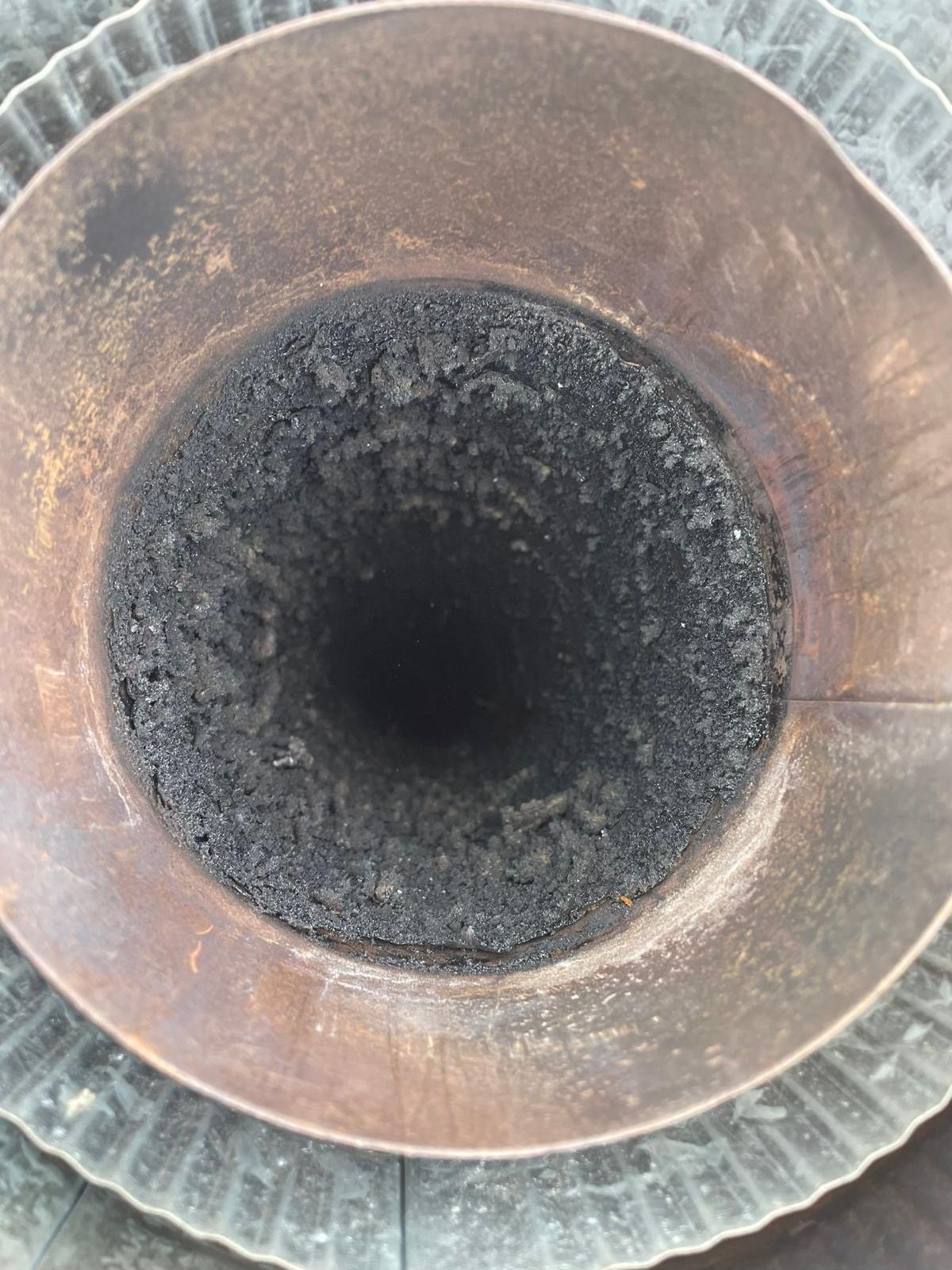
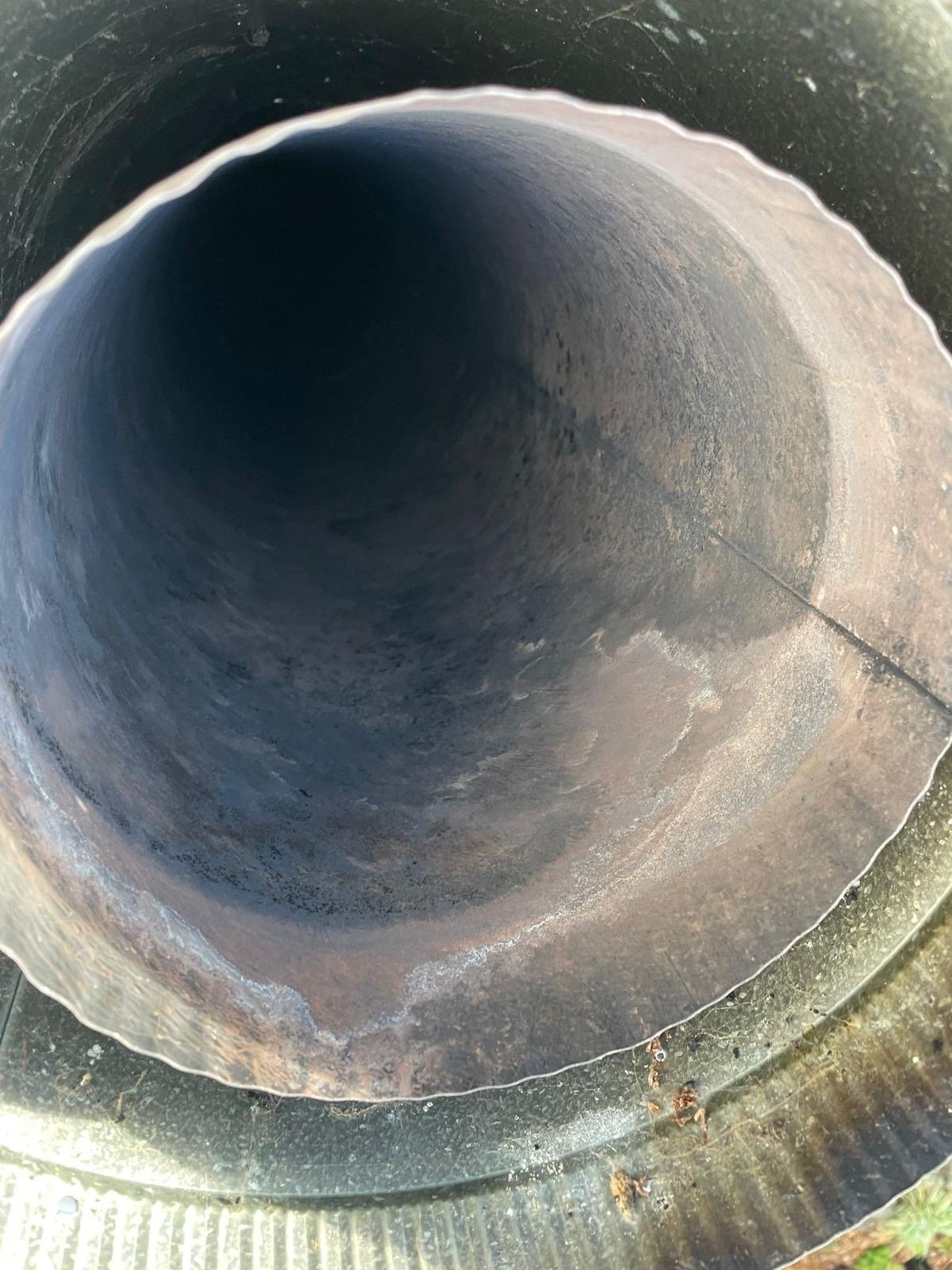

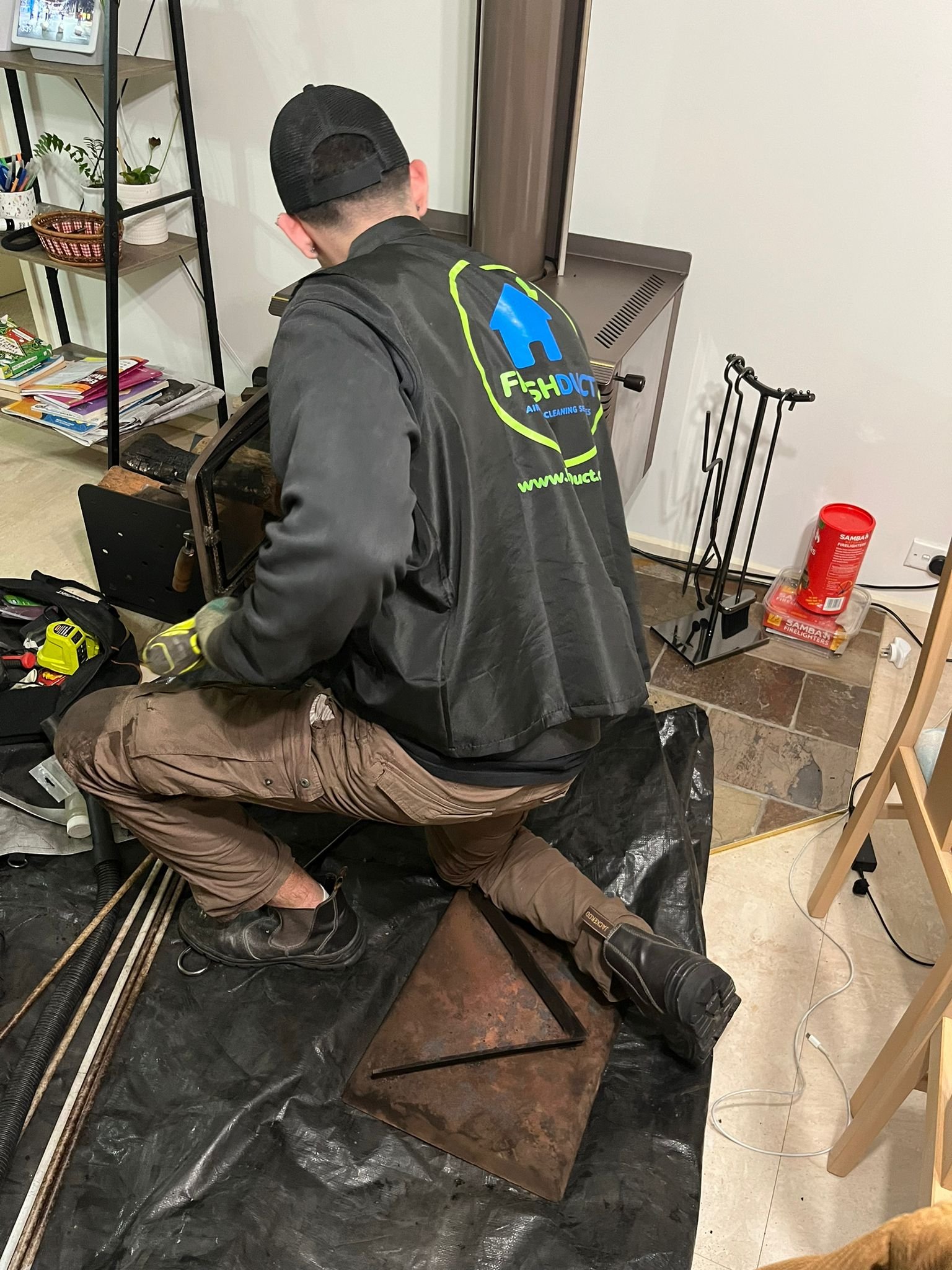
A FreshDuct sweep is a mechanical clean of the full flue with the room protected and the debris contained, followed by an internal camera inspection from the appliance to the terminal. We look at liner condition, mortar joints, parging, the smoke chamber, the damper, the crown, the cap and the arrestor. You get photos and video stills of the inside of your own flue, not a generic diagram.
Then you get a straight report. If it is sound and just needed sweeping, we say so and that is the end of it. If we find a cracked liner, an unlined century-old masonry flue in the Inner North, spalled brickwork from freeze-thaw, or an arrestor that has rusted through, you get the photo, the explanation and a firm price to fix it — along with an honest view on whether it needs doing now or can wait a season.
Book a Canberra Chimney SweepWe sweep, inspect and repair chimneys and flues across every Canberra district — the century-old masonry of the Inner North through Braddon, Ainslie, Turner, Dickson and O’Connor; the Inner South through Griffith, Narrabundah, Yarralumla, Deakin and Kingston; Woden and Weston Creek including Curtin, Phillip, Weston and Holder; Belconnen including Bruce and Kaleen; Gungahlin through Ngunnawal and Amaroo; and Tuggeranong including Kambah. Queanbeyan too.
What we find changes district by district, because the era changes. The pre-war Inner North and Inner South are mostly original open masonry flues. The housing built out around the town centres that opened at Woden in 1971, Belconnen in 1977 and Tuggeranong in 1987 is dominated by freestanding wood heaters on steel flue kits. Newer Gungahlin stock, from the 1998 town centre onwards, is different again. Tell us the suburb and we usually know what we are coming to.
Protect the room, sweep the flue, film the inside, report honestly.
Hearth and room sheeted and sealed before anything moves.
Full mechanical sweep of the flue, with debris contained at the appliance.
Internal inspection from appliance to terminal, recorded.
Crown, cap, cowl and spark arrestor inspected and photographed.
Photos, plain-English findings and a firm price on anything needing repair.
Site left as we found it, with advice on burning it better.
Verified 5-star reviews from across FreshDuct’s duct, heating, cooling, chimney and insulation services. These are company-wide reviews from our established customer base — the same technicians and standards we bring to Canberra.
“Allen provided exceptional service — friendly, professional and went above and beyond.”
“Highly impressed with the professionalism and efficiency. On time, and no mess left behind.”
“Exceeded my expectations. Knowledgeable, meticulous and respectful of our home.”
“So glad I chose FreshDuct. Knowledgeable team and the whole process was smooth from start to finish.”
“Quick, efficient and professional — we could immediately feel the difference.”
“The technician arrived on time and was incredibly thorough — the difference at home is obvious.”
Chimney work pairs naturally with these Canberra services.
Once a year at minimum, and that is not the generic advice being repeated — it reflects how long Canberra actually burns. With 59 nights a year at or below 0°C and a season running roughly April to October, an ACT flue accumulates far more than one in a mild coastal city. If you run long overnight burns damped down, or burn unseasoned wood, we would look at it annually without hesitation.
Late summer to early autumn, before the season starts. Two reasons: you find any problem while there is still time to fix it without going without heat, and you clear out whatever moved into the flue during the six months it sat unused. The first fire of the season on a nest-blocked flue is one of the most common serious call-outs we get.
It is sensible practice, and after 18 January 2003 — when the firestorm killed four people and destroyed close to 500 homes — it is the kind of maintenance most ACT households take seriously. A spark arrestor keeps embers in; a cap keeps rain and birds out. We check that what is fitted is intact, correctly sized and secured, and replace what is not. Insurers and heater manufacturers generally expect this upkeep to be maintained.
It is very common in the Inner North and Inner South, where Braddon dates from 1921-22 and Reid from 1926-27, and it needs a camera to answer properly. An unlined masonry flue can be serviceable if the mortar joints and parging are sound. What we look for is the damage a century of Canberra freeze-thaw does — 92 days a year at or below 2°C works joints open. If we find gaps, you will see the photo before you hear the price.
Usually a draught problem rather than a dirty flue. A tightly sealed modern house starves an open fire of make-up air, and flue height, terminal position, downdraught off a nearby roofline and a partial blockage all produce the same symptom with different fixes. We diagnose it on camera rather than guessing, because the wrong fix here is expensive.
Local chimney sweeping, inspections, repairs and caps in 25 Canberra suburbs — the office confirms the date for your address.
Swept, camera-inspected and honestly reported — with photos of the inside of your own flue. Available 7 days across the ACT.
Sweeping, inspection or repair — tell us the suburb and appliance type.