 FreshDuct
Black spotting in the corner of the shower is one of the most common mould questions in Melbourne homes, and it is at its worst at the end of winter, after months of hot showers in a closed-up bathroom. The good news is that most of it is a surface problem with a surface fix. The less good news is that some of it is not, and the black line in a shower corner is sometimes the first visible sign that water has been finding its way behind the tiles.
Quick answer: Most black spotting on shower grout is surface mould feeding on soap film and it cleans off. Black inside the silicone bead usually does not, because the growth is in the sealant itself and the fix is to cut it out and reseal. If the spotting comes with loose or drummy tiles, cracked grout, a musty smell or damage on the other side of the wall, water is getting behind the tiles and cleaning alone will not solve it.
Telling the two apart is mostly a matter of knowing where to look. Grout, silicone and the wall behind them behave very differently, and the right response depends on which one the mould is actually living in.
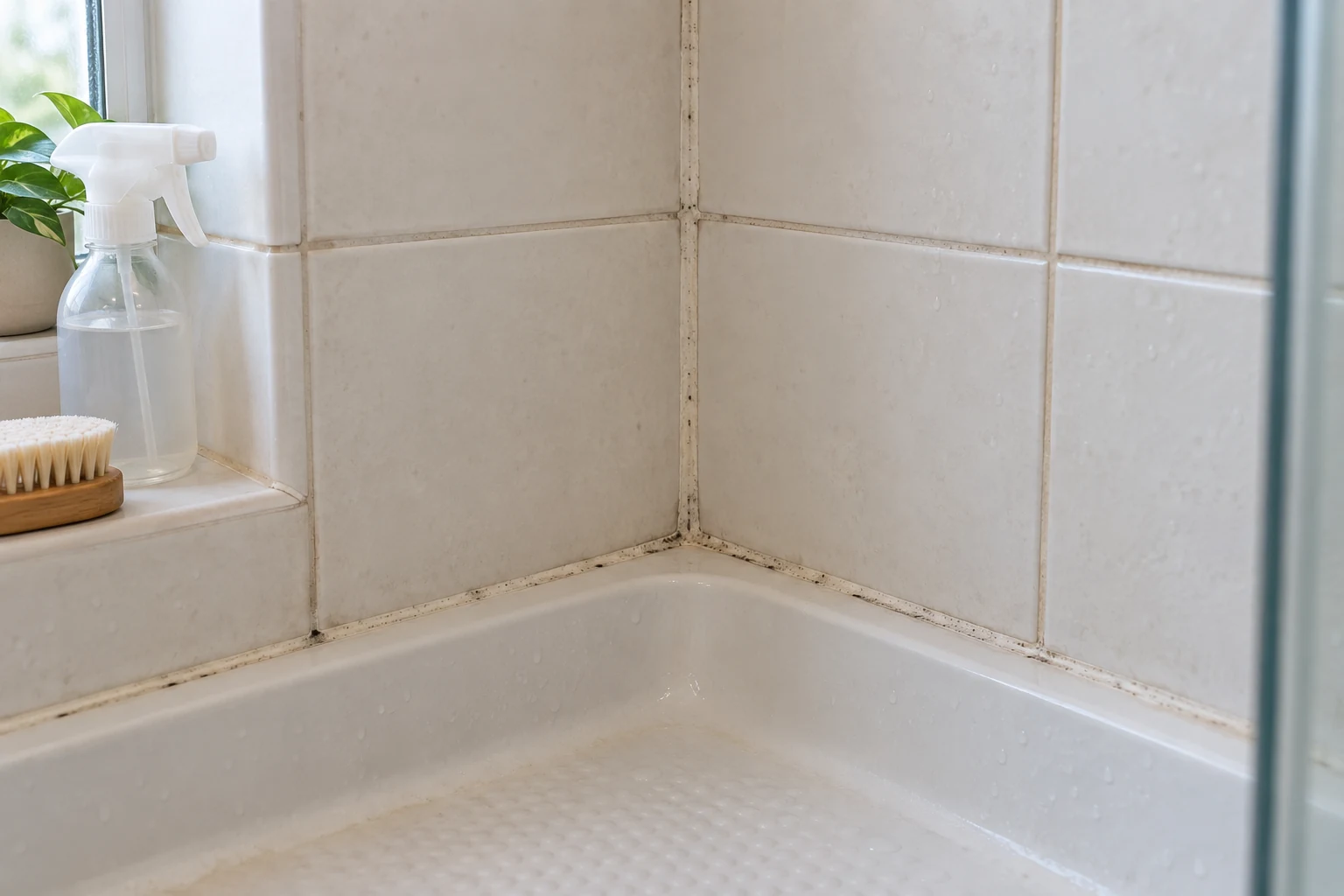
Why showers grow mould in the first place
Mould needs moisture, warmth and something to feed on, and a shower supplies all three every day. The walls are wet for a while after every use, the room is warm and humid, and soap, shampoo and skin oils leave a thin film on the surfaces that mould is happy to live on. Grout is slightly porous, so it holds moisture longer than the glazed tile around it, and silicone sits right in the internal corners and along the base where water runs down and collects.
In a Melbourne winter the bathroom window tends to stay shut, the exhaust fan is often switched off as soon as the shower stops, and the cold outside walls make condensation worse. That is why so many people notice the black corners in spring, when the light gets better and they finally have a proper look.
Surface mould on grout: usually a cleaning job
When black or grey speckling sits on top of the grout lines, it is usually growing in the soap film rather than in the grout itself. It tends to be spread along the joints, worst near the floor and in the corners, and a good clean shifts most or all of it. If the grout underneath comes up close to its original colour and the joints feel firm and intact, the problem was on the surface.
For a DIY clean, ventilate the room, wear gloves, use a bathroom mould cleaner according to its label, and work it into the joints with a soft brush rather than a wire one that can scratch glaze and erode grout. Rinse well and let everything dry. The rule that matters most: never mix bleach-based products with other cleaners, especially anything containing ammonia or acid. The fumes are genuinely harmful in a small room.
If the grout stays stained after cleaning, the mould or the discolouration has gone into the grout itself. Older grout that has become porous can be raked out and regrouted, and sealing new grout makes it slower to absorb water and soap in the future.
Black inside the silicone: why it will not scrub out
Silicone is different. The bead along the corners and the base of the shower is soft and flexible, and once mould gets established in it, the growth is in the sealant rather than on top of it. You can often see this through the bead: black spots or a grey cloud that sits beneath the surface. No amount of scrubbing reaches it, and strong cleaners can damage the silicone without removing the stain.
The proper fix is to cut the old bead out completely, clean the joint, let it dry thoroughly and run a fresh bead of sanitary-grade silicone. Laying new silicone over the old one seals the mould in and usually fails early, because the new bead cannot bond to a dirty, flexible surface.
Pay attention to what you find when the old bead comes out. Clean, dry surfaces behind it are a good sign. Black staining that continues behind the bead, wet grout at the base, or loose tile edges are not.
When the mould points to water behind the tiles
Shower walls rely on a waterproofing membrane behind the tiles. Grout and silicone are the first line of defence, and when they crack, shrink or pull away, water starts getting behind the surface. A shower can leak like this for a long time before anything obvious shows, and black mould that keeps returning to the same spot, however often it is cleaned, is sometimes the first sign.
The signs below are worth taking seriously. If any of them are present, the shower should be checked by a waterproofing specialist or plumber before it is regrouted or resealed, because cosmetic repairs over a leak only hide it.
Keeping the shower from going black again
Mould comes back when the conditions that grew it are still there, so the long-term fix is mostly about moisture. Run the exhaust fan during every shower and for a good while after it, and check that it actually pulls: a sheet of toilet paper held near the grille should be drawn against it. A fan that vents into the roof space rather than outside can leave the bathroom humid and push the moisture somewhere else. Leave the door or window open after showering when you can.
A quick squeegee of the walls and a wipe of the corners after each shower removes much of the water the mould relies on. Clean the shower regularly with a mild bathroom cleaner so soap film does not build up, and replace silicone once it is stained through or lifting, rather than waiting until it fails completely.
When to call in help
A few black spots on grout are a weekend job. It is worth getting help when the mould has spread beyond the shower to the ceiling, the walls or behind the vanity, when it comes back within weeks however well it is cleaned, when there is a persistent musty smell, or when anyone in the house has asthma or allergies and the bathroom is affecting them. Professional mould remediation deals with the growth across the whole room and identifies where the moisture is coming from, so the cleaning lasts. If the cause turns out to be a failed shower membrane, that is a job for a waterproofer or plumber, and fixing it first is what makes everything else stick.
Helpful FreshDuct services & guides
Frequently asked questions
Why does the black mould come back in the same corner every time?
Because the corner is the last part of the shower to dry. Water runs down both walls and sits in the internal angle and along the base, soap residue collects there, and if the room stays humid after showers the mould has everything it needs. Cleaning removes the growth but not the conditions. Better ventilation, a squeegee or a wipe after showering, and fresh silicone where the old bead is stained or lifting all help it stay away longer.
Can I just put new silicone over the old mouldy bead?
It is not a good idea. New sealant laid over a mouldy or loose bead does not bond properly, and the growth underneath is sealed in rather than removed, so it tends to show through or the new bead peels away. The old silicone should be cut out completely, the joint cleaned and left to dry thoroughly, and then a fresh bead of a sanitary-grade silicone run in.
Is black mould in the shower dangerous?
Shower mould is common and a small amount on grout is usually a cleaning job rather than an emergency. That said, mould can irritate the airways and some people react more strongly than others, particularly anyone with asthma, allergies or a weakened immune system. Keep the room ventilated while cleaning, wear gloves, never mix bleach with other cleaning products, and get advice if the growth is widespread or keeps spreading beyond the shower.
How do I know if water is getting behind my shower tiles?
Look for tiles that sound hollow when tapped or move under pressure, grout that is cracked or missing, silicone that has pulled away from the wall or base, swelling or flaking paint on the wall behind the shower, staining on a ceiling below, or a musty smell that stays after cleaning. Any of these mean the waterproofing should be checked, because cleaning the surface will not stop water that is already behind it.
Get a fast, free quote
Talk to FreshDuct about mould remediation across Melbourne — 7 days a week, clear upfront pricing, 600+ 5-star reviews.