 FreshDuct
For most Melbourne households the outdoor season starts sometime in October. The barbecue comes out, the outdoor setting gets wiped down, and someone notices that the deck has gone grey and the paving by the back door has turned slippery and green. A pressure wash is the obvious answer, and in most cases it is the right one. But it is worth knowing what it actually does, what it cannot fix, and where it does damage if it is done the wrong way.
Quick answer: A pressure wash removes the green growth, grime and dirt that build up on decks and paving over a Melbourne winter, which makes surfaces safer underfoot and readies timber for oiling. It does not fix loose or rotten boards, replace worn coatings, or remove deep stains from rust, oil or tannin, and the wrong pressure or nozzle can gouge timber, damage composite and blast the sand out of paver joints.
What winter does to decks and paving
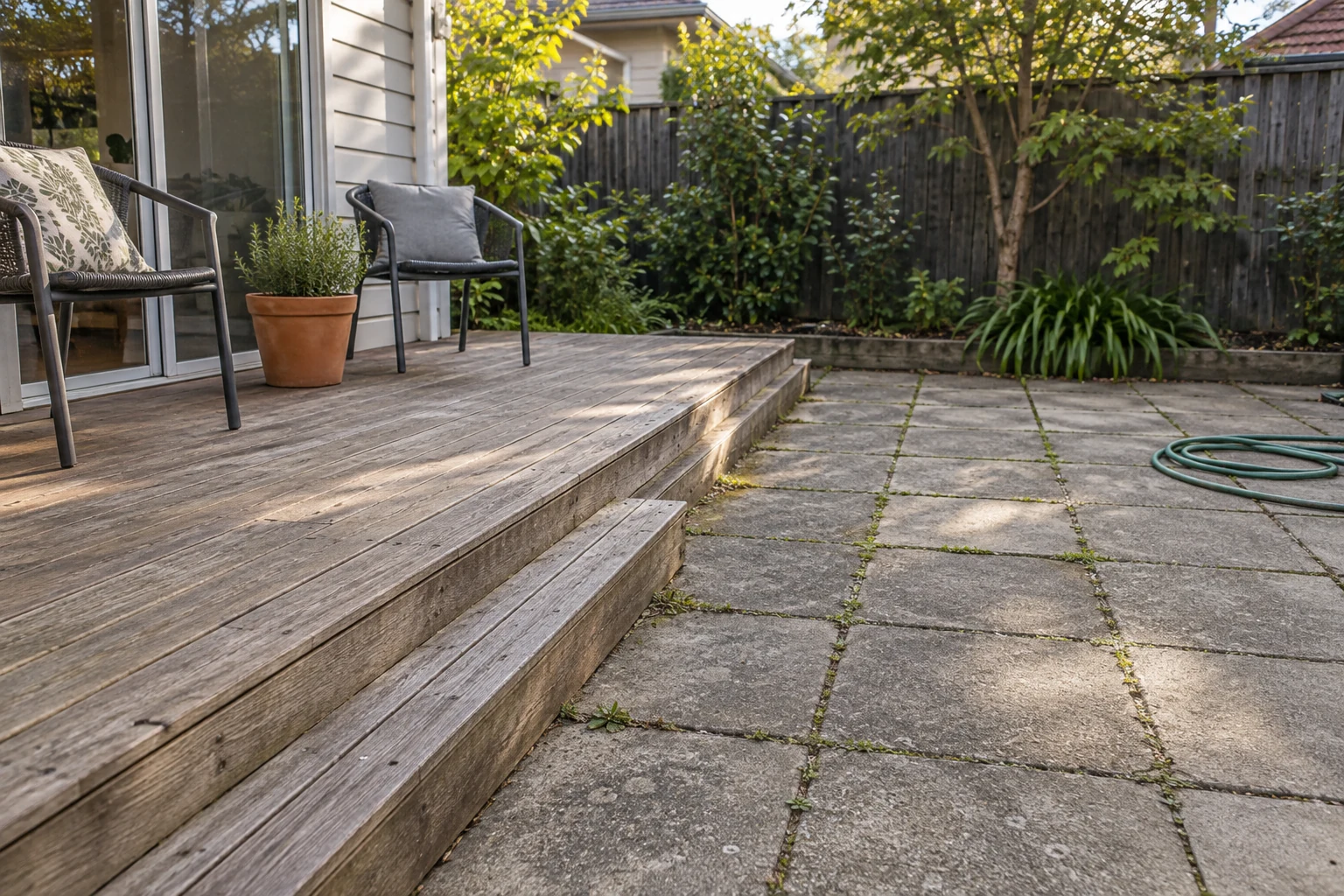
A Melbourne winter is long, damp and short on sun, and outdoor surfaces that stay wet for months grow things. Shaded paving, the boards under the eaves, steps and the spots near downpipes pick up a film of algae and moss. Leaves sit in the gaps between deck boards and break down, timber goes grey as the surface weathers, and dirt from shoes, pets and garden beds works its way into the grain and into paver joints.
The green film is the part that matters most. When it is wet it is surprisingly slippery, and decks and paths are where people walk barefoot, carry plates and chase children around in summer. Getting it off before the outdoor season is as much about safety as appearance.
Where the deck sits makes a big difference. A deck on the north side of the house that gets full sun usually just greys and collects dirt, while a south-facing deck, one under a pergola or a line of trees, or one close to the ground with poor airflow underneath can stay damp for most of the winter. Those are the ones that go green and slippery first, and the ones that benefit most from a spring clean.
What a pressure wash does well
Done properly, a pressure clean lifts the algae, moss, grime and built-up dirt from the surface and flushes it out of the gaps. On timber, it takes off the grey weathered layer and the old surface grime so the timber underneath is ready to take oil or stain. On pavers and concrete, it brightens the surface, removes the slippery film and clears the growth out of the joints. On composite boards, a gentle wash removes the dirt and surface mould that make them look dull.
It also shows you what you are working with. Once the grime is off, loose boards, popped nails, cracked pavers and lifted edges are much easier to see, and spring is a far better time to find them than the day of a family barbecue.
What it does not do
A pressure wash is a cleaning job, not a repair. It will not fix soft, rotten or split boards, loose fixings, sagging joists or pavers that have sunk or lifted. It does not restore a coating that has worn through; the deck will still need oiling or staining afterwards to protect the timber through summer. And some stains are not dirt at all: rust marks from furniture, oil and grease from a barbecue, and the dark tannin stains that some timbers bleed usually need specific treatment and may never fully disappear.
Merbau, one of the most common decking timbers around Melbourne, is well known for bleeding dark tannin, particularly when it is new or freshly cleaned. It can stain the paving or concrete underneath, and a pressure wash tends to spread it rather than remove it. Tannin stains respond to dedicated deck cleaners rather than more pressure.
It also will not stop the growth coming back if the conditions that caused it stay the same. Shaded, poorly drained areas will green up again over the next winter, so a yearly clean before the outdoor season is a reasonable habit rather than a one-off fix.
Timber, composite and pavers need different handling
The most common pressure-washing damage comes from treating every surface the same. Timber, especially softer timbers, can be furred, gouged or etched by a narrow jet held too close, leaving a rough, splintery surface with visible wand marks. A wide fan, a sensible distance, moving with the grain, and often a suitable deck cleaner to loosen grime first, get the result without carving the boards.
Composite decking has a surface layer that can scar under high pressure, and many manufacturers recommend gentle washing only, so check the care guidance before you start. Pavers handle more pressure, but the jointing sand between them does not: blasting straight into the joints washes the sand out and leaves pavers free to move and weeds free to grow. Joints may need topping up with fresh paving sand once everything has dried. Concrete is the toughest of the lot, though a narrow jet can still etch a visible pattern into the surface.
Rented pressure washers and the cheaper household units vary widely, and the settings that suit a concrete driveway are the wrong ones for a timber deck. If you are doing it yourself, test on an out-of-the-way board or paver first, and look at it once it has dried before you do the whole area.
A sensible order for getting it summer-ready
Whether you do it yourself or have it done, the steps below are the order that gets the best result and avoids doing any of it twice.
Safety, runoff, and when to leave it to someone else
A note on runoff: Melbourne’s stormwater drains are not treated, and they carry whatever goes into them to the local creeks and the bay. Keep detergent use modest, choose products suited to outdoor use, and direct wash water onto lawn or garden beds where you can rather than into the street gutter.
Pressure washers are more dangerous than they look. The jet can cut skin, so wear enclosed shoes and never point the wand at people or pets. Keep it away from electrical outlets, outdoor lights and the pool pump, and take care on steps, which become very slippery while they are being cleaned. Raised decks, second-storey balconies and anything that involves working near an edge are where many people decide a professional is worth it.
A professional exterior clean is also worth considering when the area is large, when there is composite decking you do not want to risk, or when you want the house walls, paths, driveway and deck done at the same time. Either way, a clean, dry, non-slip deck and paving at the start of the season means the outdoor area is ready for summer, rather than being the job that never quite gets done.
Helpful FreshDuct services & guides
Frequently asked questions
Can you pressure wash a timber deck without damaging it?
Yes, if the pressure, nozzle and distance suit the timber. Softer timbers in particular can be furred or gouged by a narrow jet held too close, which roughens the surface and raises splinters. A wide fan held at a sensible distance and moved along the grain, often combined with a suitable deck cleaner, removes the grime without carving the boards. If the surface does fur up, a light sand once it is dry smooths it before oiling.
Is it OK to pressure wash composite decking?
Often, but check the manufacturer’s care guidance first. Composite boards have a surface layer that can be scarred by high pressure or a narrow jet, and some brands recommend only gentle washing. Many composite decks clean up well with a soft brush, a suitable cleaner and a low-pressure rinse, with the pressure washer kept on a wide fan and a light setting if it is used at all.
Why is my paving so slippery in spring?
Shaded paving and the parts of a deck that stay damp over winter grow a film of algae and moss that becomes very slippery when wet. It is usually worst on south-facing areas, under trees and near downpipes. Cleaning it off removes the slip risk for a while, and improving drainage, trimming back overhanging growth and keeping the area swept help slow its return.
Should I oil the deck straight after pressure washing it?
No. The timber needs to dry out properly first, which can take a few days of fine weather depending on the timber and the conditions. Oiling damp timber traps moisture in the boards and the oil does not soak in evenly. Follow the drying time on the product you are using and check that the boards are dry right through before you start.
Get a fast, free quote
Talk to FreshDuct about external house cleaning across Melbourne — 7 days a week, clear upfront pricing, 600+ 5-star reviews.