 FreshDuct
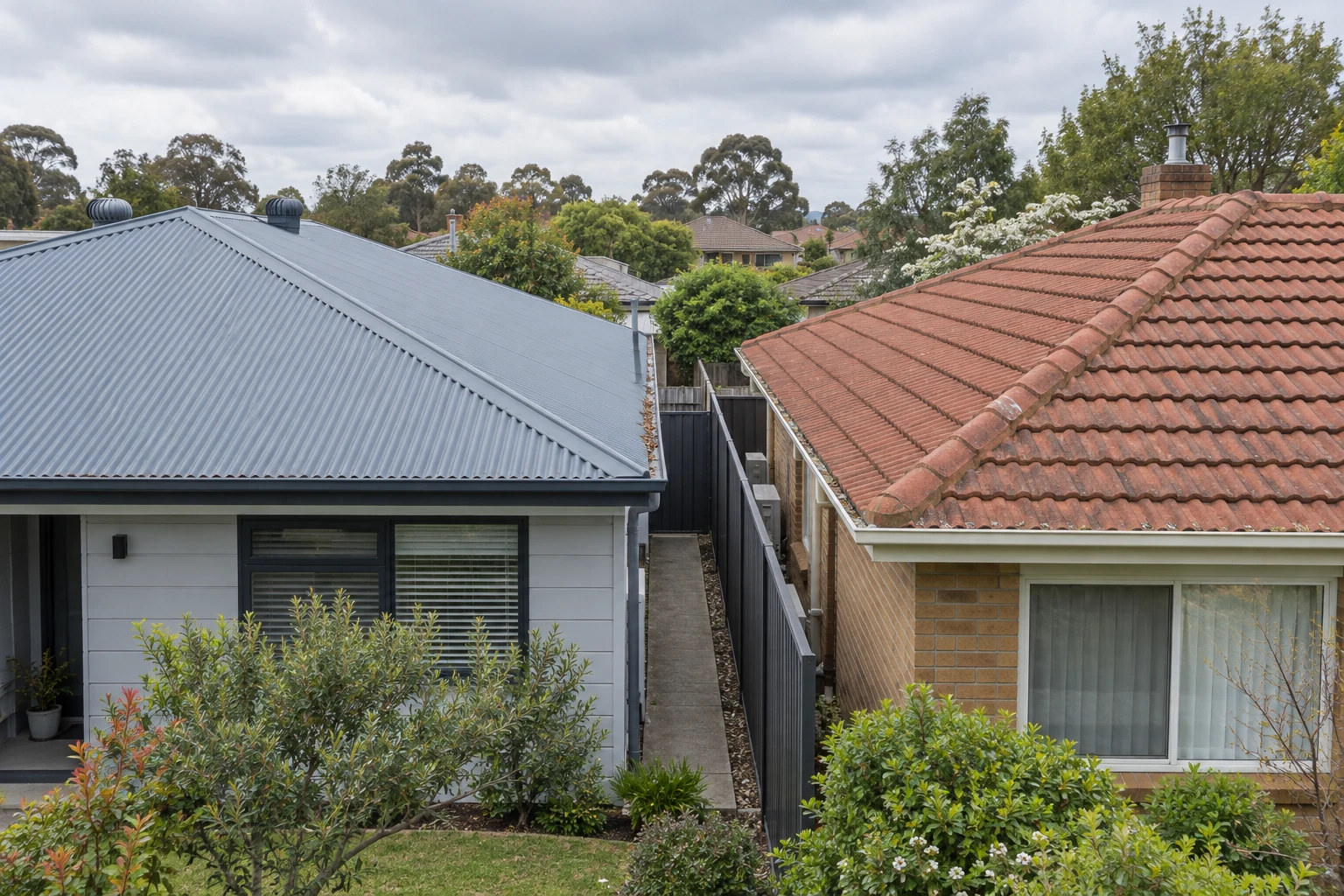
Melbourne roofs mostly come in two kinds: prefinished metal sheeting, which most people call Colorbond after the best-known brand, and tiles, either terracotta or concrete. Both collect the same things over the years. Moss and lichen on the shaded slopes, leaf litter in the valleys and gutters, dirt and pollution grime, and the black streaking that runs down from wherever water pools. But the way each roof is cleaned, and the ways each one can be damaged, are very different.
Quick answer: Both kinds of roof collect the same moss, lichen, leaf litter and grime, but they are cleaned differently. Prefinished metal roofing is walked only along the fixing lines and washed gently in the direction of the laps to protect the paint finish, while tiled roofs are cleaned with care around brittle tiles and pointing, often with a treatment for moss and lichen first and the need for repairs checked as part of the job.
If you are weighing up a roof clean before summer or before putting the house on the market, this is what changes between the two.
Why the two roofs get dirty differently
A metal roof is smooth, sheds water quickly and dries fast, so growth tends to stay in specific places: the laps where sheets overlap, around flashings and penetrations, along the bottom edge near the gutter, and anywhere leaves and debris collect against something. The general surface often just looks dull or chalky as the paint finish weathers, with grime building up on the flatter, shadier sections.
Tiles are a different surface. They are textured and slightly porous, so they hold moisture after rain and give moss and lichen something to grip. On south-facing slopes and under trees, a tiled roof can develop a full coat of green and grey growth, with moss building up in the overlaps where tiles sit on top of each other. Over time the growth can hold water against the tiles and the ridge capping and lift debris into the gutters every time it rains.
Where you live in Melbourne changes the picture too. Homes in the leafier eastern and outer suburbs collect gum leaves, bark and seed pods in valleys and gutters on either roof type, and the shade from big trees keeps slopes damp for longer. Closer to the bay, salt carried on the wind settles on roofs, and on metal roofing it is the sheltered areas that rain never washes clean, under eaves and behind parapets, where salt and grime sit longest against the paint.
Walking on the roof: the first big difference
How a roof can be walked on shapes the whole job. Metal sheeting is walked along the lines of the fixings, where the sheet is supported by the battens underneath. Stepping between them can dent or crease the sheet, and a creased sheet can hold water. Soft-soled footwear matters too, because grit underfoot scratches the paint finish.
Tiles are brittle, and older terracotta and concrete tiles more so. Weight placed in the wrong spot can crack a tile, and the crack may not show until the next heavy rain finds it. Experienced roof workers know where to place their feet and spread their weight, and any tiles cracked or slipped are something a good clean should look for and report rather than leave behind. This is also why a tiled roof is not a sensible DIY job: you can damage the roof while trying to clean it, before even considering the fall risk.
Pressure, coatings and how the water goes
On a metal roof the priority is protecting the paint finish. High pressure or a narrow jet held close can damage the coating, and spraying uphill under the laps can drive water into the roof space. The usual approach is a gentle, wide-fan wash worked down the slope with the sheets, so water runs the way the roof was designed to shed it. Manufacturers’ care guidance for prefinished steel generally favours this kind of gentle washing.
That same guidance tends to recommend regular washing of the sheltered parts of a metal roof that rain does not reach, particularly near the coast or in industrial areas, because deposits left sitting on the finish shorten its life. Harsh or abrasive cleaners, wire brushes and scourers have no place on prefinished steel; a soft brush and plain water or a mild cleaner do the job without harming the coating.
Tiles tolerate more water, but there are still things to watch. The pointing that holds the ridge capping in place can be loosened or washed out by a careless jet. Older tiles with a worn surface can be eroded further. And a coated or painted tiled roof has the same concern as metal: the coating can be stripped or patched if the pressure is too high. Many tiled-roof cleans start with a treatment applied to loosen moss and lichen first, so the growth comes away with less force.
Gutters, valleys and the rest of the job
Whatever the roof, the clean is not finished at the roofline. Everything that comes off the roof heads straight for the gutters and downpipes, so they need clearing at the end of the job, not the beginning. Valleys, where two slopes meet, collect leaf litter on both roof types and are a common place for water to back up. Box gutters and internal drainage, more common on some metal-roofed and renovated homes, need particular attention because an overflow there tends to come inside the house rather than over the edge.
A clean is also the best chance to look closely at the roof. On metal roofs that means loose or missing screws, rust spots, lifted flashings and failing sealant. On tiles it means cracked or slipped tiles, cracked or crumbling ridge pointing, and moss that has been lifting the overlaps.
Safety, older roofs and when to call a professional
Any roof clean is work at heights, and falls from roofs and ladders are a serious risk. The ground-level jobs, like clearing what you can reach from a properly secured ladder at the gutter line, are as far as most homeowners should go. Wet roofs are especially dangerous, and moss-covered tiles become very slippery during cleaning.
One type of roof needs particular care: older fibro or cement sheet roofing, common on Melbourne homes from before the 1990s. It may contain asbestos and should never be pressure washed, walked on or scrubbed. If you are not sure what your roof is made of, have it assessed before any cleaning is arranged.
For metal and tiled roofs, a professional roof clean brings the right equipment, fall protection and a method suited to the surface, along with a gutter clean and an honest report of anything that needs repair. That matters most before the summer storms, when a roof and gutters that are clear can carry away a heavy downpour rather than sending it into the ceiling.
Helpful FreshDuct services & guides
Frequently asked questions
Can you pressure wash a Colorbond roof?
It can be washed, but gently. Prefinished steel roofing has a painted coating that can be damaged by high pressure or a narrow jet held close, and spraying up under the laps can push water where it should not go. A low-pressure wash with a wide fan, worked down the slope with the sheets, is the usual approach. Check the manufacturer’s care guidance, which generally favours gentle washing over aggressive pressure.
Is it safe to walk on a tiled roof to clean it?
Tiles can crack under foot, especially older terracotta and concrete tiles, and a cracked tile may not show until the next heavy rain finds it. Experienced roof workers know where to step and spread their weight, and use proper fall protection. For a homeowner, the honest answer is that a tiled roof is not a safe DIY surface. Clean what you can reach from the gutter line with a ladder properly secured, and leave the roof itself to people equipped to work at heights.
Why does a tiled roof grow more moss than a metal one?
Tiles are textured and slightly porous, so they hold moisture and give moss and lichen a surface to grip, especially on south-facing slopes and under trees. Metal roofing is smooth and sheds water quickly, so growth usually stays to shaded areas, the laps between sheets and wherever leaf litter collects. Both roofs green up faster where trees overhang them.
Does an old cement sheet roof get cleaned the same way?
No. Older fibro or cement sheet roofing may contain asbestos and should never be pressure washed, walked on, scrubbed or broken. If a roof might be cement sheet from before the 1990s, have it assessed by a suitably qualified professional before anyone works on it.
Get a fast, free quote
Talk to FreshDuct about roof services across Melbourne — 7 days a week, clear upfront pricing, 600+ 5-star reviews.