 FreshDuct
When people think about duct cleaning, they usually think about heating. Melbourne is a heating city, and most of the talk about dusty ducts happens in autumn before the gas ducted heater goes on. But many Melbourne homes also have a second set of ducts in the roof: the large ones that carry air from an evaporative cooler to the ceiling outlets. Those ducts need attention too, and late spring is the time to give it.
Quick answer: Yes. An evaporative cooler pushes large volumes of outside air through the ducts all summer, and that air carries dust, pollen and moisture. Over time this builds up inside the ducts and outlets, and cleaning them along with servicing the cooler before summer helps the system blow fresh, even air.
The short answer is yes, evaporative cooling ducts do collect build-up, and for a slightly different reason to heating ducts. This post explains what is going on inside them, the signs they need a clean, and how it fits with servicing the cooler.
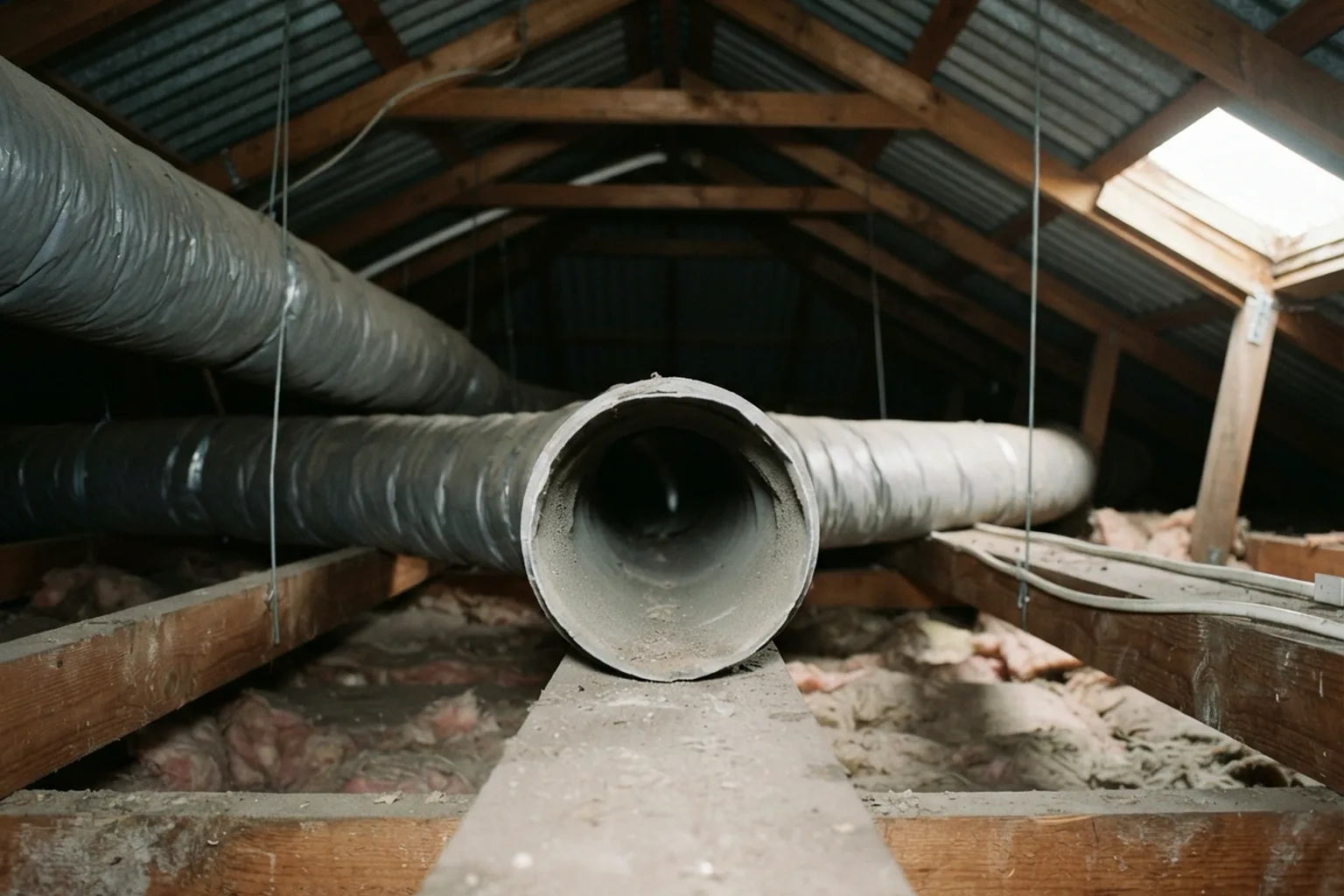
How an evaporative system moves air
An evaporative cooler sits on the roof and draws outside air through wet pads. As water evaporates from the pads, the air passing through cools down. A fan then pushes that cooled air down through large flexible ducts in the roof space and out through outlets in the ceilings of each room.
Unlike a refrigerated system, which recirculates the air already in the house, an evaporative system brings in fresh outside air all the time. That is part of its appeal, and it is why you leave windows or doors partly open when it runs so the air can flow out. It also means the ducts handle a very large volume of outside air over a summer.
Why build-up happens in evaporative ducts
The pads catch a good deal of what comes in, but not everything. Fine dust, pollen, smoke particles and bits of debris get through, particularly when the pads are old, dry in patches or damaged. Because the air leaving the pads is cool and humid, that dust tends to cling to the inside of the ducts, the joints, and the outlets rather than blowing straight through.
Then the cooler sits idle for months. Over autumn and winter the settled dust stays in the ducts. In many homes, warm air from the heating also rises into the cooler ducts through the ceiling outlets, unless winter covers or a damper stop it, and carries household dust up into them as well.
Over several seasons, a few other things add to the problem. Flexible ducts can sag between their supports, and dust collects in the low points. Joints can work loose, letting in dust from the roof space itself, which in older homes can include fine insulation fibres. Birds, insects and the odd leaf also find their way in through a cooler that has no cover or a damaged one.
Signs your evaporative ducts need cleaning
Some signs come from the cooler and some from the ducts, and they often show up together on the first hot day of the season.
- A musty or stale smell from the outlets when the cooler starts, which lingers after the first few minutes.
- Visible dust or dark marks on the ceiling outlets or the ceiling around them.
- A puff of dust when the cooler first kicks in.
- Weaker airflow from some outlets than others, which can point to a blocked, crushed or disconnected duct.
- More sneezing or irritated eyes in the house once the cooler is running.
If you notice only one of these, start with the cooler. Check the pads and the water in the tank, and make sure any winter covers on the outlets have been removed. If the smell or the dust persists once the cooler has been serviced, the ducts are the likely source.
What a clean involves
Evaporative ducts are larger than most heating ducts and run across the roof space from the cooler to each outlet. A professional clean works from the outlets back along each run.
- Inspect. The technician checks the outlets and looks at the duct runs, joints and connections in the roof space for crushing, sagging or gaps.
- Clean the outlets. Ceiling outlets are removed or opened and cleaned.
- Clean the ducts. Each run is cleaned with brushes and HEPA-filtered extraction equipment, so the loosened dust is drawn out rather than blown into the house.
- Check and report. Any damaged or disconnected sections are pointed out, and you get before and after photos of what came out.
Flexible ducts that have torn, collapsed or perished over the years cannot be cleaned back into shape. FreshDuct can replace those sections, or the whole duct network, as part of the same visit or a follow-up quote.
Cleaning the ducts alongside a cooler service
Cleaning the ducts only makes sense if the cooler feeding them is also clean. A cooler with stale water, a dirty tank or clogged pads will put dust and smells straight back into freshly cleaned ducts. In the same way, a freshly serviced cooler pushing air through a winter of settled dust will not smell as fresh as it should.
That is why the two are best done together before summer. The cooler service deals with the pads, tank, pump, water distribution and fan. The duct clean deals with everything downstream. The order matters less than doing both before the first heatwave, when everyone wants their cooler running at once.
While the ducts are being cleaned, it is also worth checking the cooler’s roof flashing and seals. Gaps around the base of the unit can let rain into the roof space in winter, and a damper that does not close properly lets heated air escape through the cooler all through the cold months. FreshDuct can reseal cooler roof flashing as part of the same booking.
Book before the first heatwave
Melbourne often gets a few hot days in late spring before summer properly settles in, and that first hot spell is when coolers that were not serviced show their problems. Booking a cooler service and duct clean in the weeks before means the system starts the season fresh, and you are not waiting while everyone else is trying to book on the same hot weekend.
FreshDuct cleans evaporative and heating ducts across Melbourne, seven days a week. Our technicians are police-checked, every job comes with before and after photos, there is no call-out fee, and you pay after the job. If you are not sure whether your ducts belong to the cooler, the heater or both, we can check that on the day.
Helpful FreshDuct services & guides
Frequently asked questions
Are evaporative ducts the same as heating ducts?
Sometimes they are separate, sometimes not. Many Melbourne homes have a roof-mounted evaporative cooler with its own large ducts and ceiling outlets, separate from a gas ducted heating system that uses floor or ceiling vents. Some homes share outlets between the two. A technician can trace which ducts belong to which system before cleaning.
Why does my evaporative cooler smell musty when I first turn it on?
A musty smell on the first run of the season usually comes from the cooler itself, such as stale water, old pads or a dirty tank, but damp dust sitting in the ducts and outlets can add to it. Servicing the cooler and cleaning the ducts together deals with both sources.
Do I need to close up the cooler ducts over winter?
Many homes fit winter covers to the evaporative outlets, or have a damper on the cooler, to stop warm air from the heating escaping up through the cooler ducts and the roof unit. If covers are used, take them off before the cooler runs again so the air has somewhere to go.
When is the best time to clean evaporative ducts?
Late spring, before the cooler gets its first serious use. Cleaning the ducts at the same time as the pre-summer cooler service means the system starts the season clean, rather than pushing a winter of settled dust into the house on the first hot day.
Get a fast, free quote
Talk to FreshDuct about air ducts across Melbourne — 7 days a week, clear upfront pricing, 600+ 5-star reviews.