 FreshDuct
A burst flexi hose under the vanity, a storm that finds a weak spot in the roof, a blocked gutter overflowing into the wall cavity. Water gets into Melbourne homes in all sorts of ways, and once the drip stops, the next question is always the same: what can be saved, and what has to go?
Quick answer: It depends on the material, how long it stayed wet and whether the water was clean. Hard, solid materials such as timber framing often dry out if air reaches them quickly, while carpet underlay, soaked plasterboard, wet insulation and chipboard usually need to be removed. Mould tends to follow when anything stays damp, so speed matters more than anything else.
The honest answer is that it depends on three things: what the material is, how long it stayed wet, and whether the water was clean. This post walks through the common materials one by one, and explains when drying is enough and when it is time to bring in mould remediation.
Why mould follows water
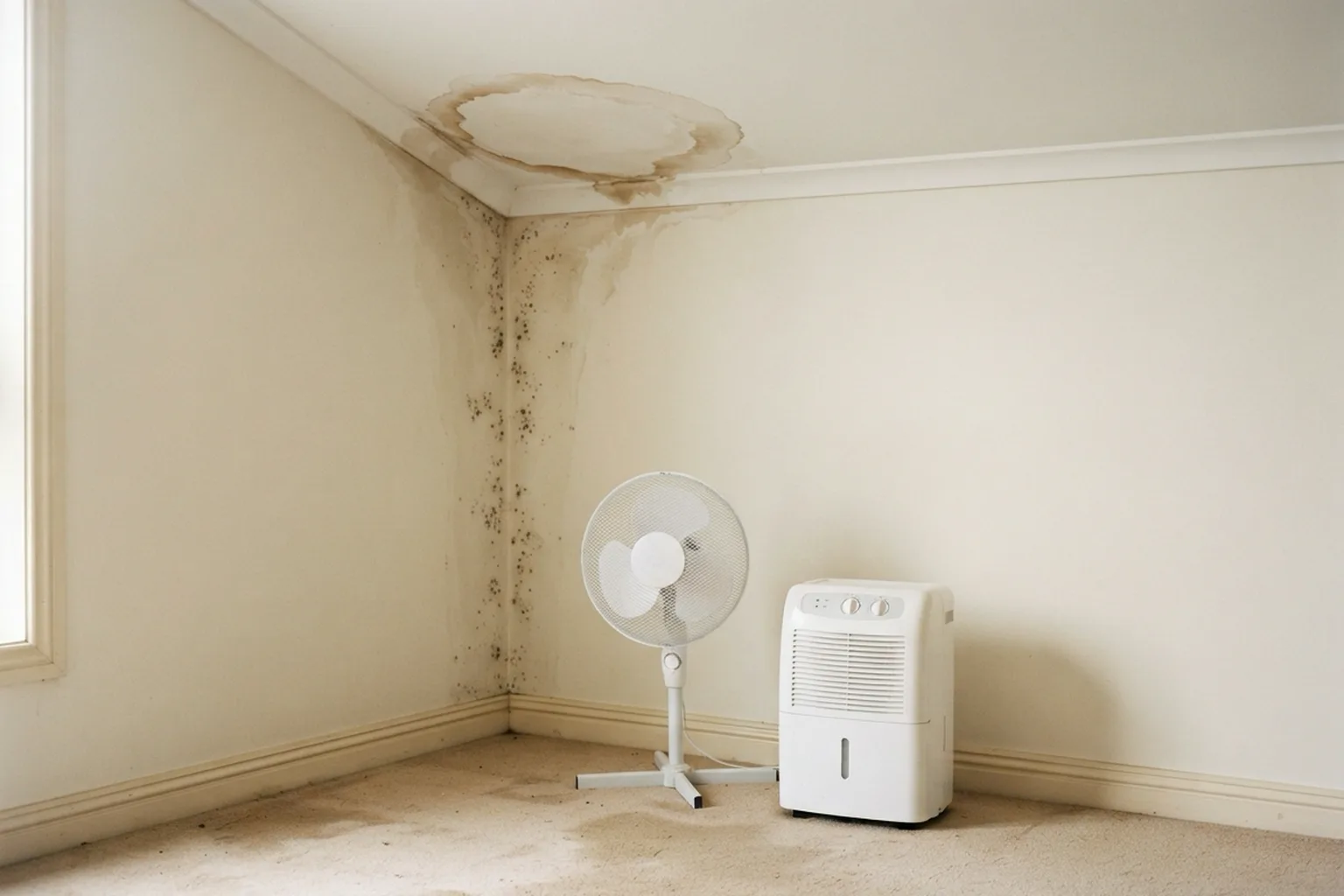
Mould spores are already present in almost every home. What they need to grow is moisture and something organic to feed on, and building materials such as the paper face of plasterboard, timber, dust and carpet backing all qualify. A leak supplies the moisture. If materials dry quickly, the spores never get going. If they stay damp, especially in a warm room with the windows shut, mould can appear within days.
That is why the first hours and days after a leak matter so much. The goal is not just to stop the water, but to get everything dry before mould has a chance to establish.
The tricky part is that water travels. It runs along ceiling joists before it drips, wicks up plasterboard from a wet floor, soaks under vinyl and floating floors, and pools behind kitchen kickboards and bathroom vanities. The visible stain is often some distance from the wettest spot, so it pays to check the rooms and cavities around it, not just the patch you can see.
The first things to do
- Stop the water. Turn off the mains or isolate the fixture. For roof leaks, get the source covered or fixed as soon as it is safe.
- Make it safe. If water has reached power points, light fittings or the switchboard, keep away and have an electrician check it.
- Take photos. Photograph the damage before moving anything. It helps with an insurance claim and with working out what got wet.
- Get air moving. Open windows when the weather allows, run fans, and use a dehumidifier if you have one.
- Lift what you can. Move furniture, rugs and boxes off wet floors so the area underneath can dry.
Material by material: what usually recovers
Plasterboard. Board that got splashed or wet for a short time can often dry out. Board that is soft, bulging, crumbling or sagging has lost its strength and needs cutting out. A brown tide mark that keeps spreading means water is still getting in or the board is still wet.
Carpet underlay. Underlay acts like a sponge and dries slowly, especially under heavy furniture. It is often the first thing to go, even when the carpet above it can be saved.
Carpet. If the water was clean and the carpet is lifted and dried quickly, it can sometimes be relaid. Carpet soaked by dirty water, or carpet that has started to smell, is usually replaced.
Timber skirting, frames and floors. Solid timber can often dry if air can reach it. Watch for swelling, cupping in floorboards, dark staining and soft spots, which can mean the timber stayed wet too long.
Insulation. Wet batts in a wall or ceiling are hidden, slow to dry and can hold moisture against the framing. Our post on wet ceiling insulation after a roof leak covers how to decide between drying and replacing it.
Chipboard and cabinet bases. Particleboard swells and falls apart once soaked. Even when it feels dry again, it rarely returns to its original shape or strength.
Clean water, grey water and dirty water
Where the water came from changes the decision. Clean water from a burst supply pipe is the most forgiving, and more materials can be dried and kept. Water from a washing machine, dishwasher or shower carries soap and organic matter, which feeds mould faster. Water from an overflowing toilet, a sewer backup or floodwater coming in from outside is contaminated, and porous materials it touched should be removed rather than dried.
If you are unsure what kind of water you are dealing with, treat it as the more serious kind.
Time works the same way. A material that would have dried well if it was caught the same day can be past saving if it sat wet over a long weekend while the house was closed up. When you are weighing up whether to keep something, think about how long it stayed wet as much as what it is made of.
Signs the drying did not work
Sometimes a room looks dry on the surface but moisture is still trapped behind a wall, under a floor or in a ceiling cavity. Watch for these over the following weeks:
- A musty, earthy smell that lingers after the room has been aired.
- Stains that grow, darken or reappear after cleaning or painting.
- Paint bubbling or peeling, or wallpaper lifting at the seams.
- Dark spotting along skirting boards, behind furniture or in wardrobe corners.
- Floorboards that cup or feel springy underfoot.
If mould keeps returning to the same place, there is usually still a moisture source behind it. Our post on why mould keeps coming back in the same spot goes into that in more detail.
When to bring in mould remediation
A small amount of surface mould on a hard surface after a minor leak can often be cleaned. It is worth calling in professionals when:
- Mould is visible over a larger area, or on porous materials such as plasterboard or carpet.
- Materials stayed wet for several days before drying started.
- The water was grey or contaminated.
- There is a musty smell but you cannot find where it is coming from.
- Someone in the home has asthma, allergies or a weakened immune system.
FreshDuct does mould remediation across Melbourne, seven days a week. That means tracing how far the damp has spread, removing materials that cannot be saved, treating and cleaning what remains, and using HEPA-filtered equipment to capture spores during the work. We take before and after photos on every job and can provide a written report, which is useful if you are making an insurance claim. There is no call-out fee, and you pay after the job.
Helpful FreshDuct services & guides
Frequently asked questions
How quickly does mould grow after a leak?
It can start within days if materials stay wet, especially in a warm, closed-up room. The exact speed depends on temperature, airflow and what got wet, which is why drying the room as fast as possible is the single most useful thing you can do.
Can I just paint over a water stain?
Only once you are sure the material underneath is dry and the leak is fixed. Painting over damp plasterboard traps the moisture behind the paint, and a stain that keeps coming back is a sign the board is still wet or the leak has returned.
Do I need to remove carpet after a leak?
Not always. Carpet itself can sometimes be lifted, dried and relaid if the water was clean and it dries quickly. The underlay underneath is a different story: it holds water and dries slowly, so it is often replaced even when the carpet is kept.
When should I call a mould remediation service?
When mould is already visible, when there is a musty smell you cannot trace, when materials stayed wet for days, or when the leak involved dirty water. A remediation service finds the extent of the damp, removes affected materials, treats what remains and can provide a written report.
Get a fast, free quote
Talk to FreshDuct about mould remediation across Melbourne — 7 days a week, clear upfront pricing, 600+ 5-star reviews.