 FreshDuct
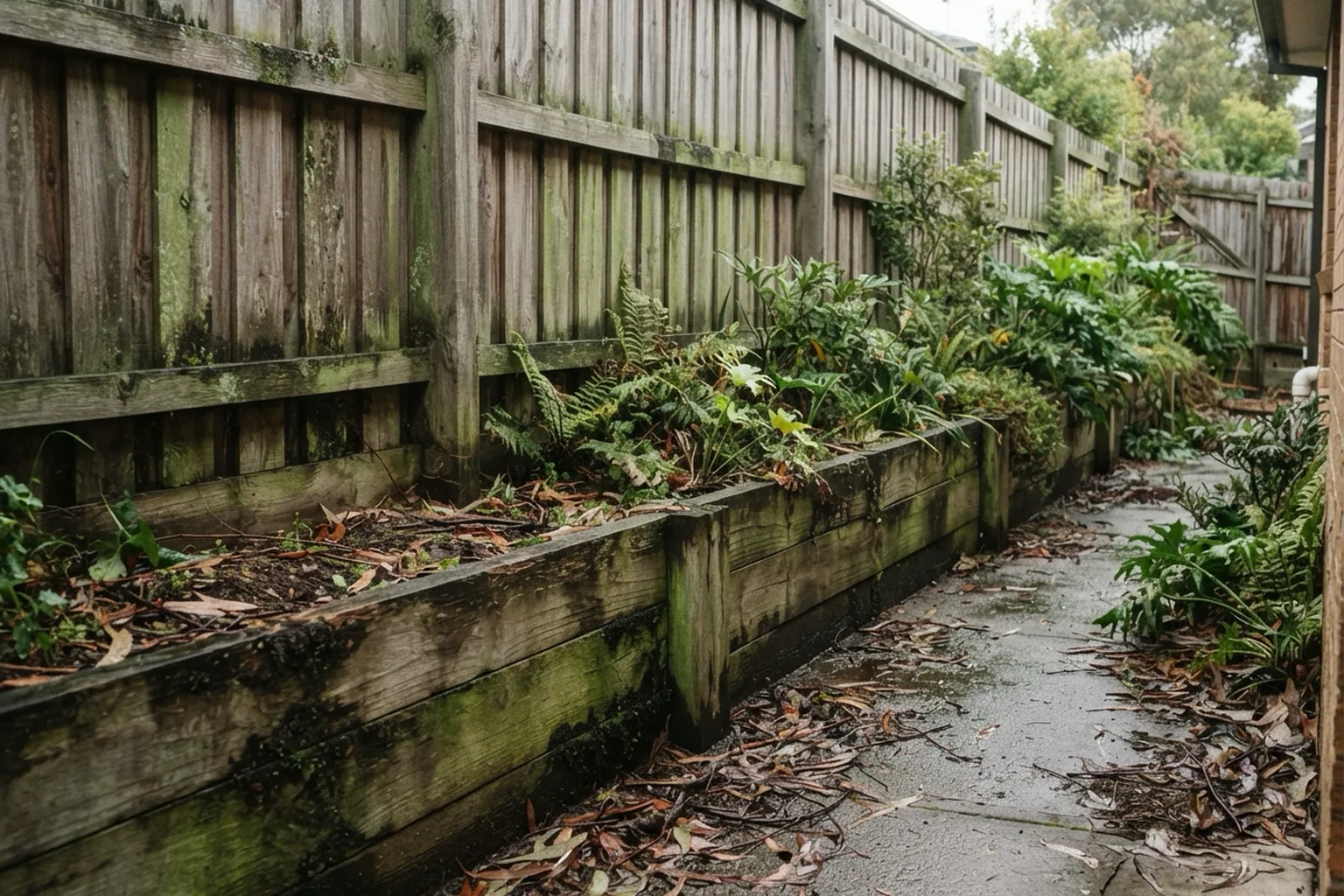
Walk down the shaded side of almost any Melbourne house after winter and you will see it: a timber paling fence gone green along the bottom, a sleeper retaining wall streaked with black, a brick garden wall with grey-green crust in the corners. It is one of the most common exterior cleaning jobs we see, and it is also one of the easiest to get wrong, because fences and walls are made of very different materials.
Quick answer: Green and black growth on fences and retaining walls is usually algae, moss, lichen and mould feeding on moisture in shaded, damp spots. It can be cleaned off with pressure washing, but the pressure and technique have to suit the surface, because timber palings and sleepers mark far more easily than brick or block. Clearing the damp base and trimming overhanging plants slows it coming back.
This post explains what the growth actually is, why it favours certain spots, how each surface should be cleaned, and how to slow it coming back.
What the green and black growth is
What looks like one stain is usually a mix. Green slime is mostly algae. Soft green cushions in gaps and on capping are moss. Flat, crusty grey-green or orange patches on brick and stone are lichen. Black spotting and streaks are often mould, or algae that has darkened as it dried.
All of them need the same three things: moisture, shade and something to hold onto. Rough timber, mortar joints and the porous face of sleepers give them plenty of grip, which is why fences and retaining walls go green long before smooth surfaces nearby.
It is worth dealing with for more than looks. Growth holds moisture against timber, which keeps palings and sleepers damp and speeds up rot at the base. The slime that washes off a fence or wall onto the path beside it can make paving slippery underfoot, especially on a shaded side path that never quite dries. And a fence that is going to be painted or stained needs the growth gone first, or the new coat will not stick.
Why shaded spots go first
In Melbourne, the south-facing side of a fence or wall barely sees direct sun from late autumn to early spring. Dew and rain sit on it for days, and the timber or masonry stays damp right through winter. Our post on which side of a Melbourne house goes green first explains the same pattern on house walls.
Other things make it worse:
- Soil and leaf litter banked against the base. They hold moisture right against the bottom of the fence, which is why growth often starts in a band along the ground.
- Overhanging plants. Shrubs and creepers block sun and air, and drip water onto the surface.
- Sprinklers and downpipes. A sprinkler that wets the fence every evening keeps it permanently damp.
- Retaining walls holding wet soil. Water seeping through from behind keeps the face damp from the inside.
Timber, brick and sleepers need different handling
Timber paling fences. Most Melbourne fences are softwood palings, often treated pine or hardwood that has weathered. Softwood is easily marked. Too much pressure, or a nozzle held too close, raises the grain into a furry texture or cuts grooves that look worse than the growth did. Timber is washed at low pressure with a wide fan, working with the grain.
Brick and block walls. Masonry can take more pressure, but old or soft mortar joints can be eroded, and render can be damaged if it is already cracked or drummy. The joints are often where growth is thickest, so they need attention without being blasted out.
Timber sleepers. Sleeper retaining walls combine the weaknesses of both: timber that marks easily and soil pressing against the back. Cleaning uses moderate pressure and care around joints and any rotting or split sections, which are worth noting for repair.
Concrete sleepers and capping. Concrete is tougher, but decorative finishes and coloured surfaces still need a sensible pressure so they are not etched or patchy.
How a fence or wall is cleaned
The washing is only one part of the job. The order matters:
- Check the surface. Identify what each section is made of and look for loose palings, cracked render or rotten sleepers before any water goes on.
- Clear the base. Rake out leaf litter and soil from the bottom edge, where the damp starts.
- Protect the garden. Wet the beds, move pots and plan where the runoff will go.
- Wash top down. Pressure is matched to the surface, and the wand is kept moving so no spot gets too much.
- Rinse and dry. Loosened growth is flushed off and the surface is left to dry in the air.
If the fence is going to be painted or stained afterwards, it needs to dry out properly first, which usually means waiting for a run of fine weather.
Slowing the growth coming back
In a shaded, damp spot, some growth will always return eventually. But you can slow it down a lot:
- Keep the base clear of soil, mulch and leaf litter.
- Trim plants back so they do not touch or shade the fence.
- Point sprinklers away from fences and walls.
- Check that downpipes and drains near retaining walls are not dumping water at the base.
- Give it a light wash before the growth gets thick, which is gentler on the surface.
Late spring and early summer are good times to clean, because the surface dries quickly afterwards and stays dry for months. It also pairs well with getting outdoor areas ready for summer, which we cover in our post on pressure washing decks and paving before summer.
When to call in a professional
A short run of fence can be a weekend job. It is worth getting help when the area is large, the growth is thick, the surfaces are mixed, or the fence or wall is old and fragile. Getting the pressure wrong on timber is permanent, and it is easy to do with a hired machine.
Access is the other common reason. Side paths are narrow, retaining walls often sit above or below garden beds, and the tallest sections of a boundary fence can be hard to reach evenly. Doing the fence and walls on the same visit as the paths, driveway or house walls also means all the runoff is dealt with once, rather than washing dirt from one surface onto another you cleaned last month.
FreshDuct cleans fences, retaining walls, paths and house exteriors across Melbourne seven days a week. Our technicians match the pressure and technique to each surface, take before and after photos on every job, and there is no call-out fee. You pay after the job.
Helpful FreshDuct services & guides
Frequently asked questions
Why does only one side of my fence go green?
Because that side stays damp longer. In Melbourne, the south-facing side of a fence or wall gets little direct sun through autumn and winter, so moisture lingers and growth takes hold. Overhanging plants, sprinklers and soil banked against the base make it worse.
Will pressure washing damage a timber fence?
It can if the pressure is too high or the nozzle is held too close. Softwood palings can fur, splinter or groove. The fix is to use lower pressure, a wider spray pattern and a steady, moving wand, working with the grain from the top down.
Can I clean sleepers without harming the garden?
Yes. Wet the garden beds down first so they are less likely to absorb runoff, move pots out of the way, and keep the spray angled so loosened growth runs onto paths rather than into the soil. Rinsing plants with clean water afterwards also helps.
How do I stop fences going green again?
Reduce the moisture. Rake leaf litter and soil away from the base, trim plants that shade or touch the fence, and redirect sprinklers that wet it. Growth will still return over time in shaded spots, but much more slowly.
Get a fast, free quote
Talk to FreshDuct about external house cleaning across Melbourne — 7 days a week, clear upfront pricing, 600+ 5-star reviews.