 FreshDuct
In a house, a clothes dryer usually sits against an outside wall and vents straight through it. Apartments and units are different. The laundry is often a cupboard in the middle of the floor plan, the nearest outside wall is rooms away, and the dryer came with the place, so nobody is quite sure what type it is or where its air goes.
Quick answer: A vented dryer blows lint and damp air out through a duct, which in an apartment often runs through the ceiling to a wall or roof outlet and needs cleaning. Condenser and heat pump dryers have no duct, so the lint stays inside the machine, in the door filter and a second filter or condenser that has to be cleaned by hand.
That matters, because every dryer has to put its lint and moisture somewhere. This guide explains the three types you will find in Melbourne apartments, where each one sends its lint, and what needs cleaning to keep the laundry dry and safe.
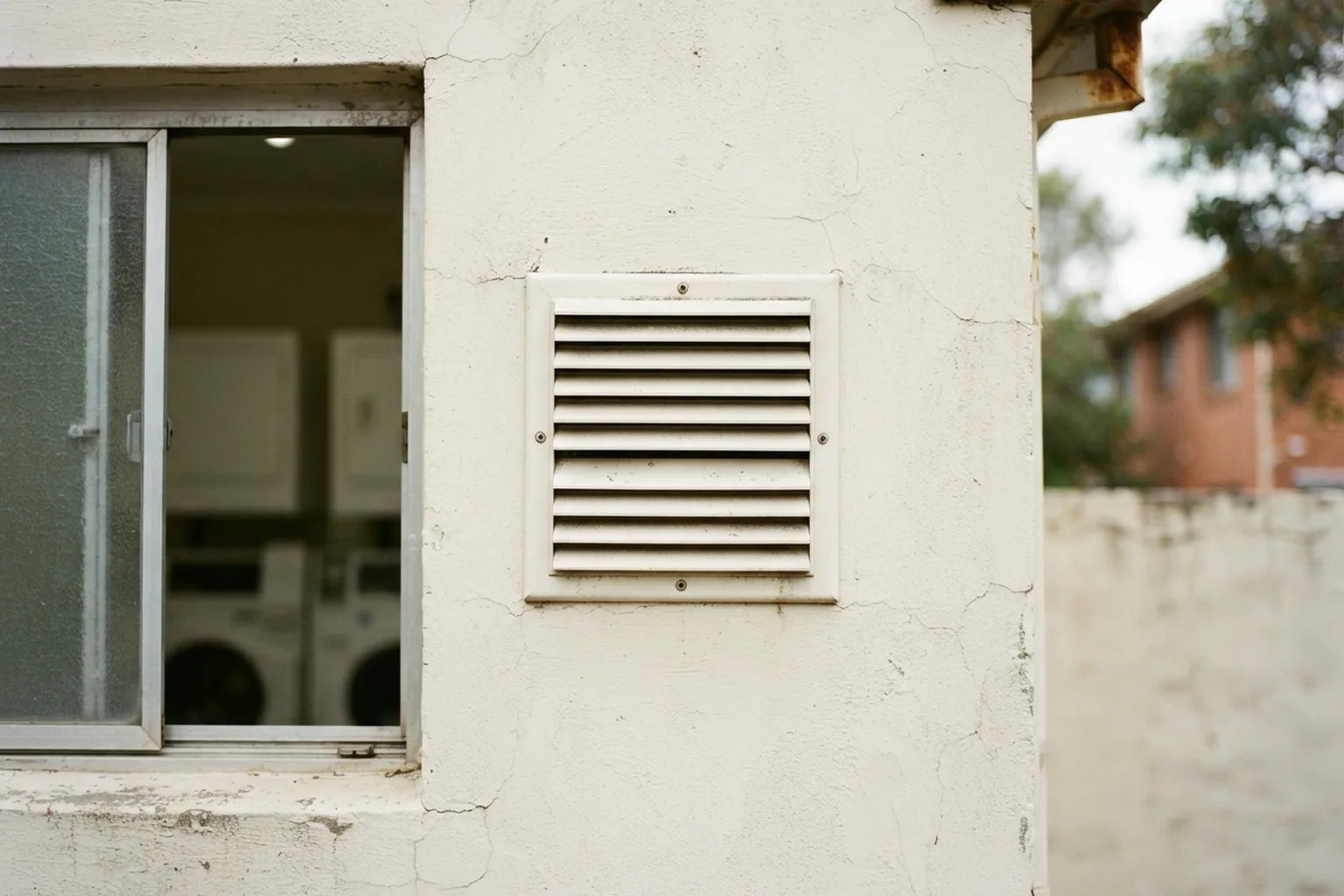
Three kinds of dryer, three places the lint goes
All dryers tumble clothes in warm air. The difference is what happens to that air once it is full of moisture and lint.
- Vented dryers blow the damp air out of the machine. A door filter catches most of the lint, and the rest travels with the air, either into a duct or straight into the room.
- Condenser dryers keep the air inside the machine. They cool it so the water drops out into a tank or a drain hose, then reheat and reuse the air. Lint is held in the door filter and in a condenser unit near the base.
- Heat pump dryers also recycle the air, using a small refrigeration system to dry it at a lower temperature. Lint is held in the door filter and a second filter that protects the heat exchanger.
To tell which one you have, look at the back and the base. A round outlet at the rear, or a hose leading away from it, means vented. A water tank or drawer, or a small panel low on the front, means condenser or heat pump. The model number on the door frame will confirm it.
Vented dryers in apartments: where the duct really runs
A vented dryer in an apartment should be connected to a duct that takes the air outside. In many buildings that duct runs from the laundry cupboard up into the ceiling space and across to a louvred outlet on an external wall, a balcony soffit or the roof. In some buildings several apartments share a riser.
These runs are much longer than the short hop through a wall in a house, and they often include several bends. Air slows down in a long run, and lint that the door filter misses settles along the way, especially at bends, at joins and behind the outside louvre. Because the duct is hidden above the ceiling, nobody sees it filling up.
The other common setup is a vented dryer with no duct at all, sitting in a cupboard and blowing into the room. That puts the moisture from every load into the apartment. In a small, well-sealed unit it shows up fast as wet windows, a musty cupboard and mould on the ceiling above the laundry.
Condenser dryers: no duct, but not no lint
Condenser dryers suit apartments because they need no outside connection. The water goes into a tank you empty, or down a drain hose into the laundry trough.
The lint still has to be dealt with. The door filter needs clearing after every load, and the condenser unit needs to be pulled out and rinsed on a regular basis, as the manual describes. When that is skipped, lint mats over the condenser, drying times stretch out and the machine runs hotter than it should.
A condenser dryer also gives off warmth and some moisture into the room while it works. In a closed cupboard with the doors shut, that heat has nowhere to go. Leave the cupboard doors open while it runs and use the laundry exhaust fan if there is one.
Heat pump dryers: gentler, with more filters to mind
Heat pump dryers work at a lower temperature and release less heat into the room, which makes them the easiest type to live with in a small laundry. They are also the most sensitive to lint.
Most have two filters: the usual one in the door and a second one low down that protects the heat exchanger. Some have a fine foam layer as well. If the second filter is forgotten, lint reaches the heat exchanger fins, which are hard to clean properly once clogged. Check the manual for your model and make the second filter part of the routine.
Signs the laundry is not coping
Whatever type you have, the warning signs are similar:
- Loads taking longer: a normal load needing a second cycle is the earliest sign of restricted airflow.
- A hot, steamy cupboard: the top of the dryer is too hot to rest a hand on, or the air in the cupboard feels wet.
- Condensation and mould: wet windows, peeling paint or dark spotting on the ceiling near the laundry.
- Lint where it should not be: fluff on shelves and skirting boards, or caught around the outside louvre.
- A hot, dusty or burning smell: stop using the dryer and have it looked at.
- No air at the outlet: with a vented dryer running, you should feel warm air at the outside louvre.
Lint is highly flammable, and a dryer that cannot move air runs hot. A blocked duct is a fire risk as well as a nuisance, so these signs are worth acting on.
Who looks after what in an apartment building
In a house, the whole vent is yours. In an apartment, it helps to split it into parts. The dryer, its filters and the flexible hose behind it are normally the occupier’s to look after. A duct that runs through the ceiling space to an outlet on the building’s exterior may be part of your lot or may be common property, depending on the plan of subdivision.
If you rent, tell your agent when drying times blow out or the cupboard gets steamy. If you own, ask the building manager or owners corporation where the duct runs, where it comes out and when it was last cleaned. In many buildings the honest answer is that nobody knows.
FreshDuct cleans dryer vent ducts in apartments and units, from the connection behind the dryer through to the outside outlet, and takes before and after photos so you and your owners corporation can see what came out. We also clean shared laundry ducts and central exhaust systems in apartment complexes for owners corporations and building managers, and a written report can be provided for the building’s records.
The short version: find out which type of dryer you have, clean every filter it has, and if it is vented, find out where the duct goes and have it cleaned. A dryer that can breathe dries faster, runs cooler and keeps the moisture out of your apartment.
Helpful FreshDuct services & guides
Frequently asked questions
Can I use a vented dryer in an apartment with no outside wall?
Only if it is connected to a duct that carries the air outside. Many apartments have a ceiling duct from the laundry cupboard to an outlet on a wall, balcony or roof. A vented dryer running in a closed cupboard with no duct pushes all its moisture and fine lint into the apartment, which leads to condensation, mould and a film of lint on every surface.
Do condenser and heat pump dryers need a vent cleaned?
No, because they do not have one. They collect water in a tank or send it to a drain, and they hold lint in the door filter plus a second filter or condenser unit near the base. Those need cleaning by hand as the manual describes. The laundry still needs some ventilation, because both types give off warmth and a little moisture into the room.
Who is responsible for the dryer duct in an apartment building?
It depends on where the duct runs and what your plan of subdivision says. The dryer and the flexible hose behind it are normally the occupier’s. A duct that runs through a ceiling space or a shared riser may be common property looked after by the owners corporation. Check with your building manager before any work on it, and ask who arranged the last clean.
How do I know the ceiling duct from my laundry is blocked?
The usual signs are loads taking much longer to dry, a hot and steamy laundry cupboard, condensation on nearby walls or windows, a burning or dusty smell, and little or no air coming out of the outside outlet while the dryer runs. Any of those with a vented dryer means the duct should be checked and cleaned before the dryer is used heavily again.
Get a fast, free quote
Talk to FreshDuct about dryer vent across Melbourne — 7 days a week, clear upfront pricing, 600+ 5-star reviews.