 FreshDuct
★★★★★
“Allen provided exceptional service — friendly, professional and went above and beyond.”
J
Jane
Wantirna South, VIC
Verified
Some people are using the FreshDuct name and pretending to be us to scam customers. Please don't fall for it. We are the only genuine FreshDuct, operating in Melbourne, Sydney, Adelaide and Perth. Only deal with us through freshduct.com.au, or call us directly on 04 3191 8137 or 0480 004 051. We are taking legal action against these impostors. Thank you.
Damp rising into the base of the stack, weathered mortar and flashing that has sat on a tile roof since the 1960s are the usual Clayton chimney repairs. FreshDuct photographs the stack first and quotes only the part that has failed.
White bloom low on the chimney breast? That is ground damp, not a flue fault — repointing over it will not hold.
Repairs on a Clayton chimney usually begin at the bottom rather than the top. The suburb sits low and flat, and a solid brick stack built on a 1950s footing draws ground moisture up through its base. It shows as a white bloom and tide marks on the chimney breast, then as soft, sandy mortar in the lowest courses. Repointing that without dealing with the moisture just moves the problem into the new joints.
Higher up, the failures are the ones a tile roof produces. Flashing that has been in place since the house was built lifts and cracks, the crown on top of the stack weathers into a cup that holds water, and the flue itself is unlined, so decades of heat and soot have opened the joints inside. A camera inspection tells us how far that has gone before we quote a stainless liner.
There is also the question of what the chimney is. Plenty of Clayton homes have a brick veneer skin around a metal flue, and that is a different repair from a solid masonry stack, usually the flue sections and the flashing rather than the brick. We establish which you have on the first visit, photograph everything, and put a firm price on the actual fault.
Masonry, damp, crown, flashing and flue repairs for post-war Clayton chimneys, with the cause found before the quote.
Efflorescence and soft joints low on a Clayton stack come from moisture wicking up through the footing on flat ground. We find where the water gets in and deal with that first, so repointing holds instead of blooming again.
The flashing around a 1950s or 60s Clayton chimney has usually never been replaced. Where it has lifted or cracked on the tile roof, we reseal or replace it and check the crown at the same time.
On a veneer chimney the brick is a skin and the flue inside is metal, so the repair is to flue sections and flashing rather than masonry. We confirm which construction you have before anyone quotes a rebuild.
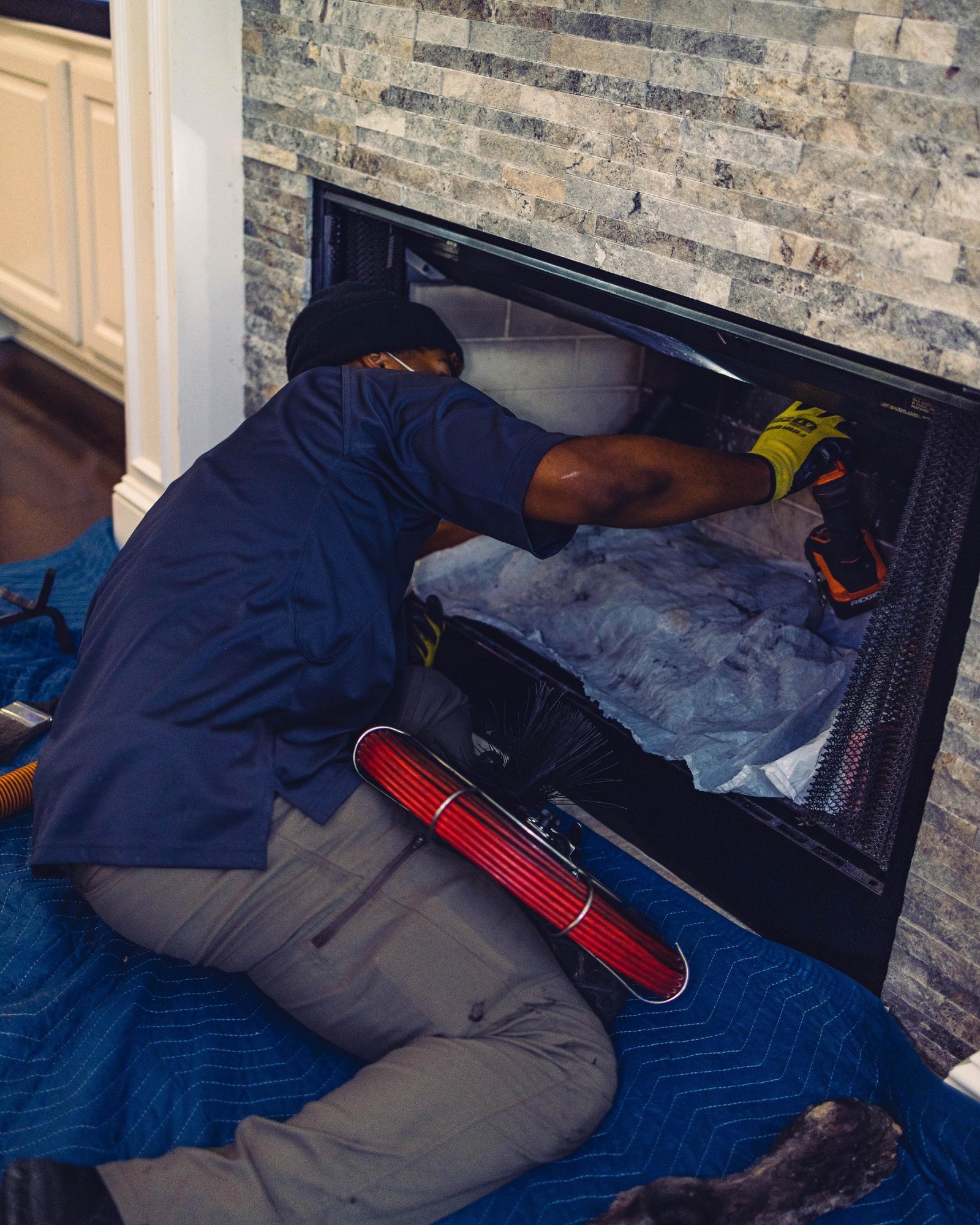
Real photos from Melbourne jobs — not stock, not staged.
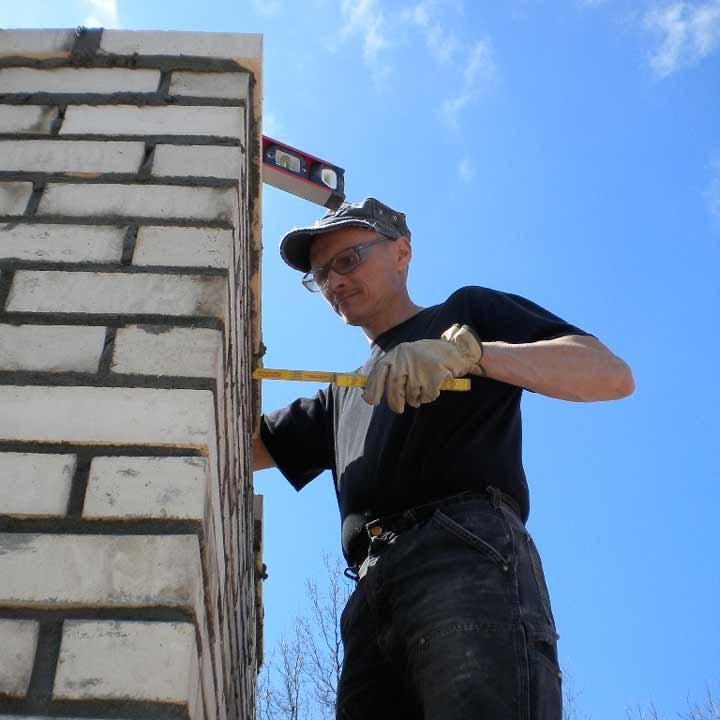


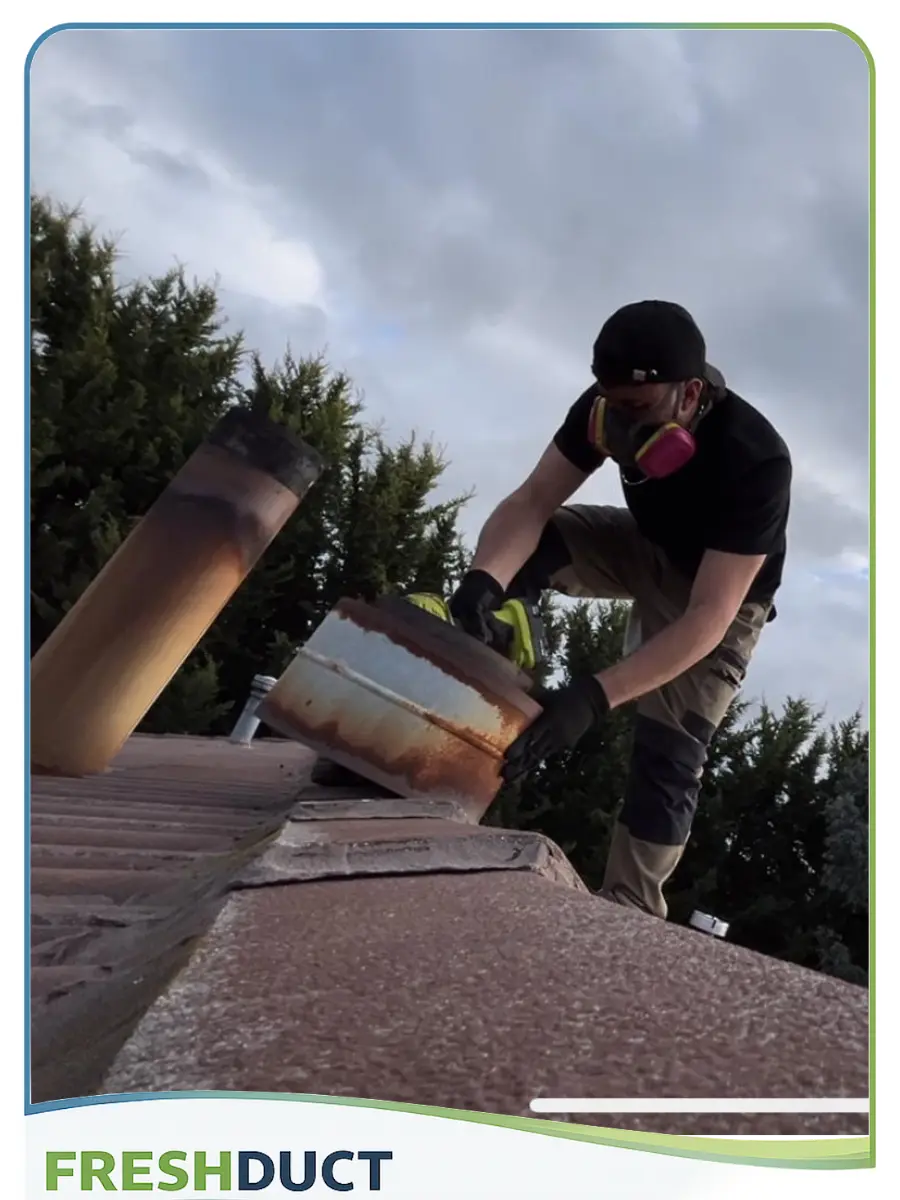
A photographed inspection of the stack, crown, flashing and flue comes first on every Clayton repair, and the photos come with the quote. Where the trouble is ground moisture rather than the chimney, we say so rather than sell brickwork that will fail again.
Mortar is matched to the post-war original, spalled bricks are cut out and replaced rather than rendered over, and a stainless liner is quoted only where the camera shows the flue joints have opened.
Documented end to end — every job, every suburb.
Camera and photo inspection of the stack, crown, flashing and flue.
We find the real cause — water, movement or heat — and explain it.
A firm price for only what is needed, before any work.
Masonry, crown, flashing or flue work done properly and safely.
Draw and weather-tightness confirmed.
Before and after photos and honest advice on what to watch.
Verified 5-star reviews from across FreshDuct’s duct, heating, cooling and chimney services.
“Allen provided exceptional service — friendly, professional and went above and beyond.”
Verified
“Highly impressed with the professionalism and efficiency. On time, and no mess left behind.”
Verified
“Exceeded my expectations. Knowledgeable, meticulous and respectful of our home.”
Verified
“So glad I chose FreshDuct. Knowledgeable team and the whole process was smooth from start to finish.”
Verified
“Quick, efficient and professional — we could immediately feel the difference.”
Verified
“The technician arrived on time and was incredibly thorough — the difference at home is obvious.”
Verified
The same local team covers the suburbs around Clayton. Explore nearby areas and related FreshDuct chimney services.
Yes, once the damp is dealt with. Sandy joints low on a Clayton stack are almost always ground moisture wicking up through the footing, and new mortar in a wet wall fails the same way. We find the source, fix that, then repoint with a matched mortar.
That is a veneer chimney: a brick skin around a steel flue. The brickwork rarely fails, but flue sections, the terminal and the flashing do, and those are what we inspect and repair. It is a smaller job than a solid masonry stack and we quote it as one.
White staining, crumbling mortar, loose or missing bricks, rust marks on the roof, water in the firebox after rain, or smoke seeping into rooms are the usual signs. A photographed inspection tells you what is cosmetic and what is not.
Yes — stainless steel liners for cracked or unlined flues on open fireplaces and wood heaters, quoted firm after a camera inspection. Gas flue work goes through the licensed gas specialists we arrange.
Often, with roof access and harness work. Taller or unstable stacks need scaffold, and we tell you before quoting rather than after.
Send your details and the office confirms a window for Clayton. No call-out fee, before and after photos, and honest advice on what your chimney needs and what it does not.