 FreshDuct
★★★★★
“Allen provided exceptional service — friendly, professional and went above and beyond.”
J
Jane
Wantirna South, VIC
Verified
Some people are using the FreshDuct name and pretending to be us to scam customers. Please don't fall for it. We are the only genuine FreshDuct, operating in Melbourne, Sydney, Adelaide and Perth. Only deal with us through freshduct.com.au, or call us directly on 04 3191 8137 or 0480 004 051. We are taking legal action against these impostors. Thank you.
On a Point Cook roof the terminal takes wind off the bay and birds from the wetlands. FreshDuct clears blocked terminals, fits guards and anti-downdraught cowls to wood heater flues and gas log fire terminals, and photographs the result from the roof.
Birds in the flue terminal again? A guard sized to the flue keeps them out of a Point Cook terminal without choking the draw.
The top of a Point Cook flue is a small steel terminal or cowl on a roof with very little around it. The estates sit on open ground beside the wetlands and the bay, and that means two things for a terminal: birds looking for a sheltered place to nest, and wind that arrives with nothing in its way. A cowl that was fine on handover day can be half blocked or pushing smoke back within a couple of winters.
A wood heater cowl clogs with creosote and whatever the wind carries onto the mesh, so the heater lights sluggishly and the glass blacks up. A gas log fire terminal that a bird has built in stops the flue venting freely, which is the one thing that terminal has to do. Either way the fix starts on the roof: we clear the terminal, look down the flue while the top is off and photograph both.
Where the problem is wind, we fit an anti-downdraught cowl and test the draw with it on rather than assuming. Where the problem is birds and debris, a guard sized to the flue keeps them out without restricting the outlet. A gas log fire terminal is handled from the flue side, with anything on the appliance itself going to the licensed gas specialists we arrange.
Guards, cowls and anti-downdraught terminals for the wood heater and gas log fire flues of Point Cook's estates, fitted from the roof and photographed.
Point Cook terminals sit beside the wetlands and open ground, and birds treat an open terminal as a ready-made nest box. We clear the nest, fit a mesh guard sized so the flue still vents, and photograph the finished terminal.
Open estate blocks near the bay give a cowl no shelter, and wind pushes smoke back down a light one. An anti-downdraught cowl is the usual fix, and we test the draw with it fitted before calling it solved.
A gas log fire needs an unobstructed terminal to vent, and a blocked one is not a cosmetic problem. We clear and check the terminal and the flue below it, and leave the appliance itself to the licensed gas specialists we arrange.
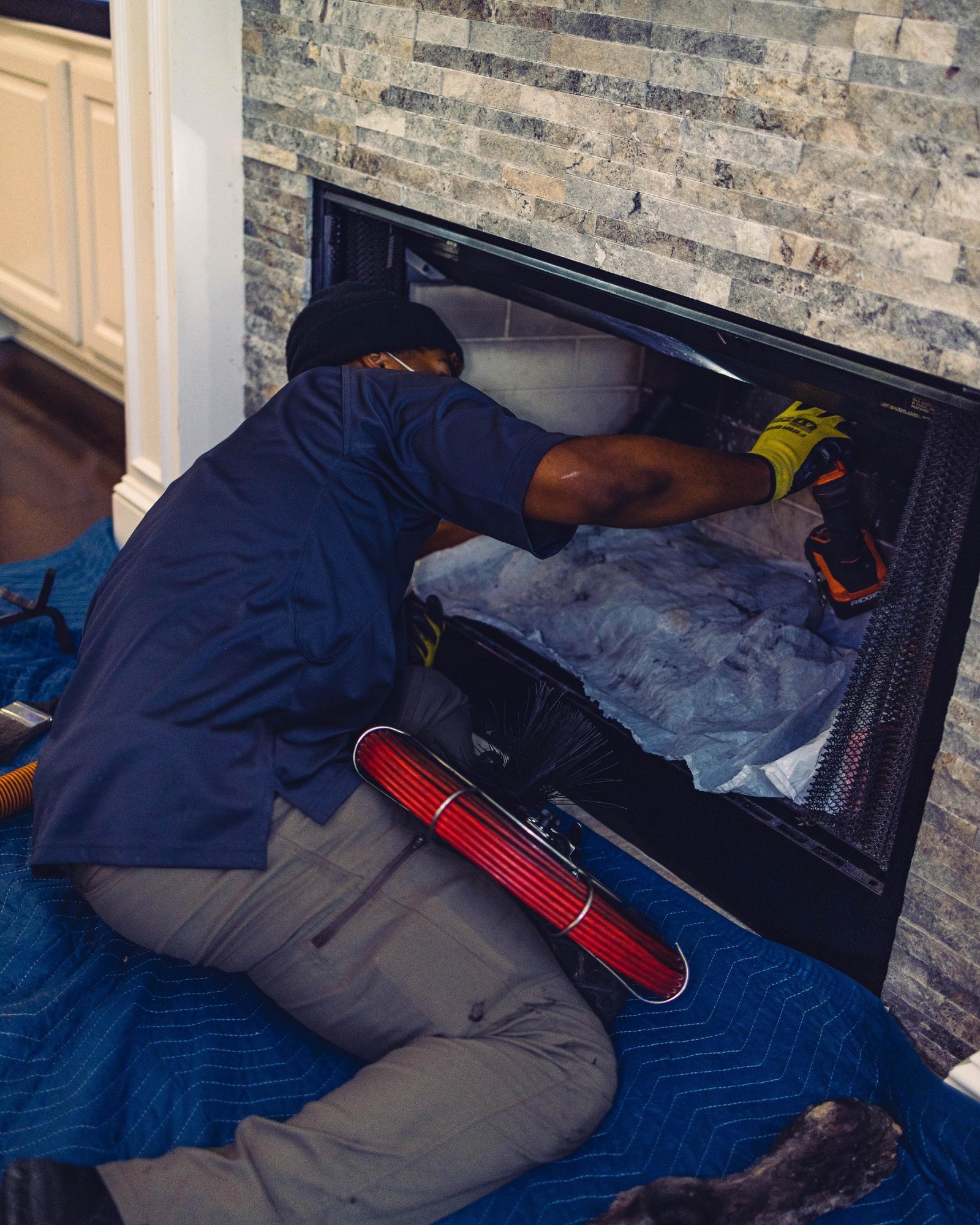
Real photos from Melbourne jobs — not stock, not staged.


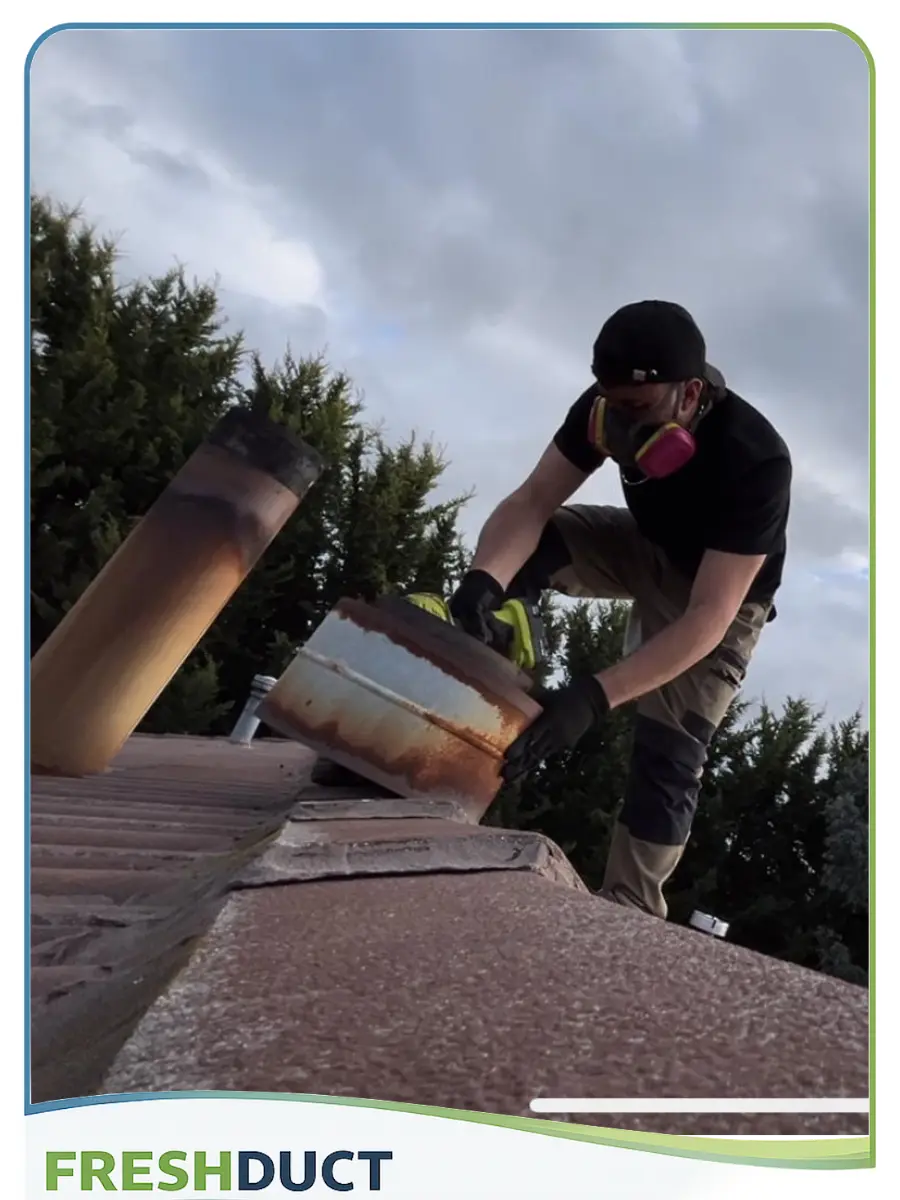
We measure the flue and its existing terminal, match a guard or cowl to the appliance and the problem it is having, and fix it from the roof, with harness work on the taller double-storey homes where the pitch calls for it.
The heater or fire is then tested with the new terminal in place, and a photo from the roof shows it fitted and sealed, so you can see the job was done without going up a ladder.
Documented end to end — every job, every suburb.
Flue size, terminal type and roof access checked.
The right cap or cowl for the appliance and the problem.
Firm price before any work.
Fixed and sealed from the roof, safely.
Draw checked with the cap on.
A photo of the finished cap from the roof.
Verified 5-star reviews from across FreshDuct’s duct, heating, cooling and chimney services.
“Allen provided exceptional service — friendly, professional and went above and beyond.”
Verified
“Highly impressed with the professionalism and efficiency. On time, and no mess left behind.”
Verified
“Exceeded my expectations. Knowledgeable, meticulous and respectful of our home.”
Verified
“So glad I chose FreshDuct. Knowledgeable team and the whole process was smooth from start to finish.”
Verified
“Quick, efficient and professional — we could immediately feel the difference.”
Verified
“The technician arrived on time and was incredibly thorough — the difference at home is obvious.”
Verified
The same local team covers the suburbs around Point Cook. Explore nearby areas and related FreshDuct chimney services.
A mesh guard fitted to the terminal and sized to the flue. Estate homes near the wetlands get more nesting attempts than most, and a plain open cowl invites them. We clear whatever is in there first, fit the guard and photograph the finished terminal so you can see it is closed off.
Usually. Wind across the open estate blocks pushes down a standard cowl and reverses the draw. An anti-downdraught cowl fitted at the terminal is the normal fix, and we light the heater and test the draw with the new cowl on before we leave.
An open flue lets rain, leaves and birds straight in. A cap keeps the flue dry, keeps nests out and, on a wood heater, a spark arrestor stops embers leaving the flue.
Usually a downdraught — wind pushing back down the flue. An anti-downdraught cowl is the normal fix; we confirm the draw with a test before and after.
Yes. If we are on the roof for a sweep and the flue needs a cap, we can quote it on the spot and fit it the same visit where we have the right size.
Send your details and the office confirms a window for Point Cook. No call-out fee, before and after photos, and honest advice on what your chimney needs and what it does not.