 FreshDuct
A concrete driveway takes more punishment than almost any other surface around a house. Cars drip oil, tyres scuff and turn on it, and Melbourne weather adds a film of grime, moss and leaf stain on top. Most people only notice how dark it has become when they are getting the house ready to sell, or tidying up before visitors arrive for Christmas.
Quick answer: Fresh oil drips and most tyre marks come off a concrete driveway with an absorbent, a concrete degreaser and a hot or high-pressure rinse. Older oil that has soaked deep into the concrete often lightens a lot but can leave a faint shadow, because pressure cleaning lifts what sits on and near the surface rather than what has wicked into the slab.
This post explains why oil and tyre marks behave the way they do on concrete, what pressure cleaning can and cannot lift, and the order to work in so you get the best result without sending oil down the drain.
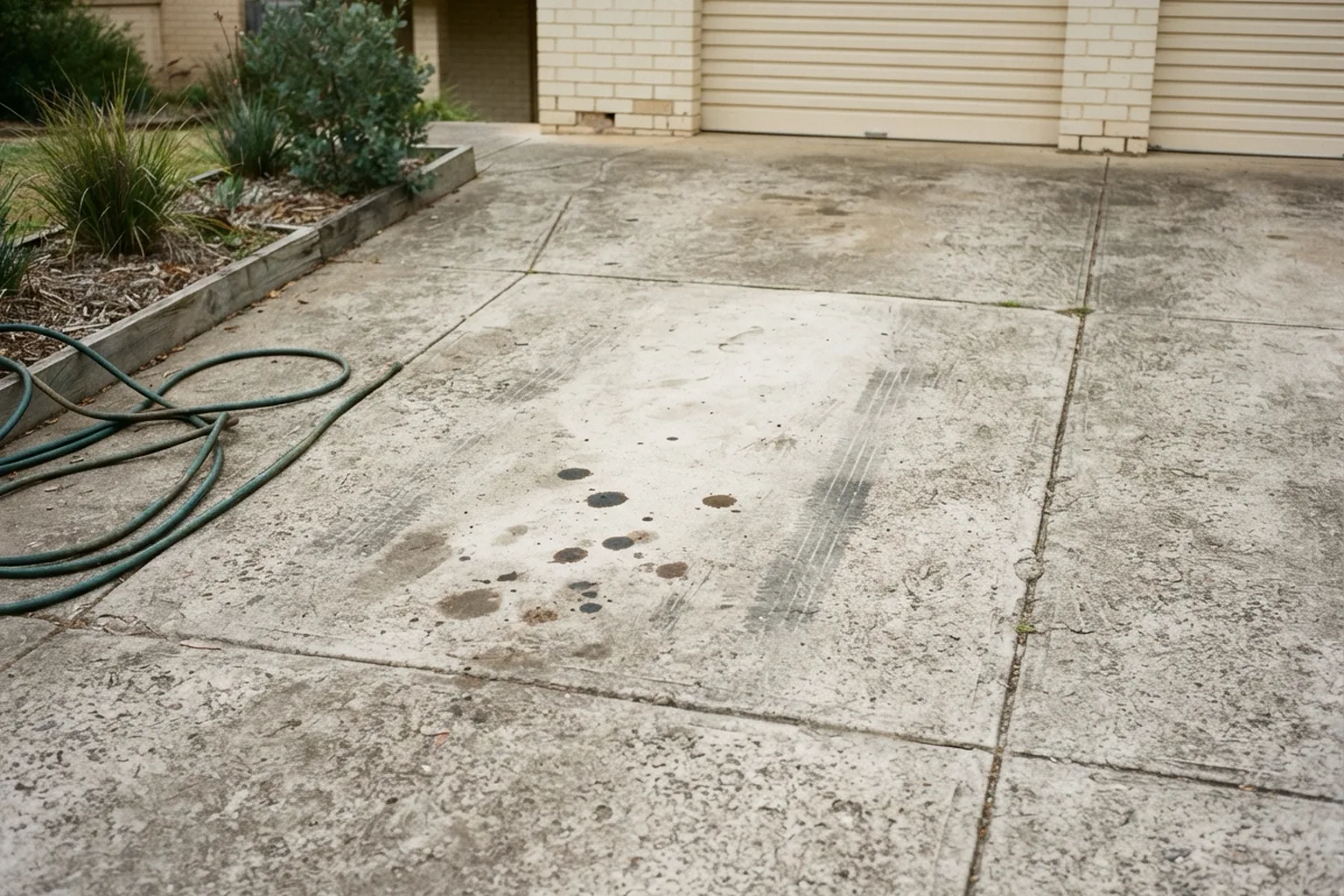
Why oil soaks into concrete
Concrete looks solid, but it is full of tiny pores and channels. When a car drips oil, the oil does not sit on top like water on glass. It starts wicking into those pores straight away, and on a warm day it spreads and sinks further. The longer a drip sits, the deeper it goes and the wider the dark patch becomes.
That is the single most useful thing to understand about driveway stains. A drip from last week is mostly near the surface and comes out well. A patch that has been under the same parking spot for years has soaked down into the slab, and no surface clean can pull all of it back out.
Tyre marks, rust and other common stains
Oil is not the only mark on a typical Melbourne driveway, and each kind behaves differently.
- Tyre marks. Black arcs where cars turn, or dark patches where tyres sit in the sun. These are rubber and tyre compounds transferring to the surface, and on bare concrete many lift with degreaser and pressure.
- Rust spots. Orange stains from metal furniture, bins, garden tools or fertiliser granules. These need a different treatment from oil, and pressure alone rarely shifts them.
- Organic staining. Leaf and gum-nut tannin stains, moss in shady corners, and the general grey film that builds up over winter. Pressure cleaning is very effective on this.
- White powdery deposits. Efflorescence, which is salt drawn up out of the concrete by moisture. It can come back after cleaning because the cause is inside the slab.
What pressure cleaning lifts and what it does not
A pressure clean strips away the grime, moss, organic staining and loose material sitting on the surface and in the top of the pores. On most driveways that alone makes a dramatic difference to the colour of the concrete, and it is often the grey film, not the oil, that makes a driveway look tired.
What pressure cleaning cannot do is reach oil that has soaked deep into the slab. A degreaser left to dwell first helps a great deal, because it breaks the oil down so the rinse can carry more of it out. Even so, the honest expectation for an old, deep oil patch is that it will lighten noticeably and may leave a faint shadow. Anyone who promises a long-standing stain will vanish completely is promising more than concrete allows.
Pressure also needs care. Too much pressure held too close can etch the surface, leave stripes, or wear away the top layer of exposed aggregate and coloured concrete.
Sealed and painted driveways are a different case again. On those, oil and tyre marks often sit in or on the coating rather than in the concrete, so they can come off more easily, but an old or flaking sealer can also lift away with the grime. If the coating is already patchy, a clean will make that more obvious, and resealing may be the next step. Hot water also helps on oily stains, because warm oil is thinner and lets go of the surface more readily than cold.
The right order to tackle an oil stain
Working in the right order gets more oil out and keeps it out of the drains.
- Soak up fresh oil first. Cover a fresh drip with an absorbent such as cat litter or sawdust, leave it, then sweep it up and put it in the bin.
- Apply a concrete degreaser. Work it into the stain with a stiff brush and leave it to dwell for as long as the product says. Do not let it dry out on a hot day.
- Scrub again. Agitating the degreaser lifts more oil out of the pores before you rinse.
- Rinse with pressure, working towards the garden. Keep the nozzle moving at an even distance so you do not leave stripes.
- Repeat on stubborn patches. An old stain often needs two or three rounds of degreaser and rinse.
Keeping oil out of the stormwater
In Melbourne, street drains and gutters carry stormwater straight to local creeks, rivers and Port Phillip Bay with no treatment. Oil, degreaser and detergent washed into them end up in the water. When you are cleaning a driveway, sweep up and bin the absorbent rather than hosing it away, use the least chemical that does the job, and direct the rinse water onto lawn or garden beds rather than into the street. On a sloping driveway it can help to block the drain at the bottom while you work.
A professional cleaner should be thinking about this as well, and should be able to tell you where the water and the residue will go before they start.
When to call a professional
A small fresh drip is a reasonable weekend job. A professional clean makes sense when the whole driveway is dark and grimy, when there are years-old oil patches, when the concrete is coloured, stencilled or exposed aggregate and could be damaged by the wrong pressure, or when the driveway is one part of a bigger exterior clean before a sale or the holidays.
FreshDuct cleans driveways, paths and paving as part of its exterior house cleaning work, along with house washing, roofs and gutters, seven days a week. There is no call-out fee, you pay after the job, and you get before and after photos. If you are tackling it yourself, start with the freshest stains first. They are the ones that come out most completely, and every week they sit makes them harder to shift.
Helpful FreshDuct services & guides
Frequently asked questions
Will pressure cleaning remove old oil stains from concrete?
It usually lightens them a great deal, especially after a degreaser has been left to work first. Oil that has soaked deep into the concrete over a long time can still leave a faint shadow, because the stain sits inside the slab rather than on top of it. Fresh drips come out far more completely, so it pays to deal with them early.
Why are there black tyre marks on my driveway?
Tyre marks usually come from rubber and the compounds in it transferring to the concrete, often where cars turn on the spot or where new tyres sit in the sun. On a cold, unsealed driveway many of them lift with a degreaser and a pressure rinse. Marks on sealed or painted concrete can be bonded into the coating itself.
Can I hose the oil and degreaser into the street drain?
No. Stormwater drains in Melbourne run to creeks, rivers and the bay without treatment, so oil and cleaning chemicals should not be washed into them. Soak up as much oil as possible first and sweep the absorbent into the bin, use the least chemical that does the job, and keep the rinse water on the garden or block the drain while you clean.
Should I seal the driveway after it has been cleaned?
Sealing can make future drips easier to wipe up because oil sits on the surface for longer before it soaks in. It also changes the look of the concrete, and it needs a clean, dry surface to bond. If you are thinking about sealing, have the driveway cleaned first and let it dry fully before any sealer goes on.
Get a fast, free quote
Talk to FreshDuct about external house cleaning across Melbourne — 7 days a week, clear upfront pricing, 600+ 5-star reviews.