 FreshDuct
Spring is renovation season in Melbourne. Floorboards get sanded back, walls get patched and repainted, and old plasterboard comes down so a kitchen or bathroom can be opened up. Most people remember to cover the couch. Far fewer think about the ducted heating or cooling, and that is how a dusty week of work turns into months of dust coming back out of the vents.
Quick answer: Fine dust from sanding floors, cutting plasterboard and patching walls drifts into floor ducts and gets pulled into the return air grille whenever the system runs, then settles in the ducts and blows back out later. Switch the system off and seal the grilles and outlets before dusty work starts, and if dust got in anyway, have the filter, grilles and ducts cleaned before you run the heating or cooling again.
This post explains where renovation dust actually goes in a home with ducts, how to protect the system while the work is happening, and how to tell whether the ducts need cleaning before you switch back on.
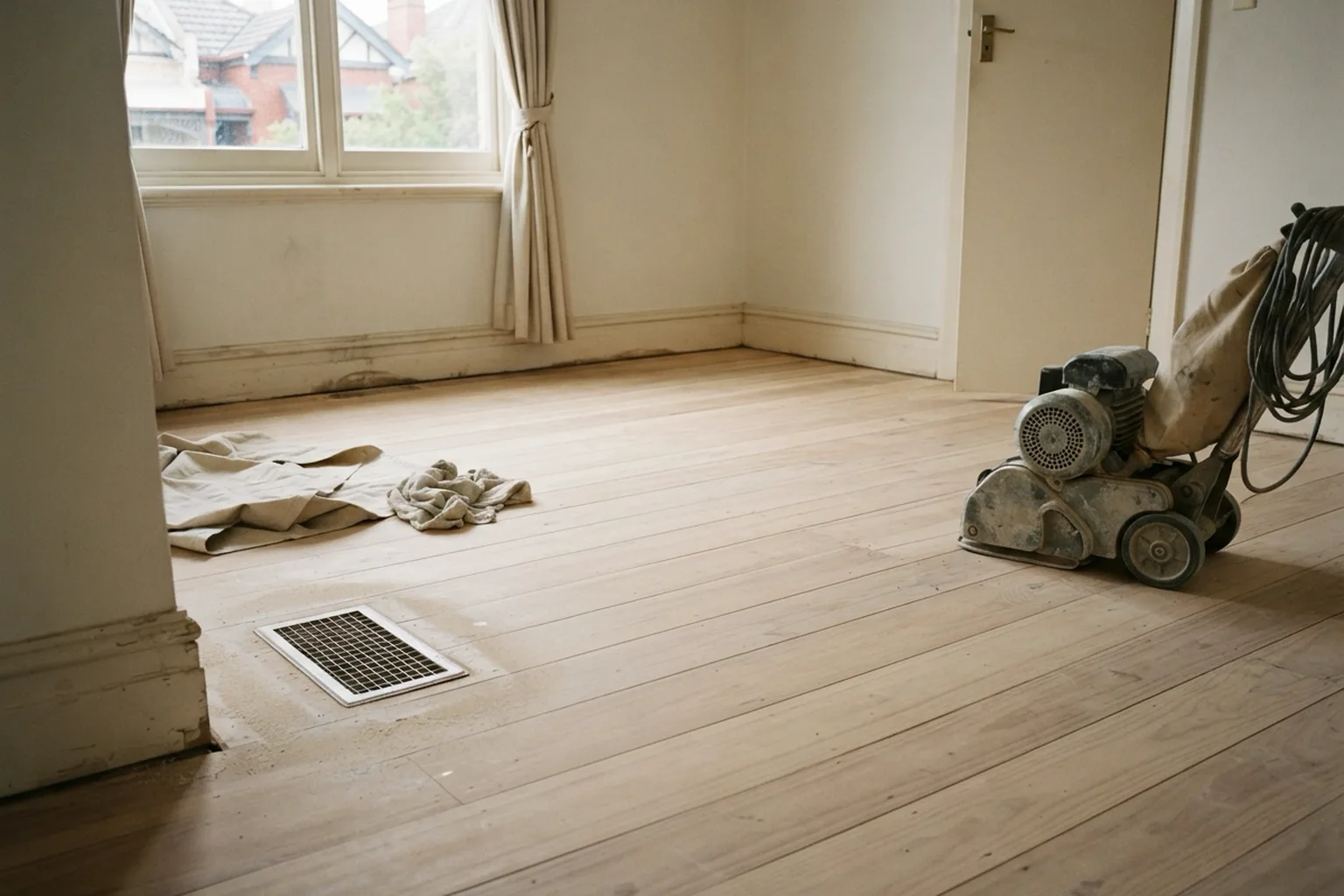
Why renovation dust ends up in the ducts
The dust from sanding timber floors and cutting or sanding plasterboard is extremely fine. It hangs in the air long after the noise stops, and it travels on the slightest air movement through doorways and down hallways. A ducted system gives it somewhere to go.
Every ducted system, whether it is gas ducted heating, ducted reverse-cycle or evaporative cooling, moves a large volume of air through the house. Ducted heating and reverse-cycle systems draw air back in through a return air grille, usually in a hallway ceiling, wall or floor, then push it through the ducts to the outlets in each room. If the system runs while the air is full of dust, the return grille pulls that dust straight in. Most of it settles in the return duct and filter area, and some travels on into the supply ducts.
Even with the system switched off, dust still finds its way in. Floor outlets in older homes sit directly in the boards being sanded, so dust falls into them by gravity. Ceiling outlets collect the fine plaster dust that drifts upwards when walls and cornices are cut.
Floor sanding versus plaster work
The two most common renovation jobs leave dust in slightly different places, which matters when you are planning what to protect.
- Sanding floors. The sander collects much of the dust, but not all of it. The rest settles on every horizontal surface, and floor outlets in the room being sanded are the most exposed part of the system. Dust falls straight down into the duct below the floor.
- Cutting and sanding plaster. Plaster dust is very fine and pale, and it drifts. It tends to reach the return air grille and ceiling outlets, and it often travels well beyond the room where the work is being done.
- Tiling, cutting masonry and grinding. Dust from cutting tiles, brick and concrete is a different and more serious kind of dust. It should be controlled at the source with the right tools and extraction, and kept well away from the ducted system.
How to protect the ducts during the works
A few simple steps before the dusty stages begin save a great deal of cleaning later.
- Switch the system off at the controller for the whole dusty stage, and tell the trades not to turn it on to warm the house or dry the paint.
- Seal the return air grille with plastic sheet and low-tack painters tape. This is the single most important step, because it is where air is drawn in.
- Cover the outlets in the work area, especially floor outlets in a room being sanded. Use plastic and tape rather than a loose drop sheet that can shift.
- Keep doors to the work area closed where you can, so less dust reaches the rest of the house and the grilles outside the room.
- Clean as the job goes with a vacuum fitted with a suitable filter, rather than dry sweeping, which throws fine dust back into the air.
Leave the covers in place until the final clean-up is done. Many people remove the plastic as soon as the trades leave, then run the system while the last of the dust is still settling.
What to do before you switch the system back on
Once the work is finished and the house has been vacuumed and wiped down, there are a few checks that take only a few minutes.
Lift off the covers carefully so any dust sitting on top of the plastic does not drop into the outlet. Look inside the floor outlets with a torch. A layer of pale dust in the boot or the first part of the duct is a clear sign that some got in. Check the return air filter, and clean or replace it if it is coated. Wipe the outlet grilles before the fan blows across them.
When you first switch on, stand near an outlet for a minute or two. A short puff of dust as the fan starts, a white film appearing around the outlets over the next day or two, or a dusty plaster smell all mean dust is sitting further inside the ducts than you can reach.
When the ducts need a professional clean
If the system was protected properly and the checks come up clean, a fresh filter may be all it needs. A professional duct clean is worth booking when the system ran during the dusty work, when outlets were left uncovered in a room being sanded, when dust keeps reappearing around the outlets after the house has been cleaned, or when anyone in the house is sensitive to dust.
A proper clean deals with the whole system, not just the parts you can see. That means the return air grille and filter area, the return duct, the supply ducts and the outlets in each room. For homes in Melbourne that are about to swap from heating to cooling, it makes sense to have the clean done before the first warm spell, so the system is not pushing renovation dust around the house all summer. Ask for before and after photos so you can see what came out.
If you are planning a renovation now, the simplest approach is to book the clean for the week after the trades finish. That way the job is the last thing done before the house goes back to normal, not something you find out about later when the dust keeps coming back.
Helpful FreshDuct services & guides
Frequently asked questions
Can I run the ducted heating while the floors are being sanded?
It is best not to. Any ducted system that is running pulls air in through the return air grille, and during sanding or plaster work that air is full of fine dust. Turn the system off at the controller for the dusty stages, seal the return grille and the outlets in the work area, and only switch back on once the work is finished and the room has been cleaned.
How do I know if renovation dust has got into my ducts?
Common signs are a fine white or pale grey film around the outlets soon after the system is switched back on, dust settling on furniture faster than usual, a return air filter that is visibly coated, and a dusty or plaster-like smell when the system first runs. If the outlets were left open in a room where floors were sanded or plaster was cut, it is worth assuming some dust got in.
Is a new filter enough after a renovation?
A clean filter is the first step and it stops more dust being drawn in, but it only protects the system from that point on. Dust that is already sitting in the return duct, the floor or ceiling ducts and the outlets stays there, and it is blown back into the rooms when the fan starts. If a lot of dust got in, the ducts and outlets need cleaning as well.
What if the house is old and the renovation disturbed old materials?
Some materials in older homes, including certain sheeting, linings and flooring, may contain asbestos. If you are not sure what was disturbed, stop the work, keep the ducted system off and have the material tested by a licensed professional before anything is cleaned. Duct cleaning is not asbestos removal, and that question needs answering first.
Get a fast, free quote
Talk to FreshDuct about air ducts across Melbourne — 7 days a week, clear upfront pricing, 600+ 5-star reviews.