 FreshDuct
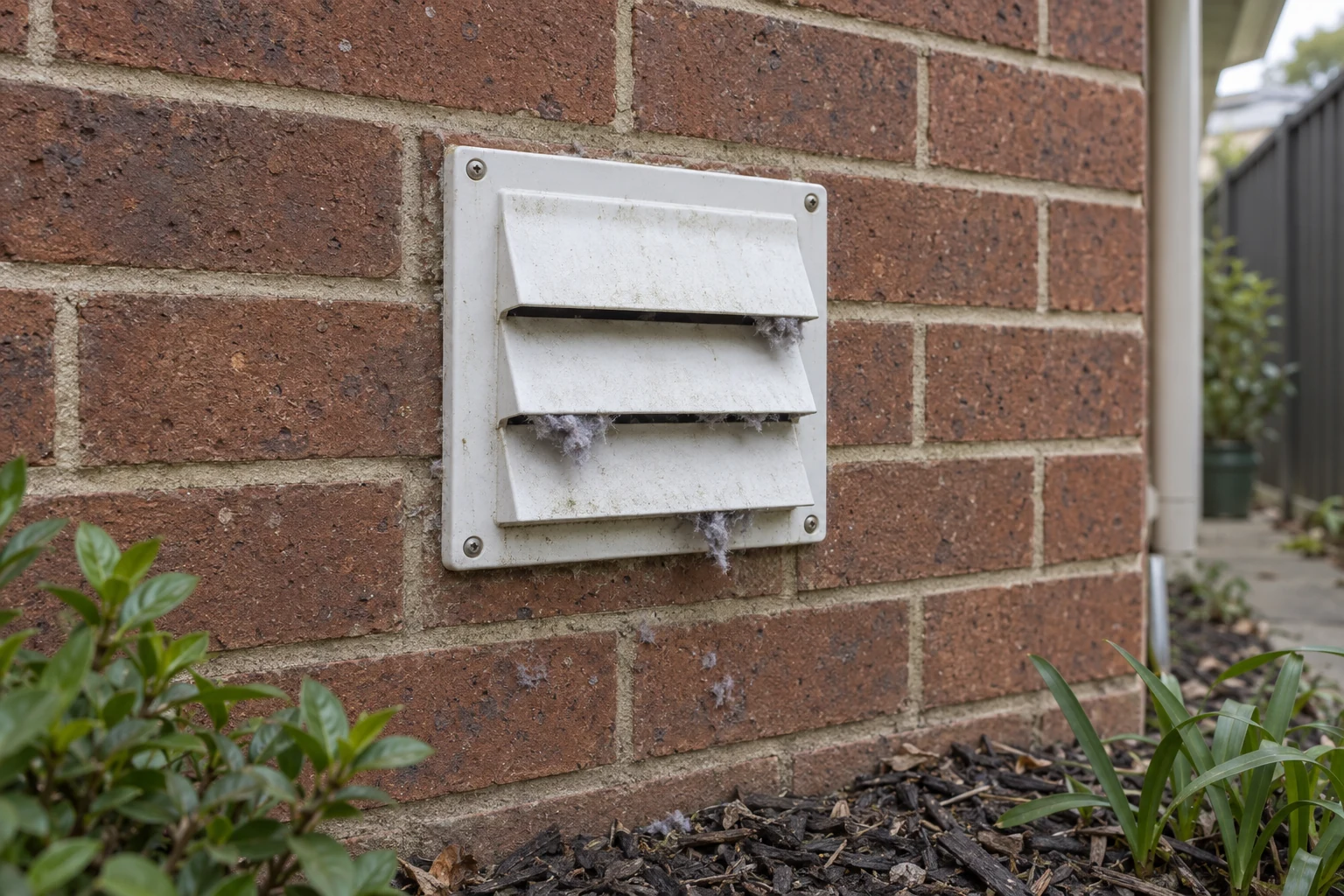
The outside dryer vent is one of the few parts of the whole drying system you can actually see, and it says a lot about what is happening inside the wall. Plenty of Melbourne homeowners notice it for the first time in spring, when they are out weeding or washing down the side path and find grey fluff caught in the louvres or scattered on the garden bed underneath. Some of that is completely normal. Some of it is a vent that is quietly struggling.
Quick answer: A light dusting of fluff at the outside dryer vent is normal, because a small amount of lint always gets past the filter. Lint packed into the louvres, a flap that barely opens, fluff stuck to the wall around the outlet or lint blowing back into the laundry usually means the air is not getting out freely, and the vent and the duct behind it need cleaning and checking.
This post explains what the different kinds of lint build-up mean, what you can safely check from the ground, and when the duct behind the wall needs a proper look.
Why a little lint outside is normal
Every load of washing sheds fibres in the dryer. The lint filter inside the door catches most of them, but it is a fine mesh rather than a perfect seal, so a small amount of fluff always travels on through the duct and out of the house. On a healthy vent, that shows up as a light film on the outlet cover and a few wisps on the ground below that blow away in the next breeze.
If that is all you can see, and the dryer still dries a normal load in a normal time, the vent is probably doing its job. Wiping the outlet over every so often keeps it that way.
When the lint outside is a warning sign
The picture changes when the lint starts to accumulate instead of blowing clear. A dryer vent should push a steady stream of warm, moist air out of the house whenever the dryer runs. Lint gathers in visible amounts when that stream has weakened, when it is escaping somewhere it should not, or when the outlet itself is catching what should be passing through.
The signs below are worth acting on, especially if you see more than one of them at once. None of them on its own proves the duct is blocked, but each one is the outside of the house telling you that the air is not moving the way it should.
What each sign usually points to
- Lint packed into the louvres or the flap. The airflow is too weak to blow it clear, often because the duct is partly restricted further back, or because the flaps are sticky and only open a crack.
- A flap that barely lifts while the dryer is running. Either the flap is gummed up with lint, paint or grime, or not enough air is reaching it. Have someone run the dryer while you watch the outlet from a safe distance.
- Fluff stuck to the wall or eaves around the outlet. Warm, moist air is spilling out sideways rather than being pushed clear. A damaged or poorly sealed cover, or condensation on a cool wall, can also leave a grey stain.
- Clumps that come back within days. More lint than usual is getting through. Check that the filter is clean, sitting properly and not torn.
- Lint in the laundry itself. Fluff collecting behind the dryer or on the laundry shelves often means a duct connection has come loose or a flexible duct has split, so some air is never reaching the outside at all.
- No lint at all, and long drying times. This one surprises people. If the dryer is slow but the outside vent stays perfectly clean, the lint may be stopping inside the duct before it ever reaches the outlet.
What sits between the dryer and the outside wall
The outlet is only the last few centimetres of the system. Behind it is a duct that runs from the back of the dryer, sometimes straight through the wall, sometimes up and across a ceiling space or along under a floor before it reaches the outside. In many Melbourne homes, particularly older ones where the laundry has been moved or renovated, that run is longer and has more bends than anyone would choose.
Lint settles wherever the air slows down: in bends, in sagging sections of flexible duct, and at joints. Flexible foil or plastic duct that has been squashed behind the dryer is a very common restriction. The longer and more complicated the run, the weaker the airflow arriving at the outlet, and the more likely you are to see the symptoms described above.
That is also why cleaning the outside cover rarely solves the problem for long. If the restriction is inside the duct, the clumps at the outlet are a symptom, not the cause.
What you can safely check yourself
There is a fair amount you can do without tools or ladders:
- Turn the dryer off, then clear visible lint from the outside cover by hand or with a soft brush, as long as the outlet is within easy reach from the ground.
- Check that each flap swings freely and closes again on its own.
- Clean the dryer lint filter after every load and look closely for tears or gaps around the frame.
- Pull the dryer out gently and check that the duct behind it is connected at both ends and is not crushed or kinked against the wall.
- Keep the area around the outside outlet clear of plants, mulch and stored items so the air can escape.
If the outlet is on a second storey, under the eaves or anywhere you would need a ladder to reach, leave it for a professional. It is not worth a fall for a handful of lint.
When to have the vent professionally cleaned
It is time to get the full run cleaned and checked if the lint keeps coming back soon after you clear it, the flap will not open properly while the dryer is running, a normal load is taking noticeably longer to dry, the dryer or laundry gets unusually hot, or there is a burning or scorched smell. Those are signs of a restricted vent, and a restricted vent makes the dryer work harder and run hotter.
A professional clean covers the whole path from the back of the dryer to the outside: disconnecting the dryer, clearing the duct along its length, cleaning the outlet cover and flaps, and checking connections and any sections that are crushed or sagging. It is also the moment to find out whether the duct actually ends outside. A vent that discharges into a roof space or wall cavity will not show lint on the outside wall at all, and that is a bigger problem than any visible fluff.
Until then, the basics still matter most: clean the filter after every load, and do not leave the dryer running while you are out or asleep.
Helpful FreshDuct services & guides
Frequently asked questions
Is it normal to see some lint at the outside dryer vent?
Yes, a small amount is normal. The lint filter inside the dryer catches most of the fluff but not all of it, so a fine film on the outlet or a few wisps on the ground underneath is expected on a vent that is working. It becomes a warning sign when the lint builds up into clumps, holds the louvres shut, coats the wall around the outlet or keeps coming back soon after you clear it.
Can I just clean the lint off the outside vent myself?
Clearing visible lint from the outside cover is a sensible, easy job, as long as the dryer is off and the outlet is within safe reach from the ground. It does not clean the duct behind the wall, though, and that is usually where the restriction is. If the clumps come back quickly, or the dryer is still slow, the whole run from the back of the dryer to the outside needs attention.
Why is the flap on my outside dryer vent stuck shut?
The flaps on a louvred outlet are designed to be pushed open by the dryer airflow and fall shut when it stops. Lint stuck around the hinges, paint, a bent cover or a weak airflow from a restricted duct can all stop them opening properly. A flap that barely moves while the dryer is running is a sign that something is holding the air back, either at the cover or further down the duct.
Does lint around the outside vent mean there is a fire risk?
Lint is highly flammable and a restricted vent makes a dryer run hotter and longer, so a vent that is clogging up is worth dealing with rather than ignoring. Clear the outside cover, make sure the lint filter is cleaned after every load, never run the dryer while you are out or asleep, and have the duct checked if the signs keep returning.
Get a fast, free quote
Talk to FreshDuct about dryer vent across Melbourne — 7 days a week, clear upfront pricing, 600+ 5-star reviews.