 FreshDuct
If you host guests over summer, the cooling is one of the first things they will judge the place on. They walk in after a hot drive, reach for the remote, and within a minute or two they know whether the air smells fresh or stale and whether the room is going to cool down. A split system or ducted unit that has not been cleaned since last season tends to give itself away at exactly that moment.
Quick answer: Have the cooling in a short-stay or holiday rental cleaned before the summer calendar fills, not during it. Guests notice a musty smell or weak airflow in the first few minutes, and a full clean of the coil, blower wheel, drain and filters needs a gap between bookings that is much easier to find in late spring.
This guide is written for owners and hosts of short-stay apartments, holiday houses and guest rooms around Melbourne. It covers why rental cooling gets dirty faster than you might expect, what to check before the bookings stack up, and how to fit a proper clean into the calendar.
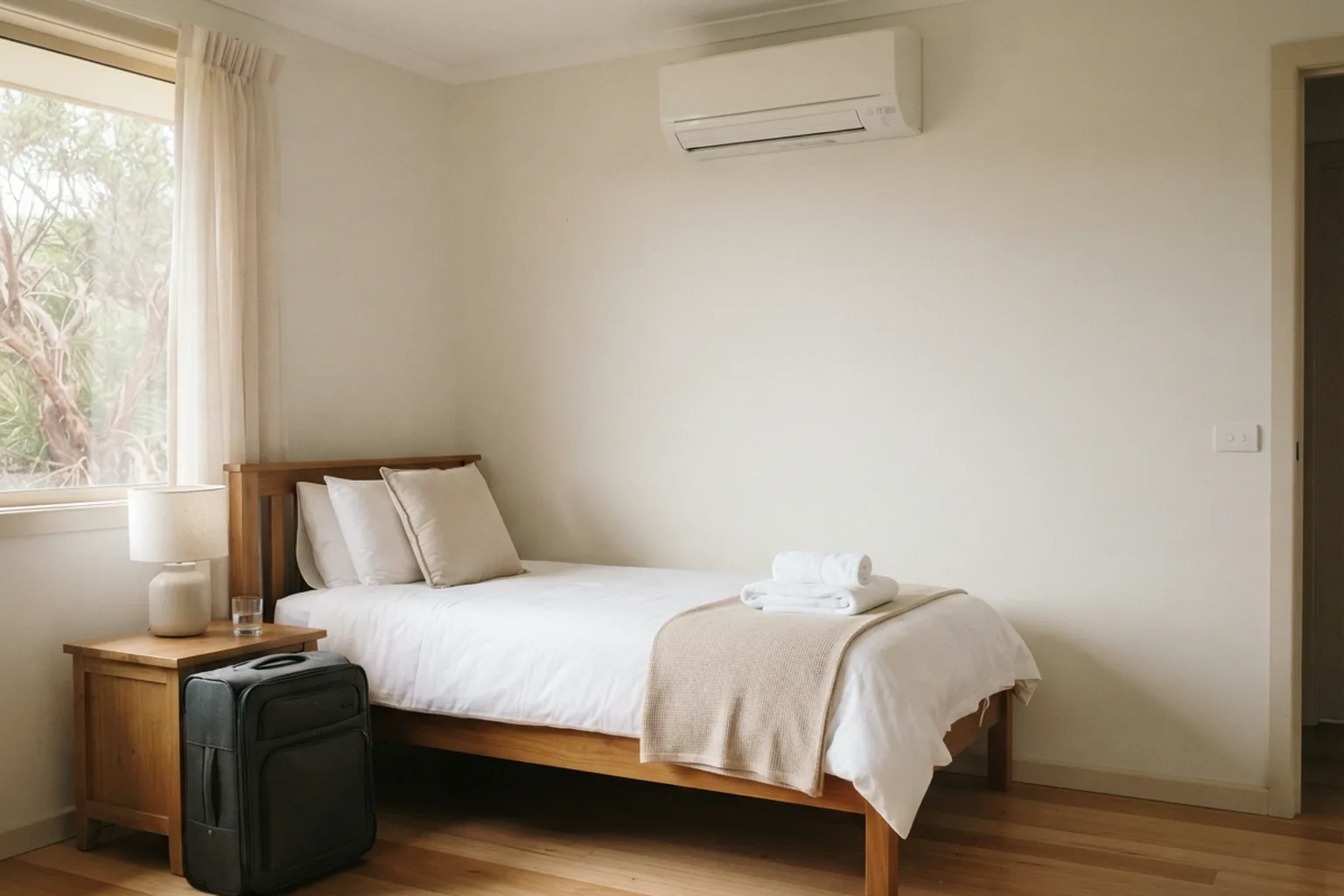
Why a rental’s cooling gets dirty faster than a home’s
Guests do not use an air conditioner the way an owner does. They are on holiday, the power bill is not theirs, and the unit often runs from the moment they arrive until they leave. Doors to the deck stay open, sandy towels hang nearby, and the remote gets set as cold as it will go.
All of that pulls more air, dust and moisture through the unit. The filter catches the bigger particles, but fine dust gets past it and settles on the cooling coil and the blower wheel, which stay wet while the unit is running. Then the guests leave, the property is shut up, and the damp inside of the unit sits in warm, still air until the next arrival.
That cycle of heavy use followed by a closed-up house suits mould and bacteria very well. Holiday houses near the bay or in the hills add salty or humid air to the mix, and city apartments add kitchen vapour and traffic dust in a small space.
What guests notice first
Guests rarely know what is wrong with a unit, but they notice the result straight away. These are the things that tend to end up in messages to the host:
- A smell on start-up: musty, sour or like damp washing in the first few minutes of running.
- A room that will not cool: the unit is on, but the air coming out is weak or barely cold.
- Drips: water running down the wall or onto the bed or couch below the unit.
- Noise: rattles, whistles or a gurgling sound, which are much more noticeable to someone trying to sleep in an unfamiliar room.
- Dust on the outlets: grey fluff or dark spotting on the louvres or ceiling vents, right where guests can see it from the bed.
None of these means the unit has failed. In most cases they mean it is dirty inside, and a clean puts it right.
What to check before the calendar fills
Pick a day when the property is empty and go through each unit. You need a torch and about ten minutes per room.
- Filters: open the front cover and slide them out. Grey felt or clumps of fluff mean they have not been washed for a long time.
- Behind the filters: shine the torch through the outlet at the round blower wheel. Black or grey build-up on the blades is the usual source of smell.
- Start-up smell: run the unit on cool for a few minutes with the windows closed and stand underneath it.
- Drain: look for water marks on the wall under the unit and check the drain outlet outside is dripping freely while it runs.
- Outdoor unit: clear leaves, pool toys, bins and stacked furniture away from it so it can breathe.
- Ducted and evaporative systems: lift a vent and look inside, check the return air grille and filter, and note any room that gets less air than the others.
If you manage the property from a distance, ask your cleaner or property manager to do the same walk and send photos of each filter and blower wheel.
Fitting a clean between bookings
The hardest part for most hosts is not deciding to clean the units. It is finding a gap. Once the Christmas and January bookings are in, a free weekday can be hard to come by, and a job squeezed into the hours between check-out and check-in leaves no margin if a unit needs more work than expected.
Late spring is the easy window. Block out a day before the busy run starts, have every unit in the property done in one visit, and let the place air afterwards. If the calendar is already tight, a gap of a night between guests still gives the units time to be washed, run and dried properly.
FreshDuct works 7 days a week, there is no call-out fee and you pay after the job, so the booking can follow your calendar instead of the other way around.
Split, ducted or evaporative: what each one needs
Split systems are the most common in rentals. A full clean covers the filters, the cooling coil, the blower wheel, the drain tray and drain line, and the covers and louvres guests can see. That is the clean that removes smells and restores airflow.
Ducted systems move air through ducts in the roof or under the floor. Dust, sand and pet hair from past guests collect in the return air, the ducts and the outlets. Duct cleaning removes that build-up from the whole network, and crushed or split sections of duct can be repaired or replaced when they are found.
Evaporative coolers sit on the roof and bring in outside air through wet pads. A unit that has sat unused since last summer can hold stale water, scale and dusty pads. It should be serviced and cleaned before its first run of the season, not after a guest has turned it on.
What to leave with your cleaners, and what to book
A simple routine between stays keeps a cleaned unit fresh for longer. Ask your cleaners to rinse and dry the filters on a regular rotation, wipe the louvres and vents, and leave the unit on fan-only for a short while after cleaning the room so the inside dries out. A note in the house guide asking guests to close doors and windows while the cooling is on helps too.
Leave the inside of the unit to a technician. Spray cans from the hardware shop do not reach the blower wheel properly, and pushing water into a split system without covers and a catch bag can send it down the wall or into the electrics.
When you book a professional clean, you get before and after photos of every unit, and a written report can be provided if you want a record for your files or your property manager. That is useful proof of upkeep when you are not there to see the work yourself.
The short version: check every unit while the property is empty, book the clean before the summer run, and give your cleaners a filter routine to keep it that way. Your guests will never think about the air conditioner at all, which is exactly what you want.
Helpful FreshDuct services & guides
Frequently asked questions
How often should the aircon in a holiday rental be cleaned?
It depends on how heavily the property is booked and how guests use it. A rental that runs its cooling hard all summer, often with doors and windows open, collects dust and moisture faster than an owner-occupied home. A full clean before each summer season suits most short-stay properties, with filters checked between stays through the busy months.
Can my cleaners look after the split system between guests?
They can do the part that matters most between stays, which is the filters. Sliding them out, rinsing them, letting them dry and refitting them keeps airflow up. What they cannot reach is the coil, the blower wheel and the drain tray behind the filters, and that is where smells and drips start. Those parts need the unit opened up and washed properly.
Why does the rental smell musty when guests first turn the cooling on?
A property that sits closed between bookings holds still, humid air, and the inside of a split system stays damp after each use. Mould and bacteria grow on the coil, blower wheel and drain tray, and the first minutes of running push that smell into the room. Air freshener covers it for a while. Cleaning those parts removes the cause.
Can a clean be booked on a changeover day?
FreshDuct works 7 days a week, so a clean can be booked for the day that suits your calendar, weekends included. A wider gap than a same-day changeover is better where you can manage it, because the units need time to be washed, run and dried before the next guest arrives. Before and after photos are taken on every job, which is handy if you manage the property from a distance.
Get a fast, free quote
Talk to FreshDuct about air conditioning across Melbourne — 7 days a week, clear upfront pricing, 600+ 5-star reviews.