★★★★★
“Allen provided exceptional service — friendly, professional and went above and beyond.”
J
Jane
Wantirna South, VIC
Verified
On a point with open water on three sides, a Williamstown cottage stack can take wind from any quarter, and the wrong cowl makes a short flue worse. FreshDuct watches what the stack does before choosing a terminal, then fits it in a material that survives the salt.
Been sold a cowl for a Williamstown cottage that now smokes more? Some throttle a short flue; we test before we fit one.
The colonial cottages behind Nelson Place and the Victorian homes back from the foreshore have chimneys that clear the ridge by very little, on a point where the wind arrives off the water from almost any direction. That is the worst combination a terminal can face. There is no lee side to shelter in, the flue has little height to fight back with, and a gust from the wrong quarter pushes straight down and puts smoke in the room.
The temptation is to bolt on the first anti-downdraught cowl that comes to hand, and we regularly find cottages where that has made things worse. A cowl built for a strong flue can restrict a short one enough that it smoulders on calm nights instead of smoking on windy ones. So we look at the stack in a blow where we can, test the draw with the flue clean, and choose a terminal that handles the wind without choking the draw.
Whatever goes on, it goes on in a material the salt will not eat. Stainless or coated caps and cowls, fixed with corrosion-resistant fasteners and sealed to the pot or crown, are the only sensible choice this close to the water. Open pots on disused flues get a vented cap so the lime-mortar stack can still breathe, and we photograph every terminal from the roof so you can see it seated.
Anti-downdraught cowls chosen after testing, corrosion-resistant caps and vented caps for open pots, fitted to Williamstown's low cottage and Victorian stacks.
Water on three sides means a Williamstown stack has no sheltered side. We choose a cowl that copes with wind from any quarter and test the draw with it fitted, rather than assuming the southerly is the only problem.
A short flue has little draw to spare, and a heavy cowl can take what there is. We match the terminal to the flue size and the fireplace below, and if the draw drops with it on, we change it rather than leave it.
Galvanised caps rust at the fixings within a few winters on the point. We fit stainless or coated terminals with fasteners to match, sealed to the pot, so the cowl that fixes the smoke is not the next thing to fail.
Real photos from Melbourne jobs — not stock, not staged.


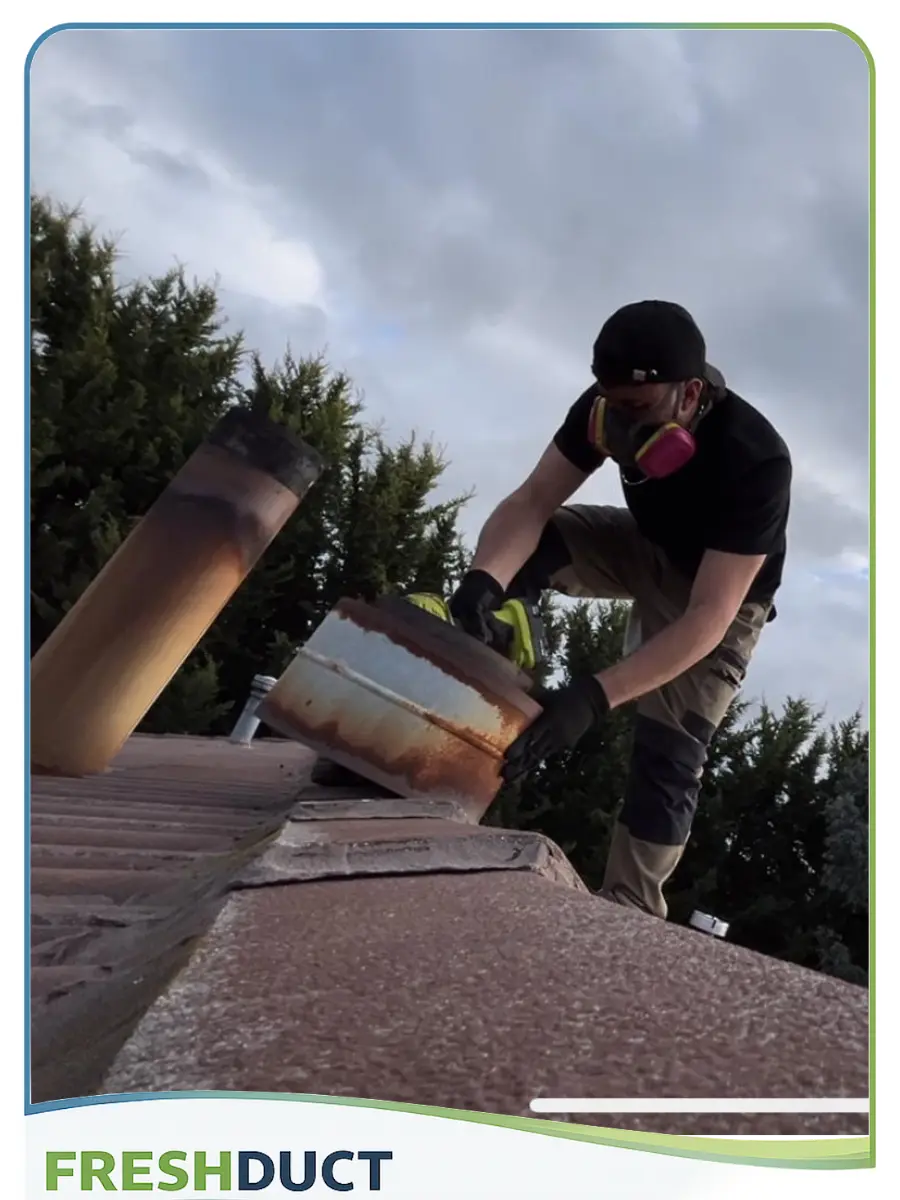
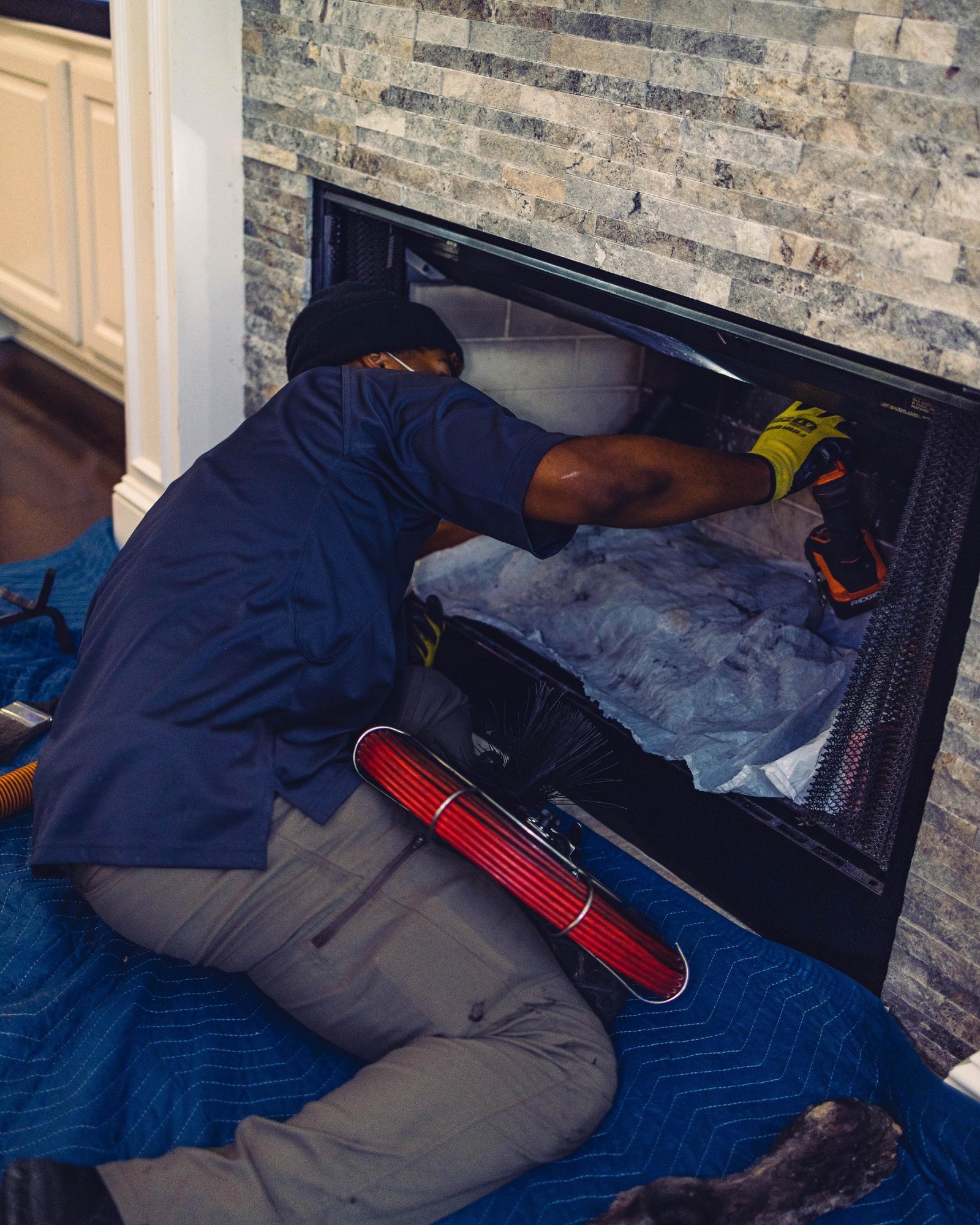
We check the flue is clean first, because a cowl cannot fix a blocked flue. Then we watch how the stack behaves, fit the terminal that suits it, and test the draw again with the fire lit where we can.
A photo of the finished cowl or cap comes with the job, seated square and sealed, so you never need to get up on a low cottage roof in a Williamstown wind to check it.
Documented end to end — every job, every suburb.
Flue size, terminal type and roof access checked.
The right cap or cowl for the appliance and the problem.
Firm price before any work.
Fixed and sealed from the roof, safely.
Draw checked with the cap on.
A photo of the finished cap from the roof.
Verified 5-star reviews from across FreshDuct’s duct, heating, cooling and chimney services.
“Allen provided exceptional service — friendly, professional and went above and beyond.”
Verified
“Highly impressed with the professionalism and efficiency. On time, and no mess left behind.”
Verified
“Exceeded my expectations. Knowledgeable, meticulous and respectful of our home.”
Verified
“So glad I chose FreshDuct. Knowledgeable team and the whole process was smooth from start to finish.”
Verified
“Quick, efficient and professional — we could immediately feel the difference.”
Verified
“The technician arrived on time and was incredibly thorough — the difference at home is obvious.”
Verified
The same local team covers the suburbs around Williamstown. Explore nearby areas and related FreshDuct chimney services.
Usually, provided the right one is chosen. On a short stack with wind from any side, some cowls cure the downdraught and some restrict the flue so it smokes on calm nights instead. We test the draw with the flue clean, fit a cowl suited to a low flue, and check it again before we call it done.
A stainless or coated cap with corrosion-resistant fasteners, sealed to the pot or crown. Standard galvanised caps corrode at the fixings and the mesh within a few years on the point. The better material costs a little more and is the difference between a cap and a recurring job.
An open flue lets rain, leaves and birds straight in. A cap keeps the flue dry, keeps nests out and, on a wood heater, a spark arrestor stops embers leaving the flue.
Usually a downdraught — wind pushing back down the flue. An anti-downdraught cowl is the normal fix; we confirm the draw with a test before and after.
Yes. If we are on the roof for a sweep and the flue needs a cap, we can quote it on the spot and fit it the same visit where we have the right size.
Send your details and the office confirms a window for Williamstown. No call-out fee, before and after photos, and honest advice on what your chimney needs and what it does not.