 FreshDuct
The first warm days of a Melbourne spring are when most people switch the split system over to cooling for the first time in months. Often that first blast smells a little stale, or the airflow seems weaker than you remember, and the obvious question follows: can I just clean this myself?
Quick answer: Yes, partly. Rinsing the mesh filters and wiping the front panel and louvres is a safe and worthwhile DIY job, but the coil, blower wheel and drain tray that sit behind the filters are where mould and grime build up, and they need the unit isolated, protected and properly washed by a technician.
The honest answer is that you can do part of the job, and the part you can do is worth doing. But a split system has more inside it than the filters you can see when you lift the front panel, and the parts behind them are where most of the build-up happens. This post walks through what a DIY clean reaches, what it does not, and how to tell when the unit needs more than a rinse.
What is actually inside the indoor unit
Lift the front panel of a wall-mounted split system and the first thing you see is a pair of mesh filters. Behind them sits the evaporator coil, a block of thin metal fins that the air passes through to be cooled or heated. Below and behind the coil is the blower wheel, a long cylindrical fan that pulls air through the unit and pushes it out through the louvres. Underneath it all is a drain tray that collects the water the coil produces when it cools, and a drain line that carries that water outside.
When the unit runs in cooling mode, the coil is cold and wet. Any dust that gets past the filters sticks to those damp surfaces, and dust plus moisture in a dark space is exactly what mould needs. That is why the smell people notice usually comes from the coil, the blower wheel and the drain tray, not from the filters.
What you can safely clean yourself
These jobs need no tools beyond a vacuum, a soft brush and a tap, and they make a real difference to airflow.
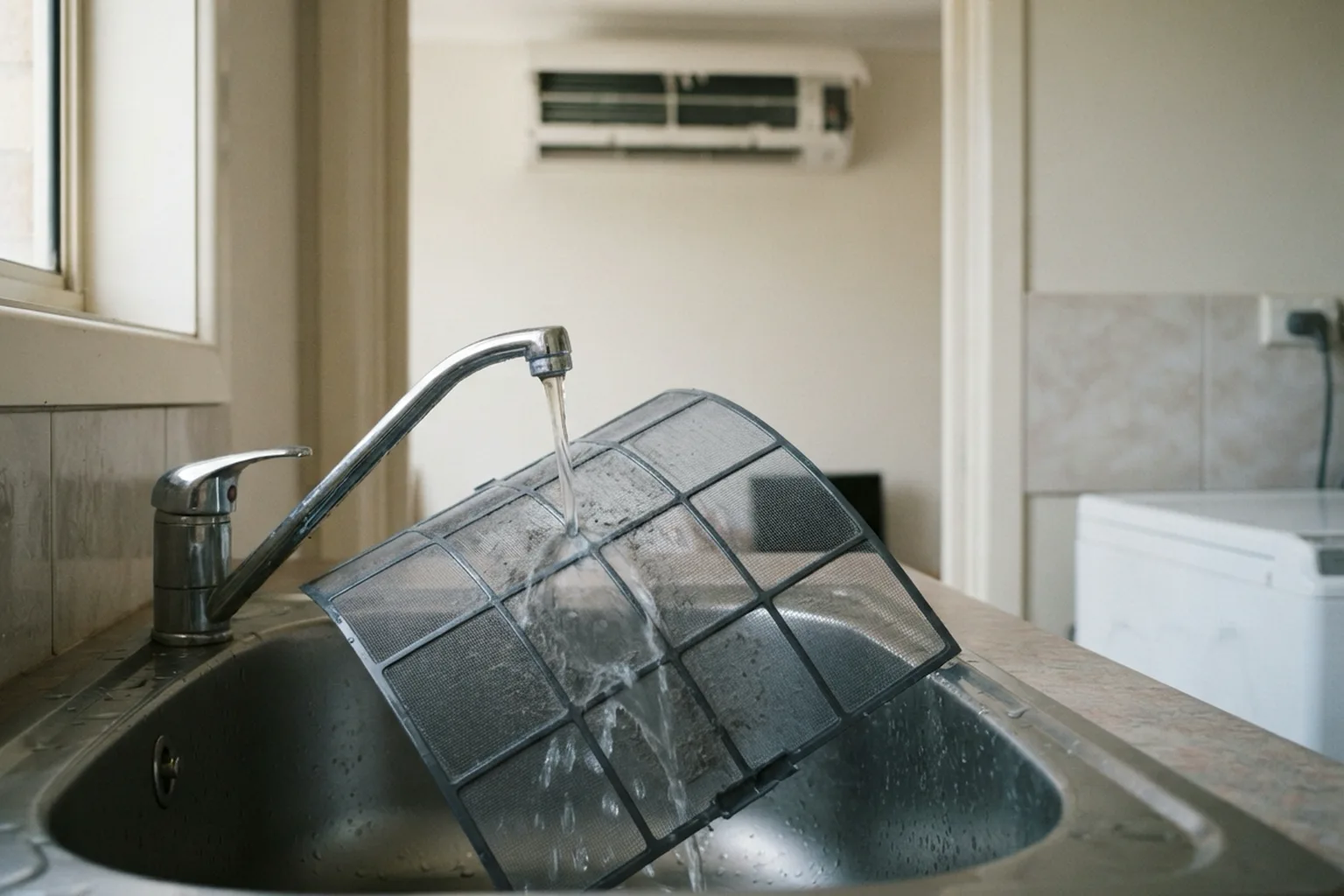
- The mesh filters. Switch the unit off, slide them out, vacuum off the loose dust and rinse them under lukewarm water. Let them dry fully in the shade before refitting. Never run the unit without them.
- The front panel and casing. Wipe with a damp cloth and a little mild detergent. Avoid solvents, which can discolour the plastic.
- The louvres and the visible outlet. A soft cloth or brush will lift the dust you can see. If you notice black spots on the louvres, that is worth noting, because it often means the same growth is further inside.
- Around the outdoor unit. Clear leaves, weeds and anything stored against it so it can breathe. Do not open it up or hose the fins hard.
Your owner manual will say how often the filters on your model should be cleaned. In a house with pets, nearby building work or a lot of use, checking them more often is sensible.
What a filter rinse does not reach
Clean filters stop more dust getting in from that point on. They do nothing for the dust and growth that is already inside the unit.
The coil sits only a few centimetres behind the filters, but its fins are thin and easily bent, and grime packs deep between them. The blower wheel is harder still: it sits inside the unit with dozens of narrow curved blades, and the build-up on those blades is what you are often seeing when you shine a torch up through the louvres and spot a dark, furry coating. The drain tray sits underneath, out of sight, and slime or debris there can block the drain and cause water to drip down the wall.
None of these can be reached properly from the front with a cloth or a brush, and pushing a brush into the blower wheel can simply pack the dirt tighter or damage the blades.
Why DIY coil sprays and deep cleans can go wrong
Hardware stores sell foaming coil cleaners, and online videos show people washing out their units with a spray bottle. The risks are real.
- Electrics. The indoor unit has a circuit board and wiring close to the coil and fan. Water or cleaner in the wrong place can damage it, and the unit should always be isolated at the power before anything wet goes near it.
- Where the dirt goes. Loosened grime has to drain somewhere. Without a wash bag to catch it, it runs into the drain tray and line, and can block them.
- Bent fins and broken parts. Coil fins fold over easily, and louvre motors and clips are fragile.
- Partial results. A spray on the front of the coil can make it look cleaner while the blower wheel, which is often the main source of the smell, is untouched.
Signs the unit needs a professional clean
A filter rinse is enough when the unit smells fresh, blows strongly and looks clean inside. It is time for a full clean when you notice any of the following.
- A musty or sour smell when the unit starts, even after the filters have been cleaned.
- Black spots or a dark coating visible on the louvres or the blower wheel when you shine a torch up into the outlet.
- Weaker airflow than usual, or the unit taking longer to cool the room.
- Water dripping from the indoor unit, which often points to a blocked drain tray or line.
- Someone in the house noticing more sneezing, coughing or irritated eyes when the unit is running.
What a professional clean adds
A professional split system clean deals with the parts a DIY clean cannot. The technician isolates the power, protects the wall and floor, and fits a wash bag under the indoor unit to catch the dirty water. The filters, coil, blower wheel and drain tray are washed through, the drain is checked so water runs freely, and the unit is tested before the technician leaves.
FreshDuct technicians are licensed refrigeration technicians, and every job comes with before and after photos so you can see what came out of the unit. There is no call-out fee, and you pay after the job is done. If you have rinsed the filters and the smell or weak airflow is still there, it is a good sign the inside of the unit is due, and late spring, before the first proper heatwave, is a sensible time to have it done.
Helpful FreshDuct services & guides
Frequently asked questions
How do I clean the filters in my split system?
Switch the unit off, lift the front panel and slide the mesh filters out. Vacuum off loose dust, then rinse them under lukewarm water from the clean side so the dust is pushed back out the way it came in. Let them dry completely in the shade before refitting. Your owner manual will say how often your model needs it.
Are coil cleaning sprays from the hardware store safe to use?
They can loosen surface grime on the front of the coil, but they do not reach the blower wheel or drain tray, and the residue and loosened dirt have to go somewhere. Overspray onto electrical parts or a blocked drain line can cause more trouble than it solves. If the coil is visibly dirty or the unit smells, a full professional clean is the safer option.
Why does my split system still smell after I cleaned the filters?
The smell usually comes from further inside the unit. Mould and bacteria grow on the damp coil, in the drain tray and on the blades of the blower wheel, which a filter rinse does not reach. If the musty smell returns each time the unit starts, the inside of the unit needs cleaning.
What does a professional split system clean involve?
The technician isolates the power, covers the wall and floor, and fits a wash bag under the indoor unit. The filters, coil, blower wheel and drain tray are then washed and the dirty water is caught in the bag. The drain is checked so it runs freely, and the unit is tested before the technician leaves. FreshDuct takes before and after photos on every job.
Get a fast, free quote
Talk to FreshDuct about air conditioning across Melbourne — 7 days a week, clear upfront pricing, 600+ 5-star reviews.