 FreshDuct
★★★★★
“Allen provided exceptional service — friendly, professional and went above and beyond.”
JVerified
Jane
Wantirna South, VIC
Some people are using the FreshDuct name and pretending to be us to scam customers. Please don't fall for it. We are the only genuine FreshDuct, operating in Melbourne, Sydney, Adelaide and Perth. Only deal with us through freshduct.com.au, or call us directly on 04 3191 8137 or 0480 004 051. We are taking legal action against these impostors. Thank you.
Canberra runs its dryers harder than almost anywhere — there is no season here when the washing reliably dries outside. FreshDuct clears the lint, checks the ducting and the external flap, and photographs what comes out.
If a load takes two cycles to dry, the vent is the first thing to check, not the machine.
Most Australian cities have months where you simply hang the washing out. Canberra really does not. The Bureau of Meteorology long record for Canberra Airport shows 92 days a year at or below 2°C and a July mean daily maximum of only 11.4°C — the cold does not lift much even in the afternoon. And unlike the winter-rainfall capitals, Canberra’s 616 mm of annual rain is spread right across the calendar, with the wettest month averaging about 64 mm and the driest about 41 mm. There is no dry season to plan around.
So Canberra dryers work. Through a long cold half of the year they are effectively the primary means of getting clothes dry, running most days in a lot of households, and every one of those cycles pushes lint into the vent line. The lint filter catches a fraction of it. The rest travels into the ducting, settles at bends, and builds a soft, dense, extremely flammable mat in a place no one ever inspects.
The failure mode is predictable. Restricted airflow means the machine cannot exhaust its moisture, so cycles get longer and the thermostat cycles the element harder to compensate. Longer, hotter operation against a bed of dry lint is exactly the wrong combination. In a city that remembers 18 January 2003 as clearly as Canberra does, preventable fire risk inside the laundry wall is not something we treat casually.
Why an ACT dryer vent fills faster than the same appliance in a warmer city.
The specific things that go wrong in ACT laundries, from the machine to the wall.
The filter catches the coarse lint you can see. The fine stuff goes straight past it and settles wherever the airflow slows — at every bend, at every joint, and across the whole length of a flexible duct that has sagged. We clear the full run mechanically rather than vacuuming the first accessible metre, and we photograph the volume that comes out because it is usually more than people expect.
A duct run with several tight bends, or one that goes up before it goes out, kills airflow. In Canberra apartment and townhouse stock through the City, Braddon, Kingston, Bruce and Gungahlin, internal laundries often mean genuinely long runs to reach an external wall. Those systems need clearing more often and, sometimes, re-routing. We will tell you if the ducting itself is the problem rather than the lint in it.
The vent hood on the outside wall has a flap that is supposed to open under airflow and close when the machine stops. Lint gums them, paint seizes them and cold weather stiffens them. A flap stuck shut backs the whole system up; a flap stuck open lets cold air, insects and birds straight in. Both are five-minute fixes once someone actually looks at them.
A dryer exhausts hot, saturated air, and in Canberra it exhausts it through ducting sitting in or against a wall that is genuinely cold — this is a city with a mean daily ground minimum around -2.8°C in July. Moisture condenses on the duct wall, and damp lint packs and sticks far worse than dry lint. It also feeds mould inside the duct, which is where the smell in some laundries comes from.
A lot of newer Canberra housing is apartments, and dryer venting in a block is frequently nobody’s clearly assigned job. Runs are long, access is awkward and the last clean may be unrecorded. We service individual apartments and whole blocks, and we document each unit separately so building managers have something to file.
A restricted vent means longer cycles, and longer cycles mean more electricity for the same load of washing. In a household running the dryer most days for half the year, that adds up quietly. Clearing the vent is a small, one-off spend that shortens every cycle from the day it is done, quite separately from the safety argument.
Real FreshDuct dryer vent work, photographed before and after on every job.

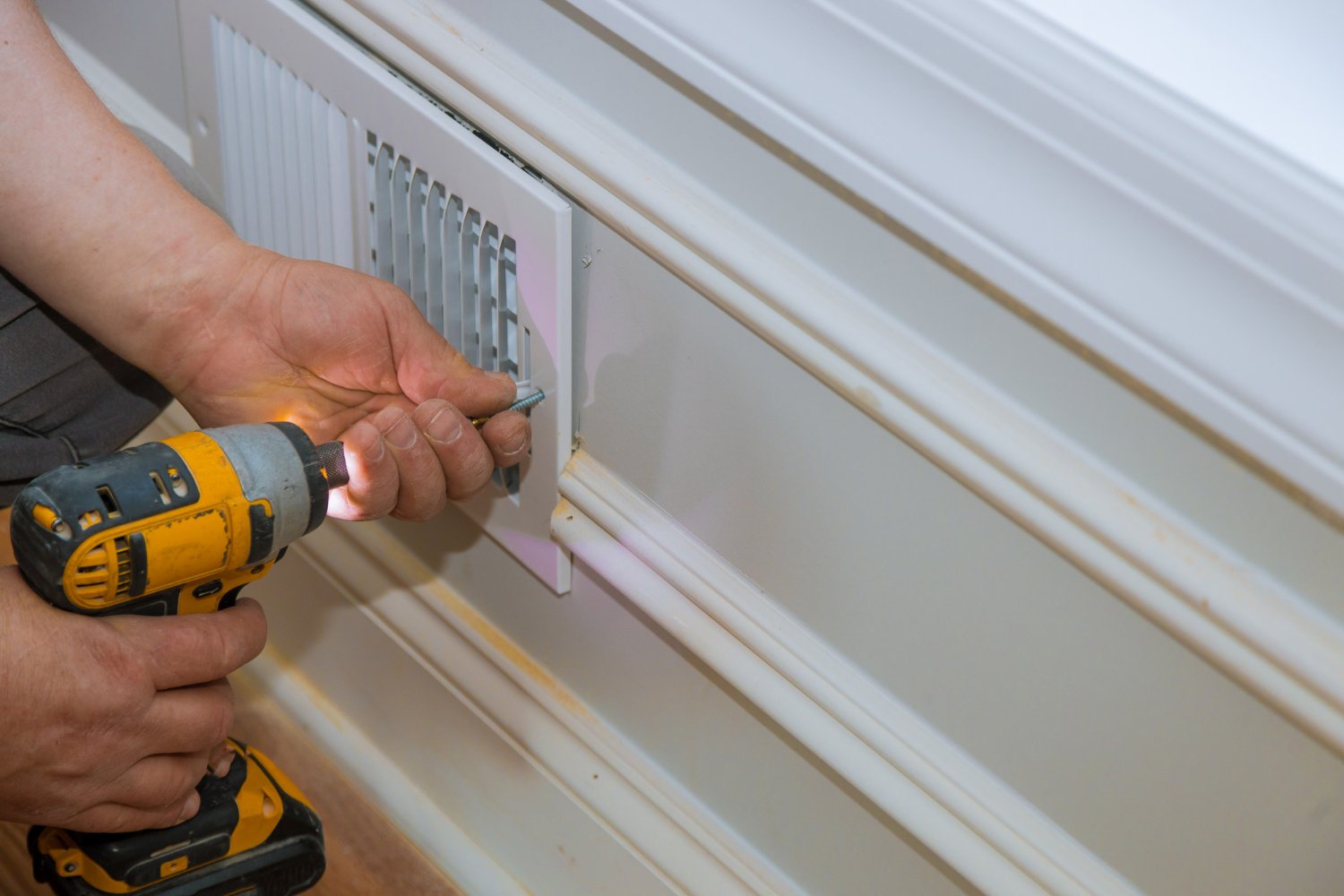

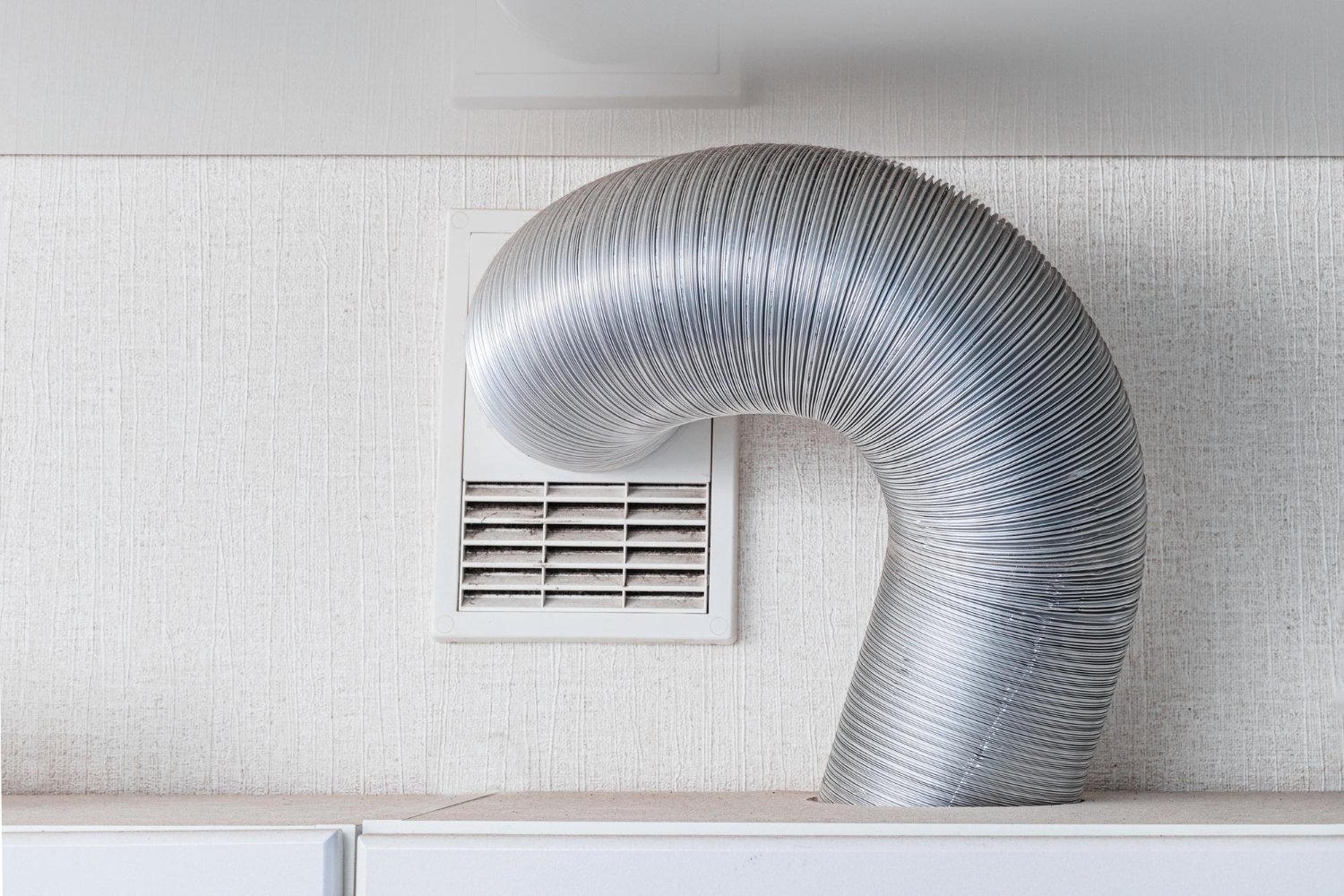
We pull the machine out, disconnect the duct, and clear the entire run mechanically from the appliance to the external outlet — rotary brushing with extraction, so the lint comes out rather than being pushed into the next bend. The external hood and flap get cleaned and tested, the ducting is inspected for crush points, sags, disconnections and damp, and the machine’s own lint housing gets cleared while we are behind it.
You get photographs of what came out, which is the part that changes people’s minds about the interval. If we find that the run itself is the problem — too long, too many bends, flexible duct where rigid should be, or a vent terminating into a wall cavity or roof space rather than outside — you get a clear explanation and a firm price to put it right.
Book a Dryer Vent CleanWe clear dryer vents across every Canberra district — the City and Inner North through Braddon, Turner, Dickson, Ainslie and O’Connor; the Inner South through Kingston, Manuka, Griffith, Narrabundah, Yarralumla and Deakin; Woden and Weston Creek including Curtin, Phillip, Weston and Holder; Belconnen including Bruce and Kaleen; Gungahlin through Ngunnawal and Amaroo; and Tuggeranong including Kambah. Queanbeyan included.
Apartment and townhouse work is a big part of what we do in Canberra, particularly through the City, Braddon, Kingston, Bruce and the Gungahlin town centre, where internal laundries mean long duct runs to an external wall. We handle single units and whole buildings, and we document each unit separately so there is a record.
Machine out, full run cleared mechanically, outlet tested, everything photographed.
Machine moved out and the full duct run assessed end to end.
Laundry floor and surrounds sheeted before the duct is opened.
Rotary brushing with extraction from appliance to external outlet.
External hood cleaned, flap freed and tested under airflow.
Lint housing behind the drum cleared while we have access.
Photos of what came out and a note on any ducting fault found.
Verified 5-star reviews from across FreshDuct’s duct, heating, cooling, chimney and insulation services. These are company-wide reviews from our established customer base — the same technicians and standards we bring to Canberra.
“Allen provided exceptional service — friendly, professional and went above and beyond.”
“Highly impressed with the professionalism and efficiency. On time, and no mess left behind.”
“Exceeded my expectations. Knowledgeable, meticulous and respectful of our home.”
“So glad I chose FreshDuct. Knowledgeable team and the whole process was smooth from start to finish.”
“Quick, efficient and professional — we could immediately feel the difference.”
“The technician arrived on time and was incredibly thorough — the difference at home is obvious.”
Dryer vent work pairs naturally with these Canberra services.
Annually for most households, and more often for heavy users or long duct runs. The reason is usage: Canberra Airport records 92 days a year at or below 2°C, a July mean maximum of 11.4°C and rain spread evenly across every month, so there is no reliable line-drying season. ACT dryers simply run more cycles than the same machine in a warm coastal city, and the vent fills accordingly.
Usually it is the vent, not the machine, and it is the most common call we get. A restricted duct means the dryer cannot exhaust its moisture, so it runs longer and the element cycles harder trying to compensate. Clearing the run typically restores cycle times immediately. It is worth checking before you spend money on a repair or a replacement appliance.
Yes, and the mechanism is straightforward. Lint is dry, fine and highly combustible, and it accumulates at bends and along sagging duct where airflow slows. A restricted vent makes the appliance run hotter and longer, which puts sustained heat against that accumulation. It is one of the more preventable household fire risks, and clearing the run properly removes it.
Yes, and it is a large part of our Canberra work — particularly through the City, Braddon, Kingston, Bruce and Gungahlin, where internal laundries mean long duct runs to reach an external wall. Those systems need clearing more often than a house with a short run. We service single apartments and whole buildings, and we document each unit separately for building managers.
Outside, through an external wall or approved outlet with a working flap — never into a wall cavity, a roof space or an internal room. Venting into an enclosed space dumps a large volume of hot moist air where it will condense, which in a Canberra winter means damp structure and, before long, mould. If we find that arrangement we will show you the photo and quote to fix it.
Full run cleared mechanically, outlet tested and photographed — shorter cycles and a lot less risk. Available 7 days across the ACT.
Tell us whether it is a house, townhouse or apartment and which suburb.