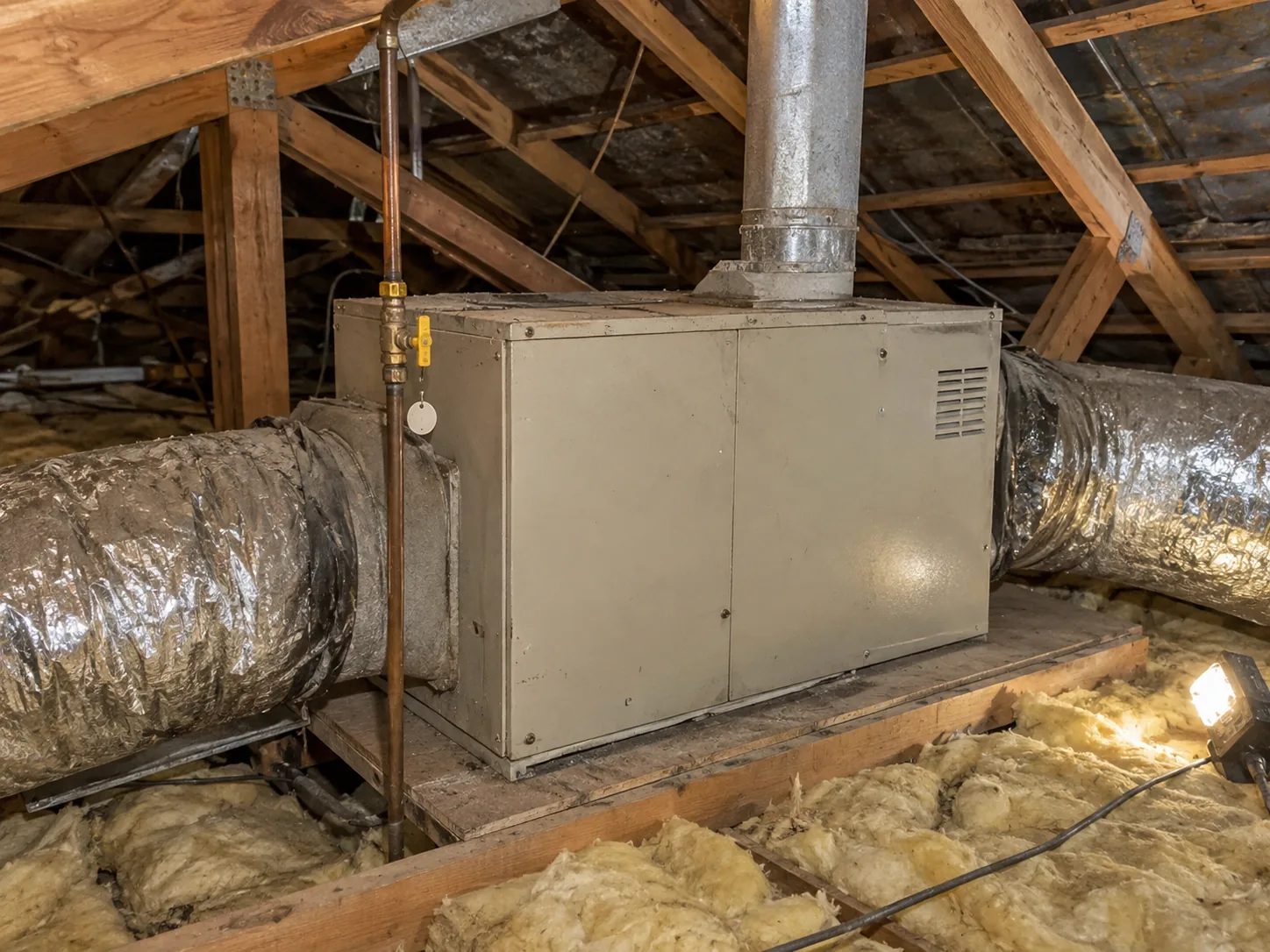
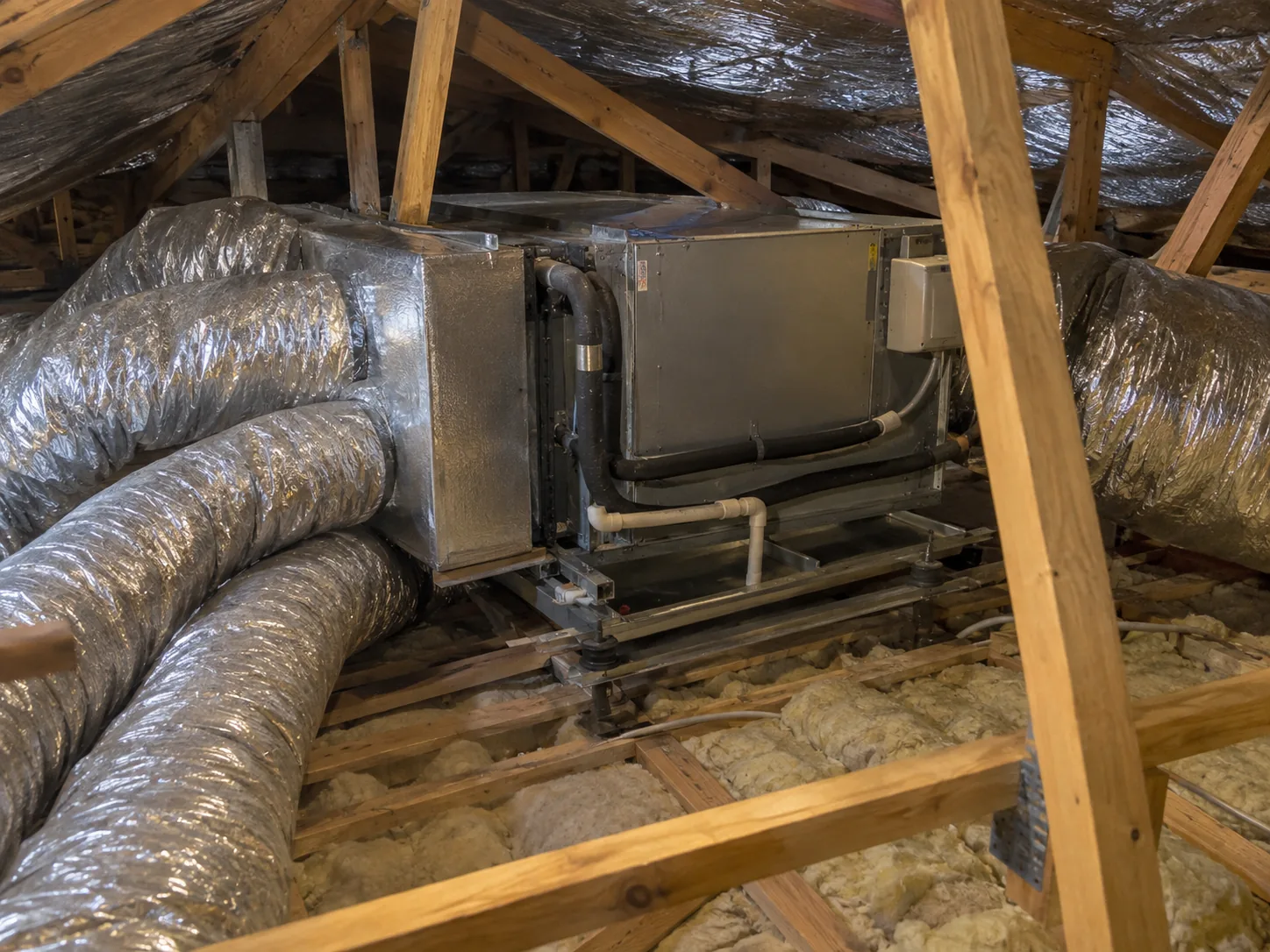
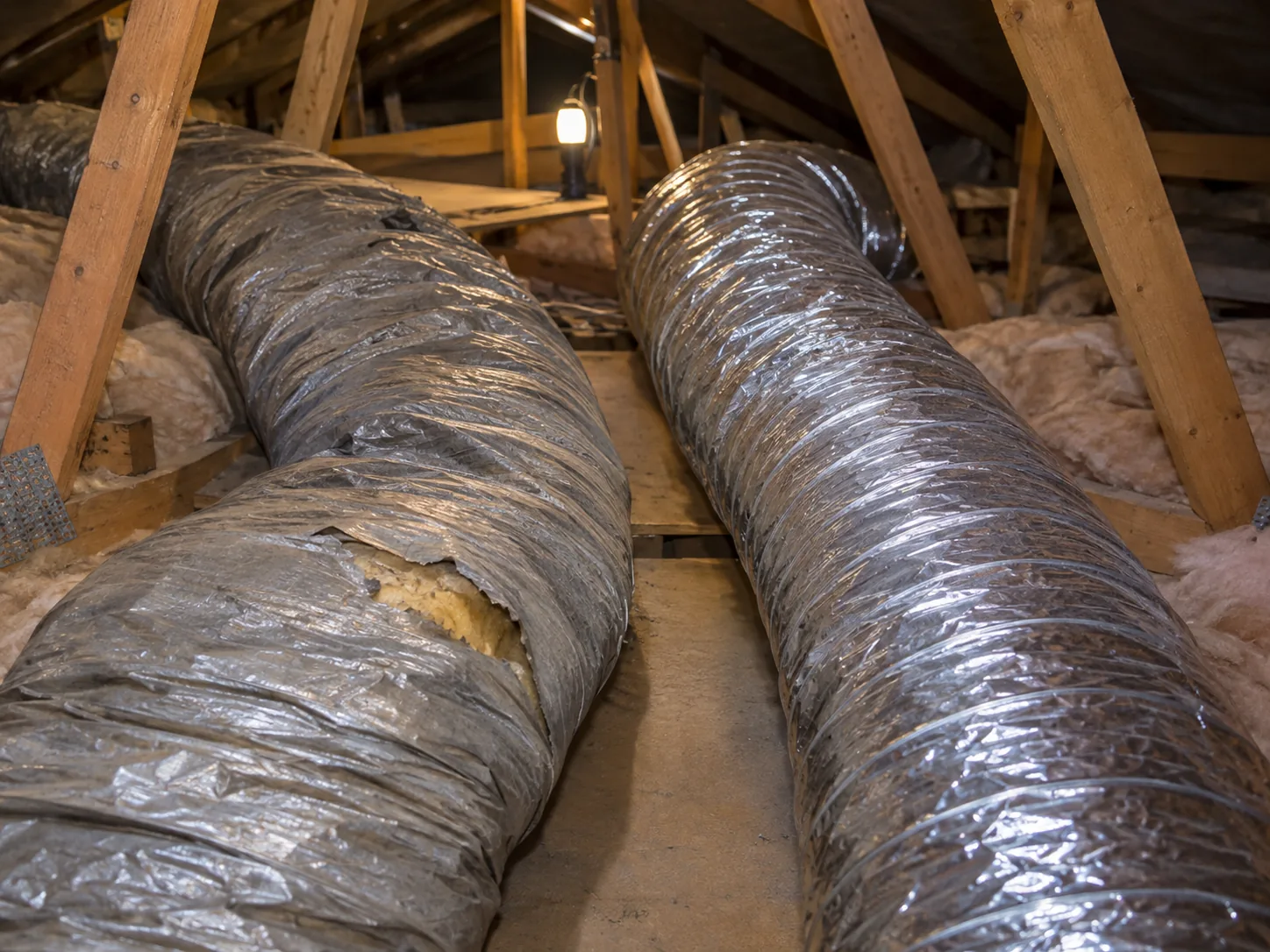
Whichever path you take, the ducts decide how well the new system performs, and they are the part nobody looks at until the roof space is opened. Fifteen years of cleaning and inspecting ducts across Melbourne is why we start there.
On a gas-for-gas replacement the existing ducts are usually reused, so they need to be sound: insulation intact, joints sealed, no runs crushed under stored boxes, no flex chewed through, no outlet starved at the end of a long run. If they are staying, they should be cleaned before the new heater blows through them, otherwise the first thing the new heater does is redistribute a decade of dust. On a reverse cycle changeover the program guidance recommends new ductwork and fittings, and we explain why on the changeover page. In either case we photograph every run and show you.
The return air grille and the roof space matter just as much. A return that is too small starves any heater, and a roof space with no working room, low pitch or a heater wedged beside the manhole changes what can be fitted. The office asks about all three before recommending a path, and the firm price includes what the ducts need, not a line that appears on the day. Zoning is set up and explained on the reverse cycle path, and on the gas path where the controller supports it.
 FreshDuct