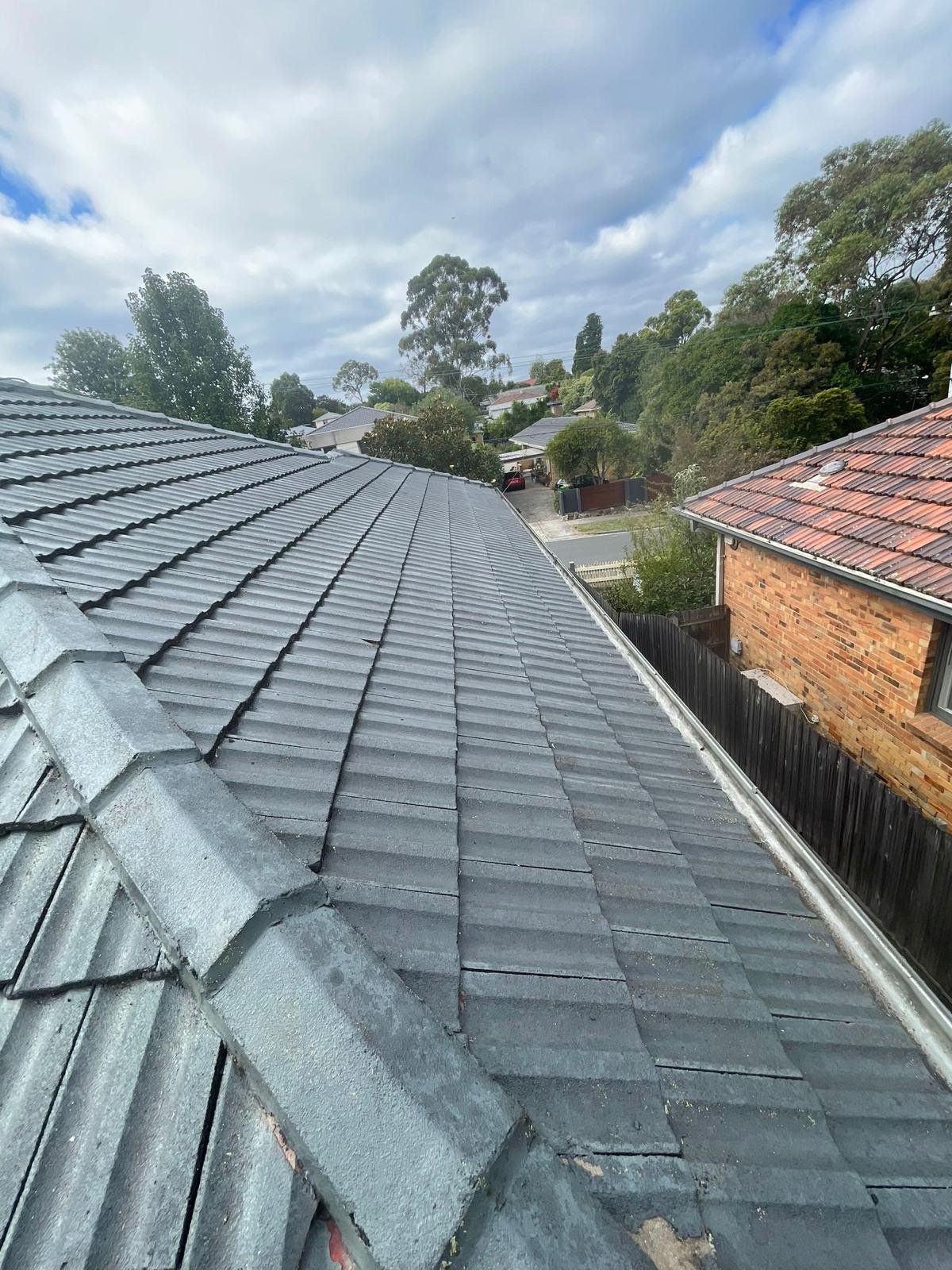
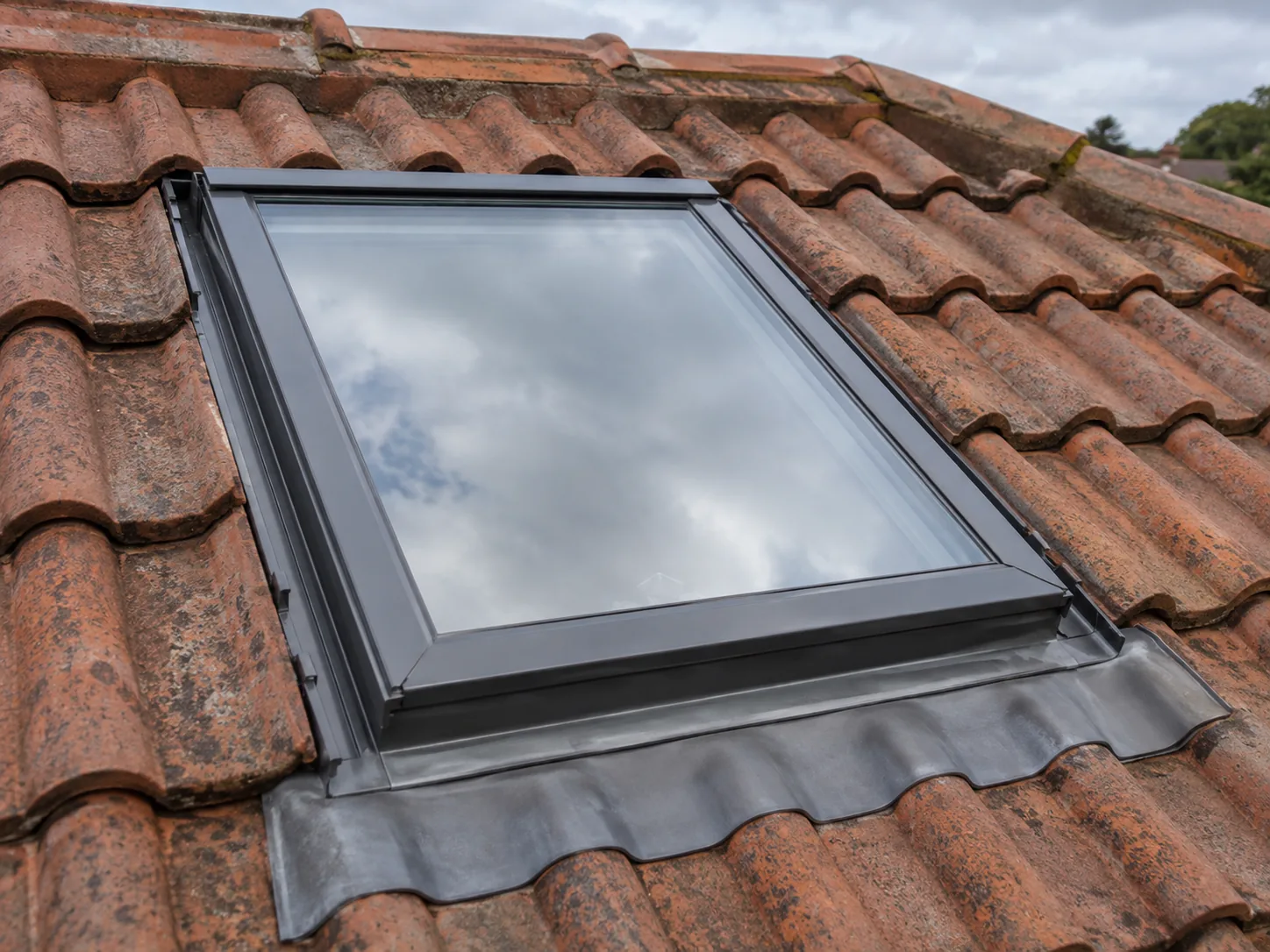
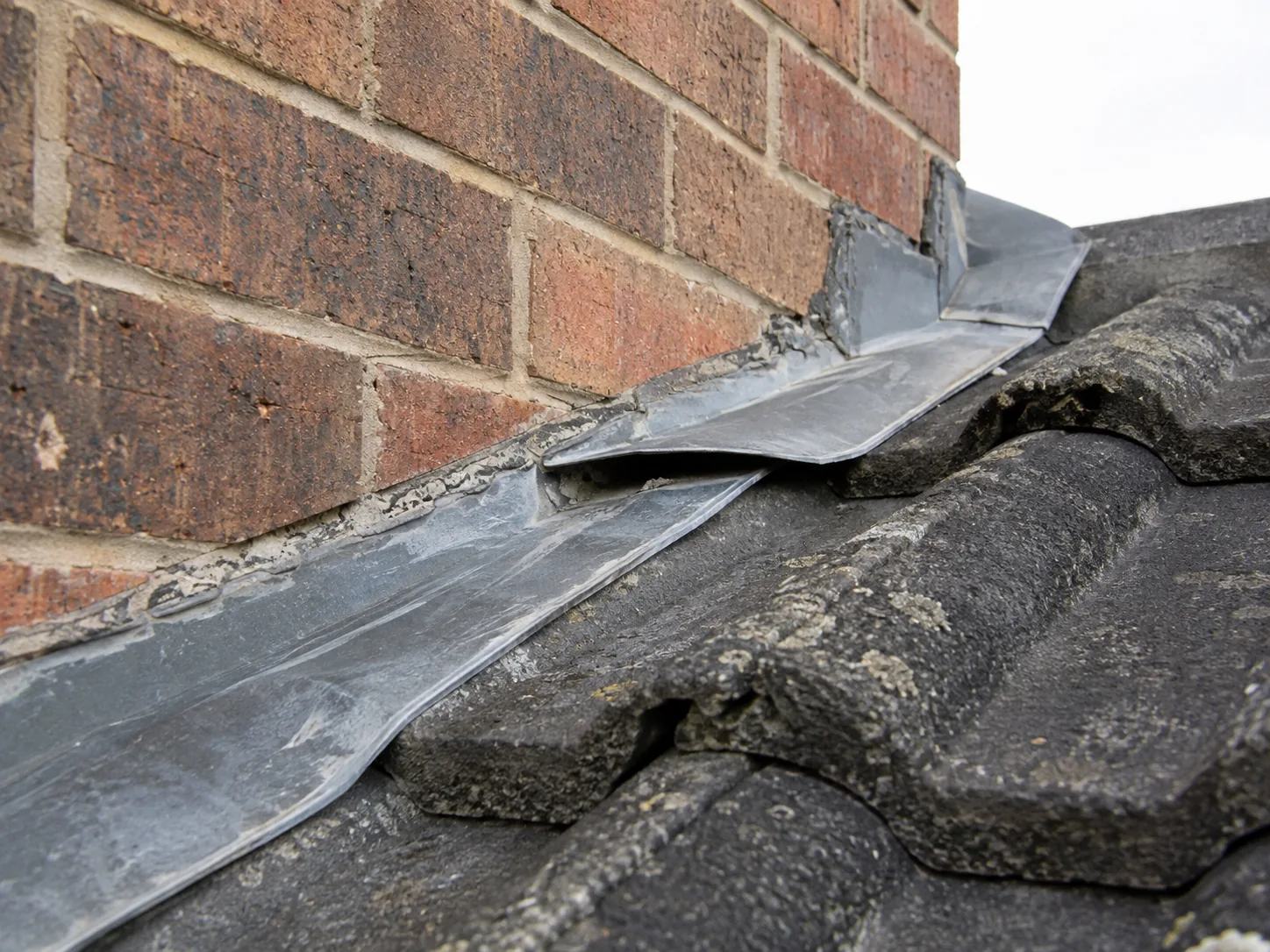
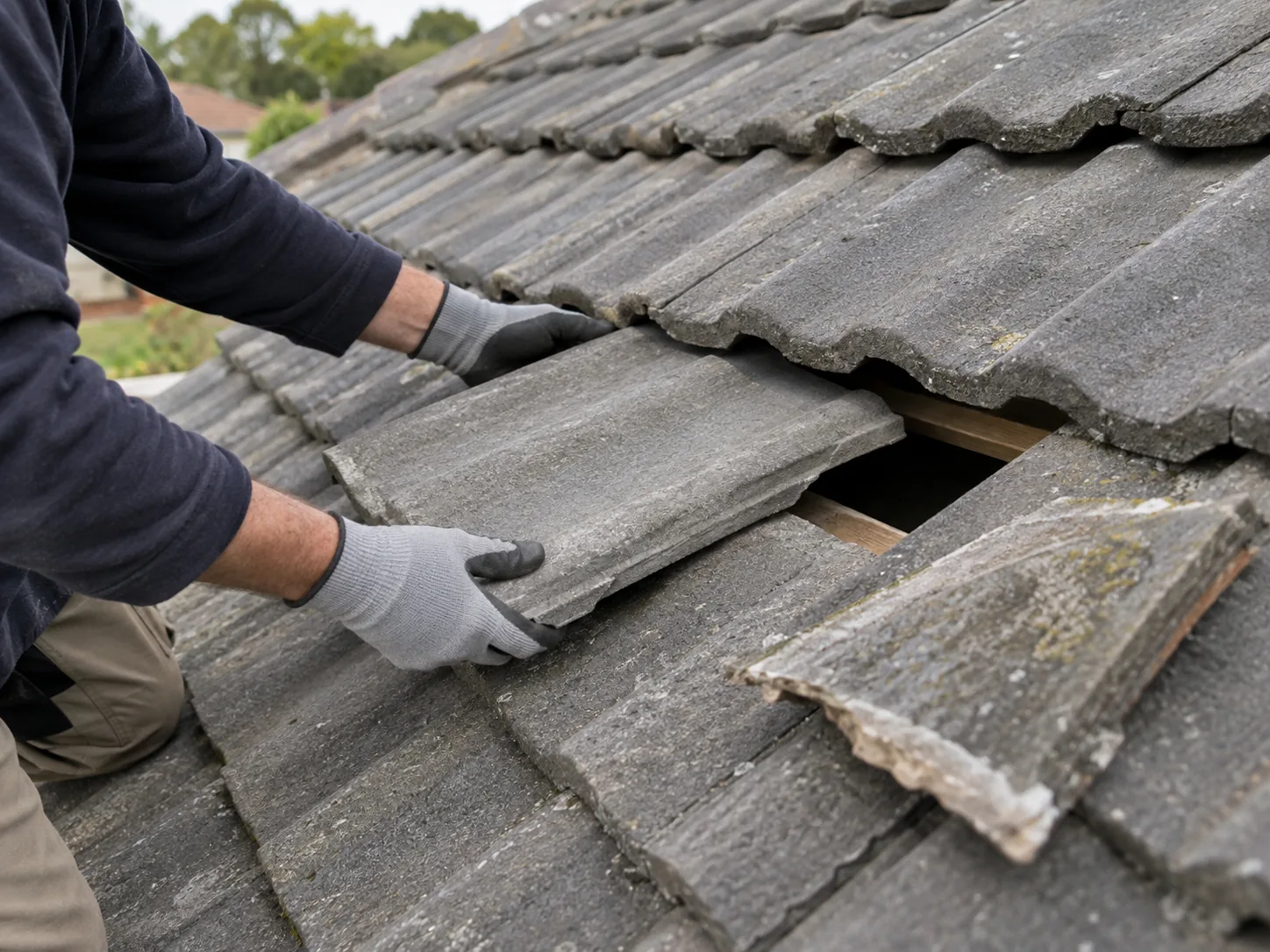
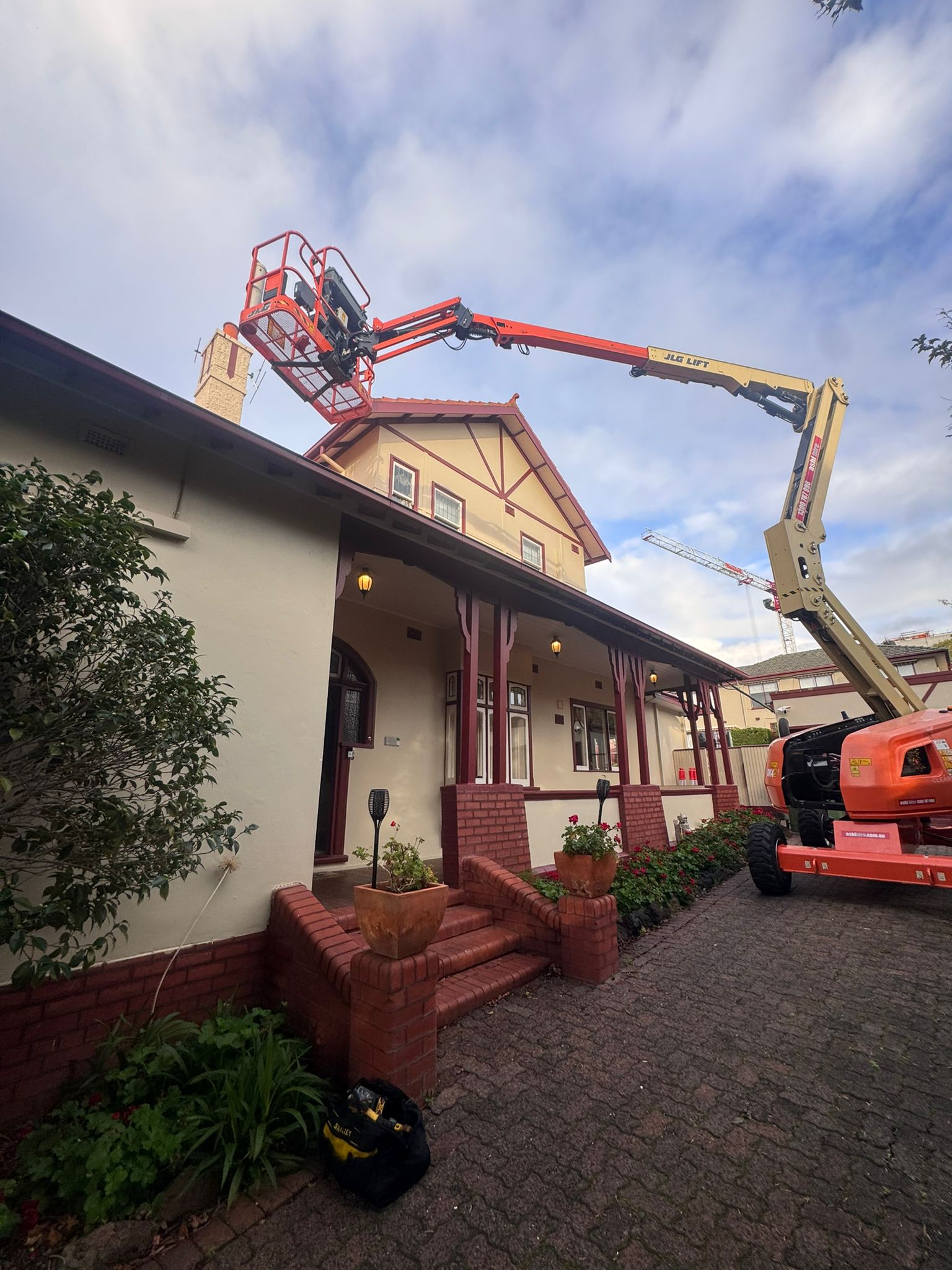
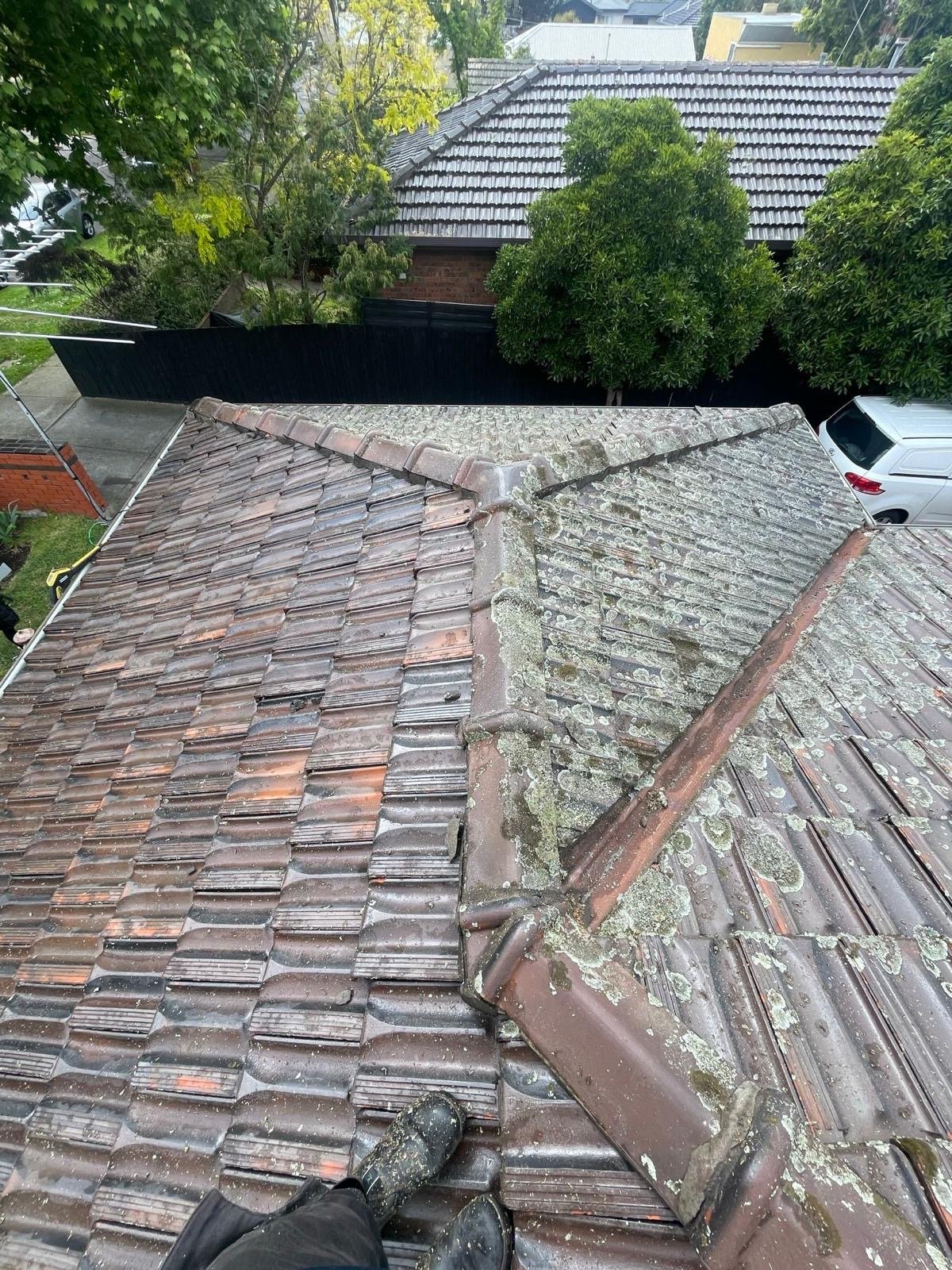
Water runs downhill, so we start above the skylight and work down. The back tray first: how wide it is, whether litter has dammed behind it, whether the tiles above lap onto it properly. Then the side flashings and the cut tiles or sheet edges that sit on them, because a cracked cut tile is one of the most common things we find. Then the apron at the bottom and the sealant along it. Then the frame itself: the seal between the glazing and the frame, the dome seal on a tubular unit, and the sash seal on a roof window that opens.
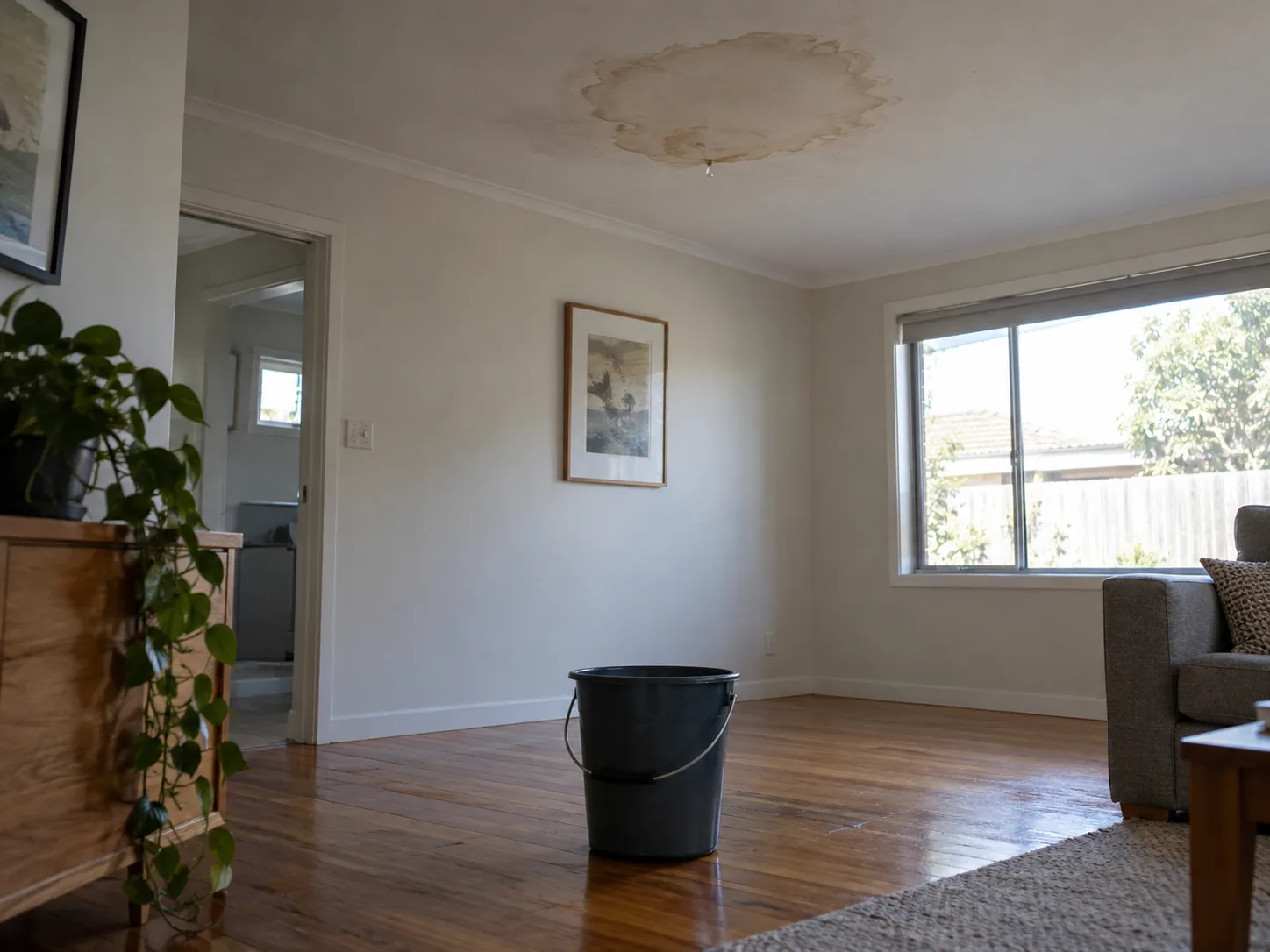
Inside, we look at the shaft. Where the stain sits tells us which side the water is coming from, and whether it is a leak at all. A skylight over a bathroom, laundry or kitchen often has condensation running down the inside of the shaft on cold mornings, which looks like a leak and is not one. We say which it is, because the fix is ventilation, not flashing.
If the entry point is not obvious from the roof we run water over the skylight from a hose, one section at a time, and watch the shaft. Everything is photographed from the roof and from below before any repair, so you see exactly what failed.
 FreshDuct