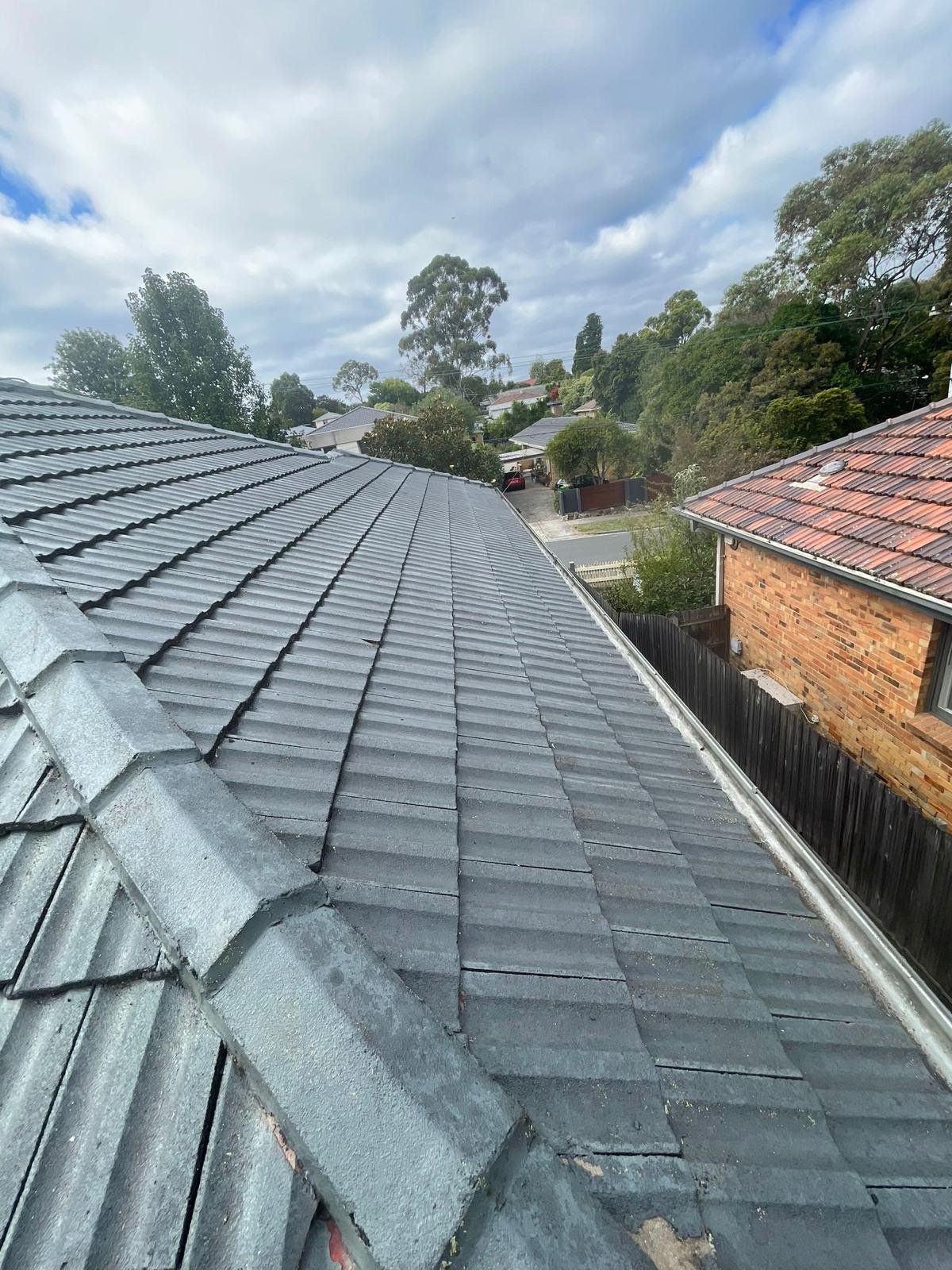
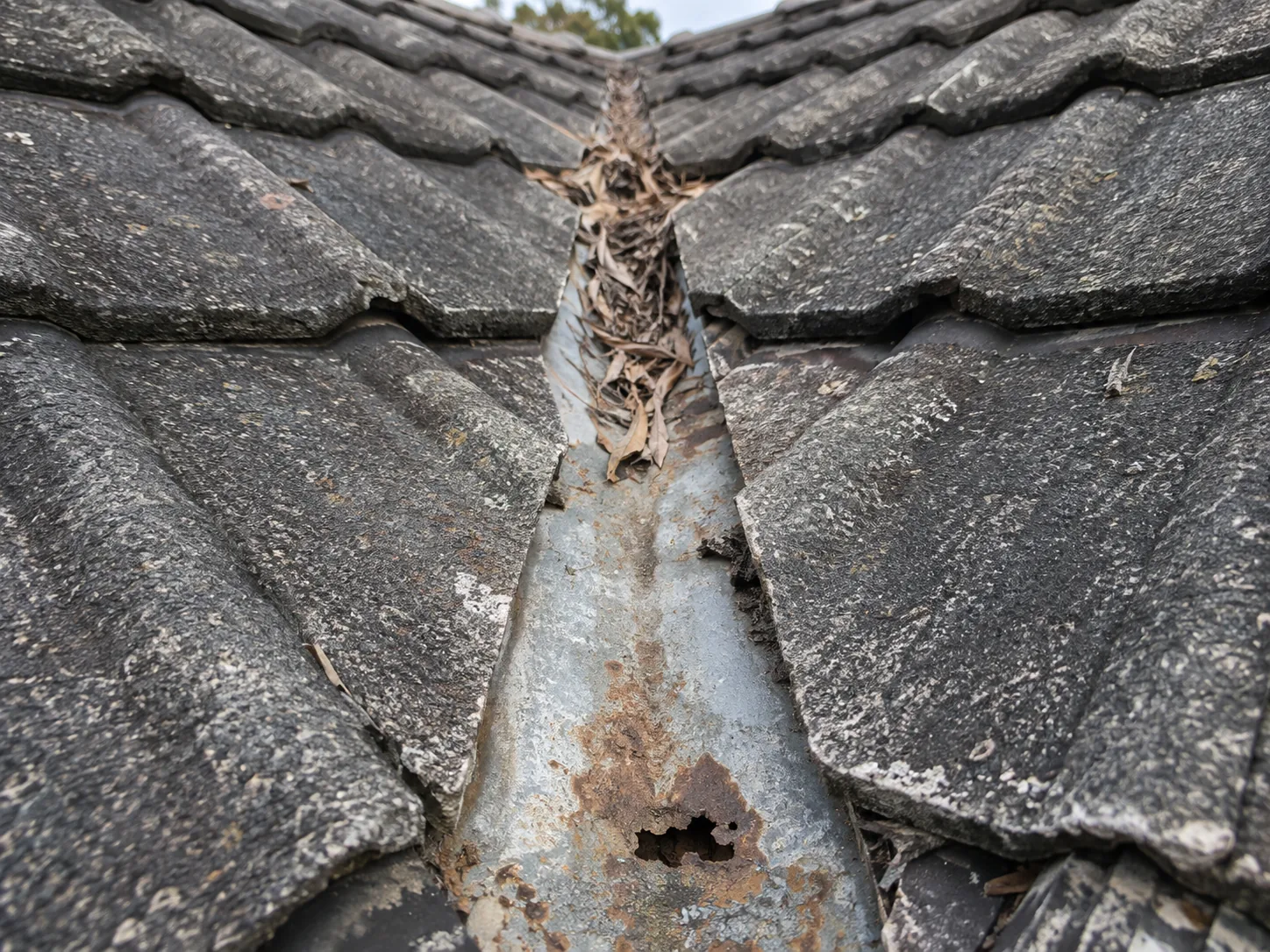
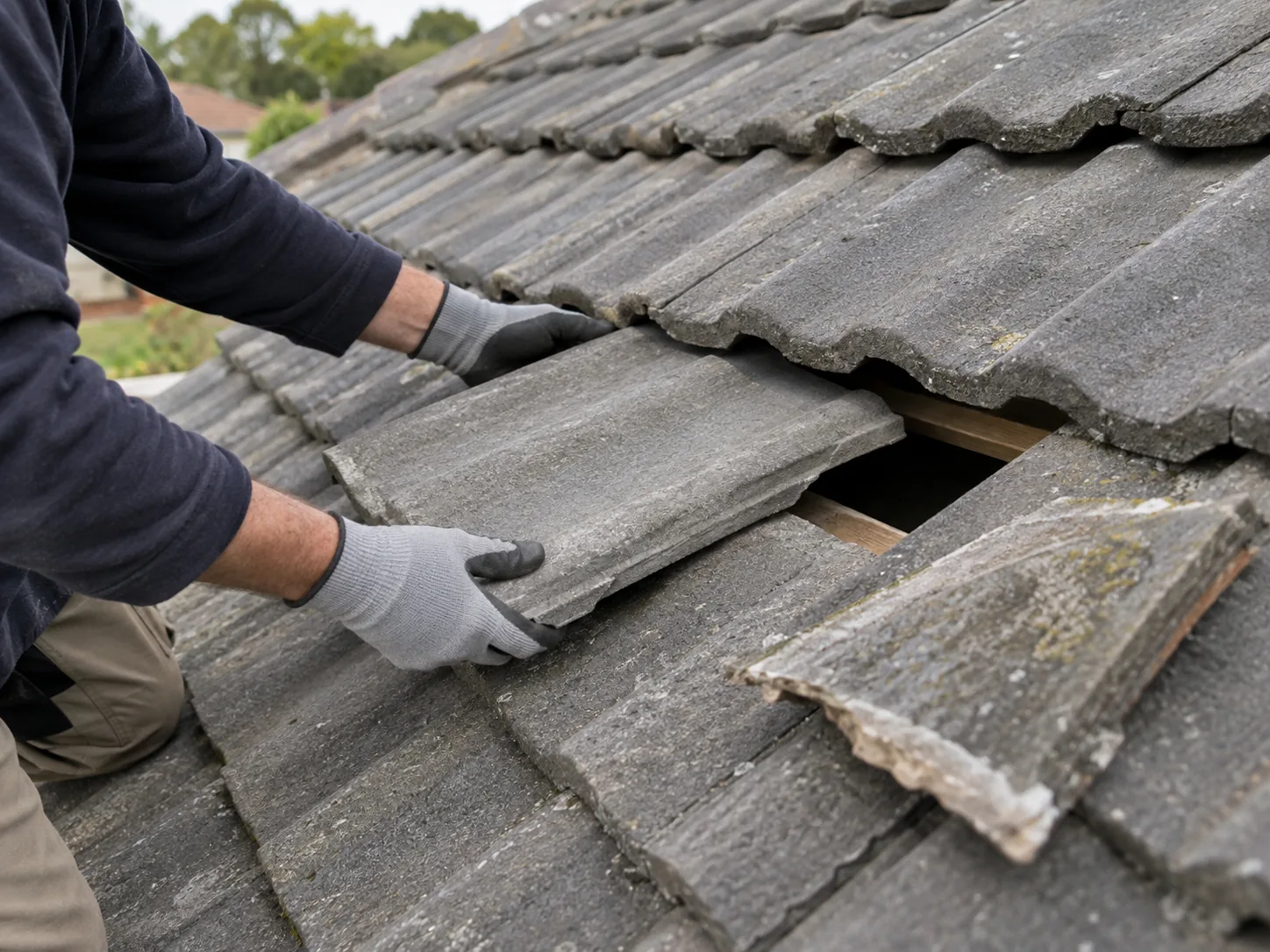
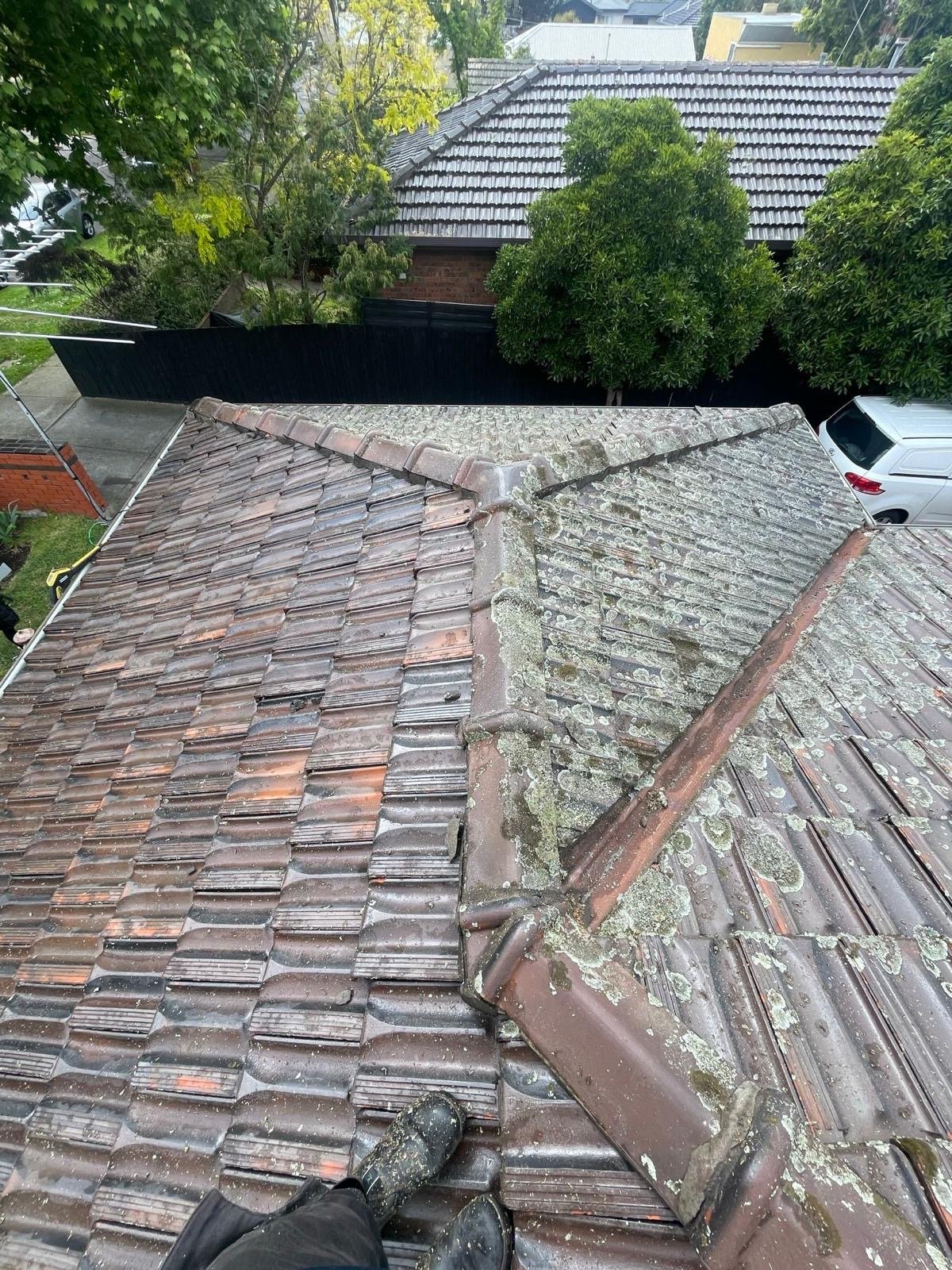
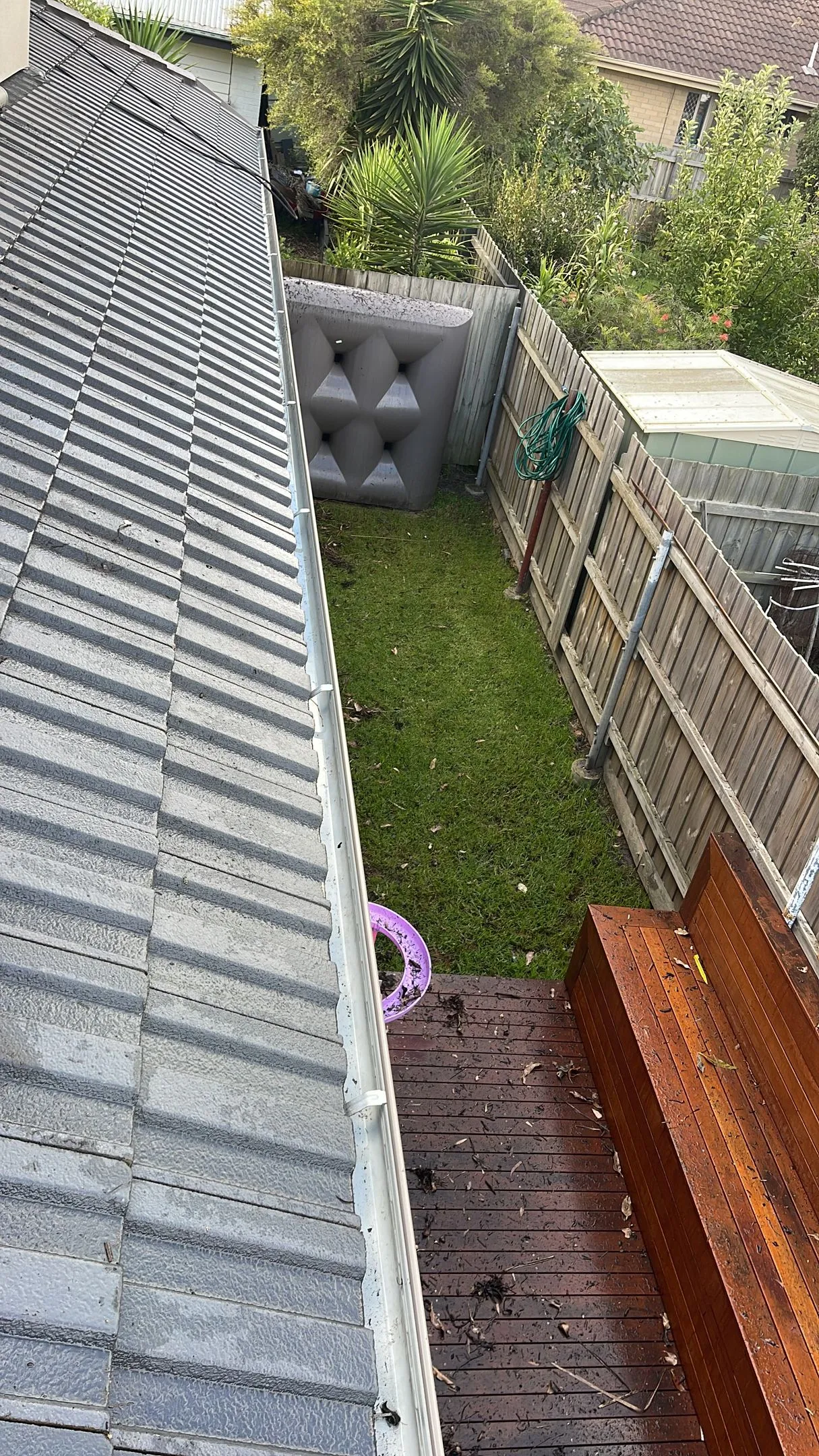
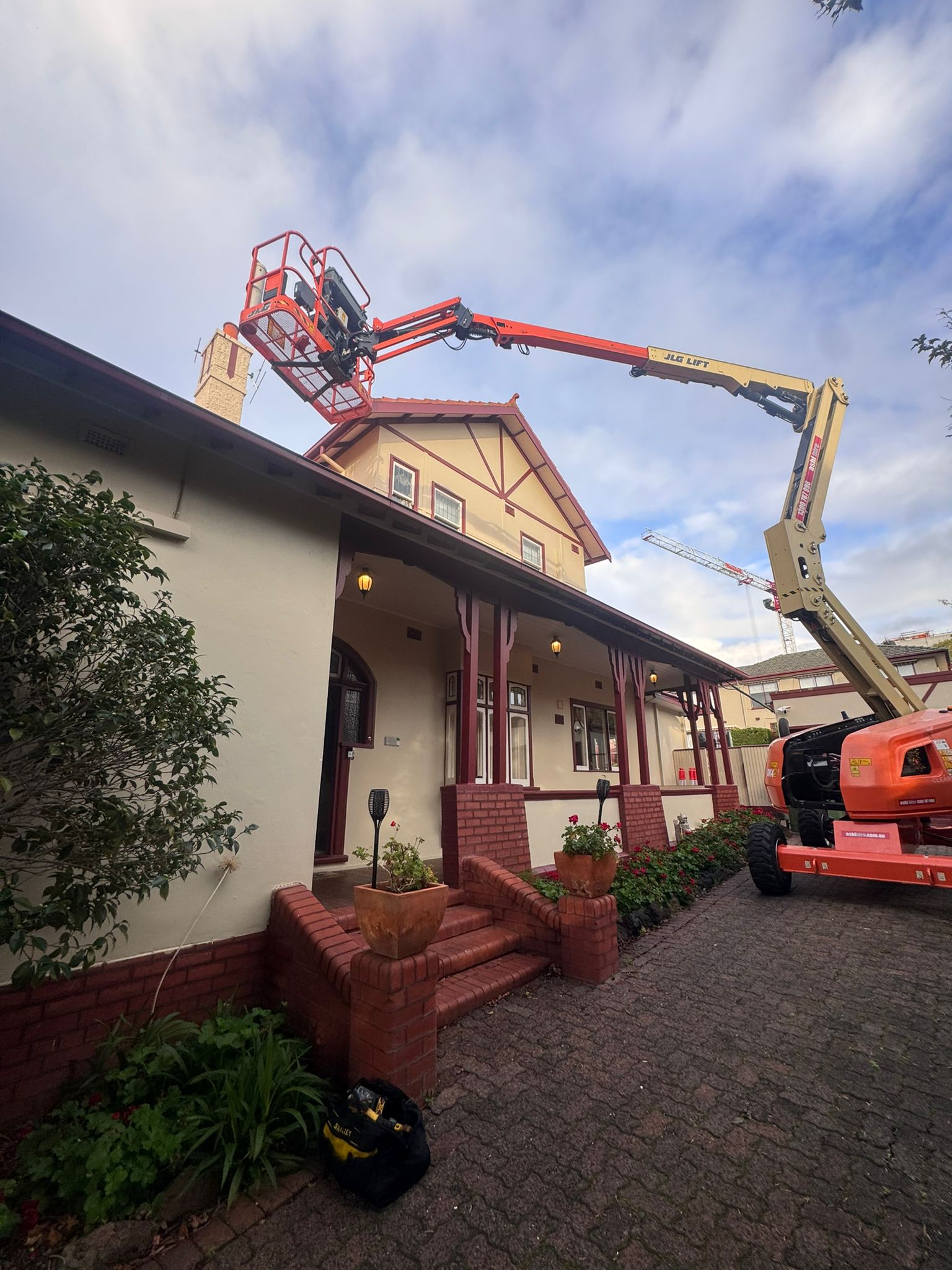
The tiles either side of the valley are lifted and stacked on the roof, usually three or four courses wide, from the gutter up to where the valley meets the ridge or a hip. Where the valley runs into ridge capping, the bedding at the top is broken out so the old valley can be pulled clear. The old valley iron is cut free and lowered down, not dropped into the gutter.
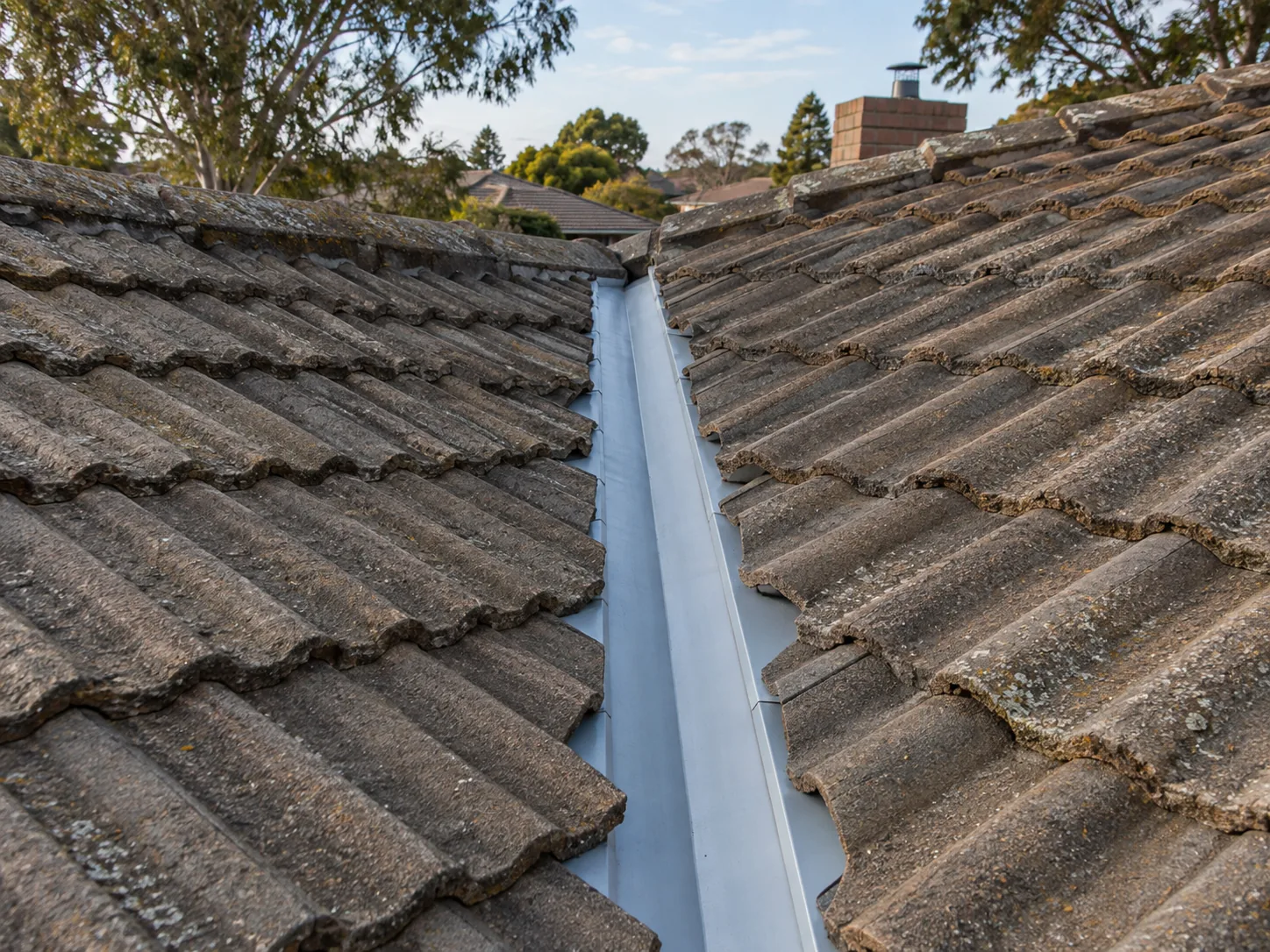
With the channel open, the valley boards or battens underneath are checked for rot, and the sarking either side is checked for tears; both are repaired before the new metal goes on. The new valley is fitted in lengths from the top down, so every lap faces downhill, with turned edges to stop water creeping sideways and enough width to carry a Melbourne downpour. Valley clips or a valley batten hold the cut tiles clear of the channel so they cannot slip into it.
Then the tiles go back. Cut tiles that cracked when they were lifted, or were already cracked, are replaced and matched to the profile. Where the valley meets the ridge, the capping is re-bedded and re-pointed so the top of the new valley is sealed. The gutter below is cleared of the rust and grit that came out of the old valley. Before the tiles are re-laid we photograph the new valley in the open channel, so you can see the metal, the laps and the clips you are paying for and will never see again.
 FreshDuct